




QUITOBAQUITO SPRINGS, Arizona — Verlon Jose recounted when he and other O'odham people picked up fragments of human bone from a burial site on a site called Monument Hill, blasted to bits to build the border wall during President Donald Trump's first term.
"They knew the burial site was there, but they didn't care," said Jose, chairman of the Tohono O'odham Nation.
Jose, Vice Chairwoman Carla Johnson and Hia-Ced O'odham elder Lorraine Eiler accompanied Rep. Adelita Grijalva on a tour of ancestral O'odham lands and the border wall on Aug. 24. The tour stopped at Quitobaquito Springs, which was severely damaged by construction activities during the first Trump administration and is just now recovering after a concerted restoration effort.
The freshwater
oasis about 40 miles southwest of Ajo has harbored humans, wildlife and three now-endangered aquatic species for millennia.
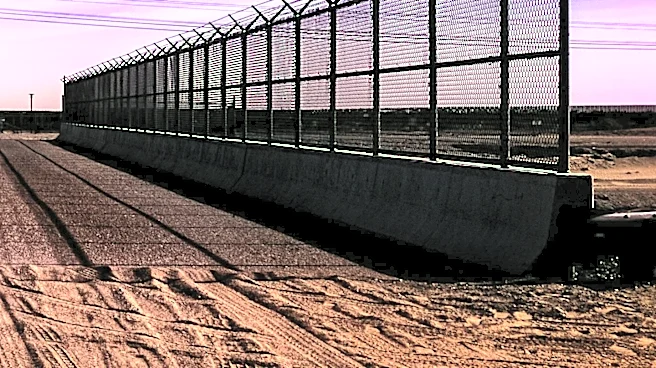
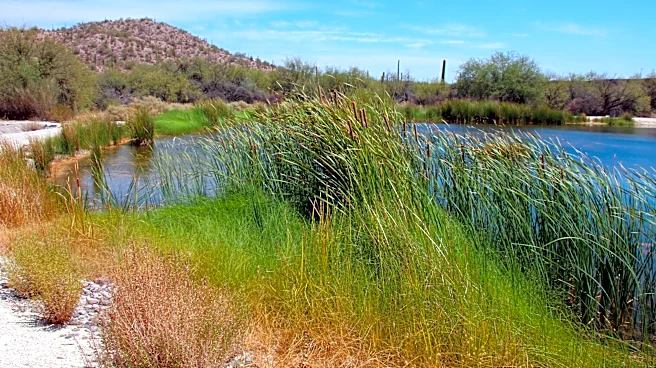
Villages once thrived around the springs, called A'al Vaippa or "Little Spring" in the O'odham language; wildlife still come for water. Dragonflies fluttered above the water, and water reeds and other plants surround the edge of the pond once again after restoration efforts. Still, many trees are gone, and the springs were closed to the public in June by the Department of Homeland Security. Just a few feet away, the rusty brown struts of the 30-foot-high wall loomed over the scene.
About a quarter mile south of the wall, vehicles could be seen and heard racing along Mexican Highway 20. Farmsteads nestled against the south side of the wall.
Jose said the wall alone offers little protection: "People catapult items over it to colleagues on the other side," he said. "People climb over it, tunnel under it and cut holes in it. Heavy winds can blow it down in sections."
Jose said a more effective way to ensure border security is what Tohono O'odham has achieved in partnership with the Border Patrol. Activities including underground and aerial sensors, drones and other aerial surveillance, vehicle barriers in key places and concentrated manpower have greatly reduced illegal border crossings on the tribe's 62-mile border, while still preserving the land and access by Tohono O'odham tribal members who live on the south side of the border.
He reminded a group of staffers and reporters that his nation was split in half with the Gadsden Purchase after the Mexican-American War.
"We've worked so hard so that we won't have a wall," Jose said.
'Why can't they respect the land, the animals and O'odham people?'
Johnson, the vice chairwoman, said enhancing security at the ports of entry would be a more effective use of taxpayer dollars than the estimated $61 billion price tag attached to building a double wall, as is the current plan.
Grijalva, D-Ariz., said these spaces must be protected because once they're gone, they are irreplaceable. Tribal sovereignty must be honored, she said, and proper consultation must be done.
"There was once more abundance here," she said, "And, we can protect this and continue to encourage its growth and production for generations to come."
A group of congressional Democrats from border districts, including Grijalva, Reps. Raul Ruiz and Juan Vargas of California and Texas Rep. Veronica Escobar sent a letter to the secretaries of Homeland Security and Interior urging them to consult with Tohono O'odham and to take other actions to prevent further damage to culturally significant sites within Tohono O'odham and other tribes' ancestral homelands. The lawmakers cited the temporary halt of construction in Texas' Big Bend country after a public outcry.
Jose said the pause in Big Bend was due to many voices joining in protest. He urged all in attendance to use their own voices by speaking out and voting.
Grijalva said she is filing a bill to rescind Homeland Security's authority to ignore environmental regulations.
Eiler said Quitobaquito was once the home of her people, the Hia-Ced O'odham or Sand People. The Hia-Ced, the westernmost O'odham people, lived around the springs until the mid-20th century, when the last family was moved from the area to create Organ Pipe Cactus National Monument. Like the Miwoks removed from Yosemite Valley to create the eponymous park, the Hia-Ced have never been federally recognized.
Eiler also said the springs and other areas are sacred to other tribes. In 2025, she said, a group of Kumeyaay came from Southern California for prayers.
"Our brothers and sisters from Mexico, from the ocean where the men do the salt runs, they came back and brought prayers here," Jose said. The prayers that come to the spring also go back out and everybody takes a prayer with them, he said.
"The struggle we have from society is why can't they respect the land and respect the animals, respect the O'odhams?" Jose said.
Damage, destruction and saguaros in the desert
In late April, contractors destroyed a 1,000-year-old site in the Cabeza Prieta National Wildlife Refuge, west of Quitobaquito. Known as the Las Playas Intaglio, the geoglyph is a large, fish-shaped carving etched into the ground, best seen from above. About 30 feet north of the border, the geoglyph stretches just over 250 feet in length and about 49 feet wide, forming a massive, clearly defined figure.
Jose said the head of the Las Playas Intaglio served as a directional sign for people headed to the Gulf of California.
"I would never go into your church and destroy it," Jose said. "I would never go into your home and destroy it or go into your cemetery and destroy it."
Jose asked why the First Amendment and other legislation that protects religious beliefs seem to fall short when it comes to protecting tribal worship, which is linked to specific spaces like Quitobaquito Springs and other places.
"I thought religion was protected," he said. "Is my religion not good enough? Is my practice not good enough?"
An Arizona Republic reporter rode with Jose, Grijalva and a contingent of security and congressional staff as they viewed the area and assessed damage, current and future.
Jose pointed out saguaros in the zone demarcated for new wall construction. "They're going to try and transplant them because they're protected," he said, as he drove toward Monument Hill where his people's burials had been desecrated for the first wall.
He also said the government had not engaged in any meaningful consultation with the tribe on the project or any possible cultural and environmental damage, even though consultation is required by federal executive orders and regulations.
'I can see them taking 150, 200 more feet'
The tribe filed suit in June to halt any border wall construction on their lands. In August, a federal judge refused to grant a preliminary injunction to stop the bulldozers while the suit winds its way through the courts. Jose said the litigation will continue.
He believes that even if they prevail, the feds won't stick to their "Roosevelt Reservation" land, a 60-foot plot stretching north of the border. "I can see them taking 150, 200 or more feet," he said. All that land would be stripped from his tribal lands.
Later that day, during a town hall in Ajo, the three leaders restated their position. A crowd of nearly 100 local residents came to hear and discuss what they also see as a desecration.
Maria Singleton, an Ajo resident and part of a grassroots group that opposes the new wall and the threat to Quitobaquito, pointed out a display her group assembled in the meeting room of the International Saguaro Desert Association, which hosted the town hall. The display had drawings of the three endangered species endemic to the springs, brochures, stickers and a list to sign up for yard signs.
The group, Protect Quitobaquito, also commissioned Navajo artist Chip Thomas to create a mural bringing attention to the newest threat to the desert, featuring Eiler.
Johnson said Tohono O'odham spends about $3 million of its own revenues to support border issues. And she said the tribal council is considering all available options to prevent a wall being built on their land.
"The council is taking this very seriously," Johnson said. "If the first wall was so successful, why do they need another one?"
Debra Krol reports on Indigenous communities at the confluence of climate, culture and commerce in Arizona and the Intermountain West. Reach Krol at debra.krol@azcentral.com. Follow her on X, formerly known as Twitter, @debkrol and on Bluesky at @debkrol.bsky.social.
This article originally appeared on Arizona Republic: O'odham leaders visit springs, cultural sites at risk from border wall