




Motorists stopping at a University Drive Chevron in east Mesa may not realize the gas station was the scene of what may have been the first of the bias killings after the Sept. 11 terror attacks.
Americans reflected on the quarter-century anniversary of the late summer day when terrorists killed thousands on U.S. soil. A few days later, as the sun set on Sept. 15, dozens gathered outside the gas station on University Drive and 80th Street to commemorate Balbir Singh Sodhi.
The 52-year-old gas station owner was gunned down 25 years to the day as he planted flowers in front of his business. The gunman targeted Singh Sodhi, thinking the Indian immigrant, who wore a beard and turban in accordance with his Sikh faith, was a Muslim.
"This gas station
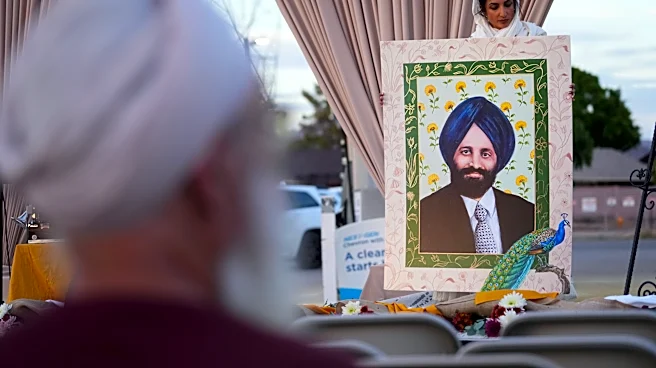
is the second Ground Zero. It is the ground zero for all the lives that have been lost or shattered in the last 25 years by the way our nation responded to 9/11 in the racial violence, the state violence and the warfare that continues today," said Valerie Kaur from a stage where Singh Sodhi's portrait stood on an easel.
Kaur, an attorney and activist, is the founder of the Revolutionary Love Project.
Bouquets decorated the small marble-laden tribute that has stood for at least two decades on the spot where Balbir Singh Sodhi was mortally wounded. Facing the convenience store, the Mesa Star Food Mart, the memorial bears a plaque in his remembrance with the inscribed words, "All people are equal in the eyes of God."

A santoor, a string instrument popular in Indian music, hummed as Kaur shared the narrative of Singh Sodhi's journey from India to California and finally to the gas station he proudly owned before his death. She spoke of how he wanted to help the recovery effort after the Sept. 11, 2001, terrorist attacks.
Between three and seven people were killed in the immediate anti-Muslim and -Arab backlash to the attacks, according to Human Rights Watch. Kaur's speech alluded to the 1984 massacre of Sikhs in India and suggested the bloodshed motivated Singh Sodhi to come to the U.S.
Deepa Iyer, who works at the Washington, D.C.-based nonprofit Building Movement Project, cited findings by the nonprofit Stop AAPI Hate.
"I wish I could stand here tonight and say that the cycle of fear, scapegoating and polarization has been broken," Iyer said.
As published in their September 2026 report, "The State of South Asian Hate," nearly half of South Asians "experienced a hate act due to their race, ethnicity, or nationality in 2025," Stop AAPI Hate's website said.
While on a recorded call on Sept. 16, 2016, Singh Sodhi's convicted murderer, Frank Silva Roque, was forgiven by the victim's brother, Rana Singh Sodhi. On the call from prison, Silva Roque initially blamed his actions on the fury he felt at the 9/11 carnage. But he finally expressed remorse.
"One day when I go to heaven to be judged by God, I will ask to see your brother. And I will hug him, and I will ask him for forgiveness," Silva Roque said in the call. Rana Singh Sodhi replied, "We already forgave you."
Silva Roque died at 62 in May 2022 while serving a life sentence.
His "legacy is not only violence and hate. His memory is also one of reconciliation and love. I hope that Frank can see Balbir now, and that they hug each other, and that he apologizes to him. I hope they are both at peace," wrote Rana Singh Sodhi in an essay for The Arizona Republic shortly after Silva Roque's death.
Kaur mentioned that Sept. 15 was also the anniversary of the 1963 deaths of four Black girls killed by White supremacists who blew up 16th Street Baptist Church in Birmingham, Alabama.
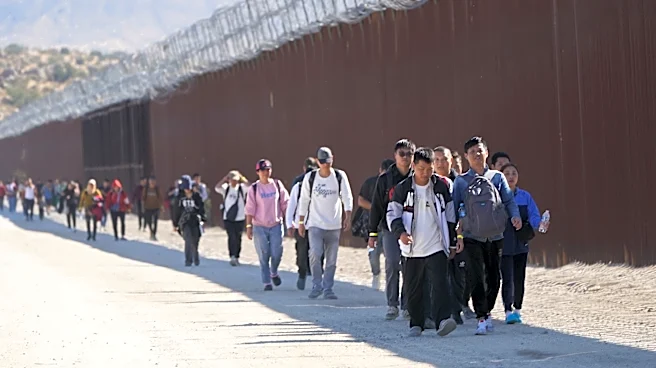
Some of the speakers at Balbir Singh Sodhi's memorial connected the country's response to 9/11 days after to the violence in recent ICE raids. After 9/11, U.S. Immigration and Customs Enforcement was created to thwart terrorism. U.S. citizens Renee Nicole Good and Alex Pretti, both 37, were shot dead by federal agents while near ICE raids in January 2026 in Minneapolis.
'This country is beautiful, and I’m still saying we are Number 1 in the world'
Grief followed Rana Singh Sodhi for years. Another brother, Sukhpal Singh Sodhi, was fatally shot as he drove a taxi in San Francisco just within a year of Balbir's killing. Kaur listed Sukhpal Singh Sodhi's name among those she said lost their lives to hate in post-9/11 America.
But the violence that befell his family never dampened Rana Singh Sodhi's love for the U.S.
"I feel so much freedom in this country," Rana Singh Sodhi told The Republic in August. "I honestly don’t think about how much hate we have in this country. … This country is beautiful, and I’m still saying we are Number 1 in the world."
This article originally appeared on Arizona Republic: AZ Sikh man killed in post-9/11 hate crime remembered 25 years later