






Read this story in Spanish
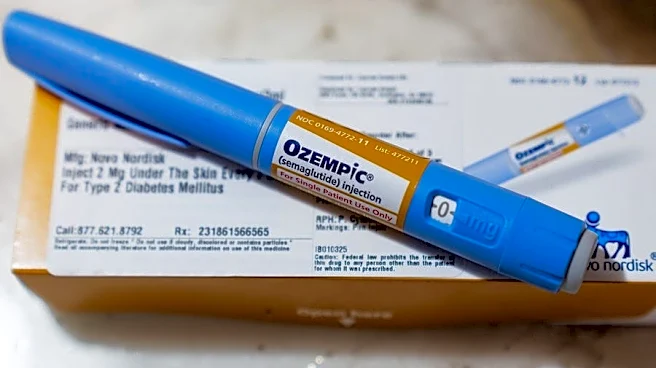
The pitch is simple: effective weight loss. The risks are not. As GLP-1 drugs surge in popularity, some users are reporting NAION, a rare condition tied to sudden vision loss and, in some cases, blindness.
Thousands of lawsuits have been filed in state and federal courts against the drug companies for serious complications including gastrointestinal injury and vision loss. As of March 2, there were 3,363 pending lawsuits. The number of cases has increased in recent days, reaching nearly 4,000 people.
NAION has been the focus of many of the most recently filed lawsuits.
Every week, Phillips Law Group, one of the law firms leading litigation involving GLP‑1 medications, receives dozens of calls from patients who say they
have experienced adverse side effects, as well as from people concerned about potential medical complications associated with these treatments. Among the most prominent are semaglutide, which helps regulate blood glucose levels and suppress appetite, and tirzepatide, which stimulates the release of insulin when blood sugar levels are high.
“Cases are increasing. When people first started taking these medications, many were unaware of these side effects. We have many Arizona residents who trusted them to improve their health, to lose weight, reduce their A1C levels, but the outcomes have been truly devastating,” said Olivia Lemorrocco, Vice President of Operations at Phoenix-based Phillips Law Group.
What is most devastating, in Lemorrocco's opinion, is the age of many of the victims; some are barely 20 years old.
The central argument in the lawsuits is that drugmakers failed to warn patients about the full scope of risks associated with GLP-1 medications before they began treatment.
“It’s terrible, and we’re seeing more and more cases. Unfortunately, this is the drug of choice for many young people who want to look thin,” the attorney said.
Sudden blindness is one of the most documented side effects in the federal Multidistrict Litigation (MDL 3094). However, according to the law firm, the lawsuit includes stories of stomach paralysis, when these medications slow gastric emptying, extreme malnutrition, vascular problems, cases of pulmonary embolism (which can be fatal without immediate medical intervention), gallbladder disease, pancreatic inflammation and vision deterioration.
“The trauma of living with irreversible vision loss that happens overnight is unimaginable” she said.

Weight returns and other risks may follow
Although it might seem that stopping these medications would solve the problem, the reality is far from it. On the contrary, discontinuation not only leads to regaining weight but also rapidly increases the risk of heart attack, stroke, and death, according to a new study from Washington University School of Medicine in St. Louis released in March.
“Our data suggests that this abrupt metabolic shift is harmful to cardiovascular health,” said lead author Dr. Ziyad Al‑Aly, a clinical epidemiologist at Washington University School of Medicine and author of the study.
Restarting the medication after stopping helped restore only part of the protection, showing that interruptions leave permanent consequences.
After following more than 333,000 U.S. veterans with type 2 diabetes over three years, the study shows that cardiovascular benefits are not permanent and fade quickly once treatment is stopped.
The consequences go beyond visible weight gain. “When people stop treatment, they don’t just regain the lost weight; they also experience a comeback of inflammation, blood pressure, and cholesterol,” Al‑Aly said. “Weight regain is visible; metabolic reversal is not.”
Is NAION linked to GLP-1s?
There is currently not enough research to definitively establish a cause-and-effect relationship between GLP-1s and NAION or other vision changes.
The evidence remains inconclusive. Some studies, including research published in JAMA Ophthalmology in 2024 and Diabetes, Obesity and Metabolism in 2025, found an association between semaglutide and NAION, though neither established a causal link. Other studies, including research funded by Novo Nordisk, found no significant association.
Despite the mixed findings, Novo Nordisk added NAION warnings to Ozempic and Wegovy labels in Europe, where regulators estimate the risk at up to 1 in 10,000 patients. Similar warnings have been adopted in the United Kingdom, Denmark and Australia, but not in the United States, where ophthalmologists say current evidence does not support a broad warning.
"A review of the available data has not established that semaglutide causes NAION, only a potential link between the two," AAO said in a press release. "...overall magnitude of the risk of NAION remains low. Shared decision-making between each patient and their care team is warranted to decide whether to start, continue, or discontinue GLP-1 RAs."
Labels for Ozempic have been updated in the U.S. multiple times in recent years to add side effects like intestinal obstruction, but nothing vision-related.
Researching the potential link between the two is complicated by the types of studies done, how the condition is defined and coded in medical documents, and how often it is assocaited with other diseases that carry an increased risk of vision loss, like diabetes.
What do the companies say?
Both Novo Nordisk and Eli Lilly have denied any significant relationship between their GLP-1s and NAION and are engaged in litigation to defend the safety of the drugs.
In court documents, the companies noted that diabetic patients are already at a higher risk of blindness and other conditions that have been the subject of GLP-1-related lawsuits, like gastroparesis and intestinal dysfunction.
"The safety profile of GLP-1 RAs has been well-established in hundreds of clinical trials, large-scale observational studies, and nearly two decades of real-world use," the drugmakers said in ajoint 2024 filing. "The known risks associated with these medicines are reflected in their FDA-approved product labeling which, collectively, the FDA has reviewed more than 40 times and is discussed in textbooks, treatment guidelines and journals."
Cheaper Ozempic, just across the border
Arizona is one of 32 states where Medicaid does not cover the medication without a diagnosis of diabetes, heart failure, hypertension or other related conditions.
The high cost of GLP‑1 drugs makes them inaccessible for hundreds of thousands of low-income residents. And for patients paying out of pocket, these treatments are far from affordable.
The solution many have found to the high price of GLP‑1s is to look south of the border.
While in the United States obtaining a drug like Ozempic can involve months of waiting, a prescription, and an out-of-pocket cost exceeding $1,300, the experience across the border is radically different.
In Mexico, healthcare bureaucracy virtually disappears. No prescription, insurance or prior doctor’s appointment is required.
A La Voz reporter tested the process firsthand, purchasing a 0.25-milligram pen for about $230 and having it delivered to a home with the same ease as ordering takeout.
As La Voz confirmed during its reporting, the lower cost is a major draw for consumers. A 1‑milligram pen that can cost more than $1,300 in the United States sells for about $300 in Mexican pharmacies, with some retailers offering Ozempic for as little as 3,826 pesos, or roughly $215.
However, what seems like a quick and affordable solution hides a far more alarming reality.
For those seeking a cheaper or faster alternative through cross-border purchases, the warning is clear: What you save on paperwork and medical consultations may ultimately be paid for with your health.
“I would encourage anyone considering taking this medication or who is already taking it to contact their doctor and get all the proper information to make sure the drug and dosage are right for you,” Lemorrocco said.
The ongoing legal action in the United States only accepts cases from people who were prescribed and purchased their medication within the country. However, Lemorrocco advised anyone suffering serious side effects who bought the drug online or in another country to seek legal counsel.
“Many people have simply been misled. In English or Spanish, everyone faces the same danger. The real problem here is that no one is disclosing the failures,” she said.
Contribución: USA TODAY and Paula Soria
This article originally appeared on Arizona Republic: Could GLP‑1 drugs be causing blindness? Arizona lawsuits are growing