



Sports betting in the United States has grown from a $4.9 billion industry in 2017 to more than $165 billion in 2026, according to the Sports Business Journal,
The biggest driver has been online betting platforms. The Journal of the American Medical Association says nearly 94 percent of wagers are now placed online, with mobile phones a major factor along with other readily available devices. Common Sense Media estimates that 36% of boys aged 11 to 17 gambled at least once during the previous year.
Statistics such as these have the National Federation of State High School Associations taking steps to address the trend. The NFHS provides guidance to state high school associations and helps write rules governing high school athletics. It includes
51 member associations, among them the Arizona Interscholastic Association, which oversees most high school sports competition in the state.
The NFHS learning center earlier this year launched an online course that provides data and discusses the risks involved with sports betting, especially for younger people. The course is designed for coaches, teachers, student athletes and their parents.
“As you see across the country the ability to place a sports bet has never been easier,” said NFHS executive director Davis Whitfield. “I don’t know if there was necessarily an alarm that was raised, but we just wanted to raise awareness, have materials readily available for parents, coaches and young people.”
“Student athletes most of all need to understand the risks of betting and what can happen when one doesn’t not handle it responsibly.”
Increased exposure to sports betting has created new pressures for young people, often before parents or coaches can recognize the warning signs.
According to a University of Michigan Health national poll, only 1 in 4 parents have talked with their teens about online betting, and 1 in 6 parents said they likely wouldn’t know if teens were betting online
The AIA and other state associations are not required by the NFHS to make the course mandatory for their coaches or student athletes. But Arizona officials welcome the new training.
“I want to commend the NFHS for being out ahead of the issue,” AIA executive director Jim Dean said. “It’s important that we’re all working to stay ahead of this issue, as you know it’s so easy to access these sites and participate in these activities.”
Nationally, states that allow online betting sites such as FanDuel or DraftKings make it illegal for minors. Some states, such as Arizona, have set the legal age at 21.
But sports betting can infiltrate high schools in other ways.
“Students should not share information about their team, competitors, or any other team,” the NFHS sports-betting course says. “This includes information regarding injuries, strategies, team disciplinary actions, or team morale. Gamblers will try to manipulate students to share this kind of information.”
The NFHS and the AIA said there weren't any specific incidents or red flags that prompted the online course, but such potential incidents can't be ignored.
A Massachusetts state audit identified 51 complaints that sports betting advertisements reached minors or individuals struggling with gambling addiction between March 2023 and March 2024. And, according to the NCAA, men who gambled while alone rose from 6% in 2016 to 15% in 2024.
A separate NCAA sports betting activities survey in 2023 revealed that 58% of young adults engaged in at least one sports betting activity, 16% engaged in at least one risky gambling behavior and 6% say they lost more than $500 in one day.
Working with the NCAA on bringing awareness to this issue is something that is in everyone’s best interest, Whitfield believes.
“I think when we’re collaborating with our friends at the NCAA and sharing data, about a number of things,” Whitfield said. “But for this specifically we wanted to make sure we’re doing our due diligence.”
College incidents offer cautionary examples
A key concern when betting infiltrates a sport is that the integrity of the game is potentially compromised.
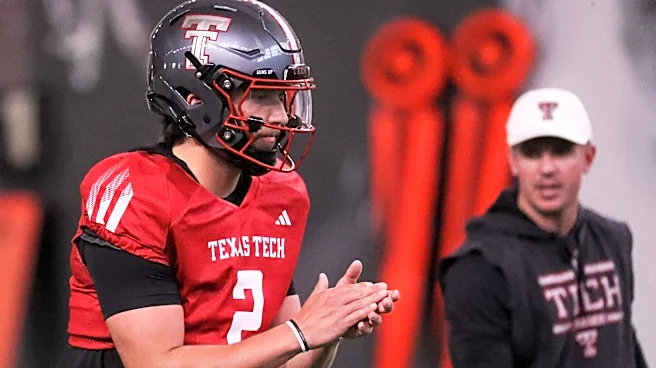
A recent high-profile example involved former Texas Tech quarterback Brendan Sorsby and the $90,000 in sports wagers, including 40 bets on his own team while at Indiana. That led to an NCAA ban. Sorsby missed out on this year’s NFL draft.

Another NCAA study found 36% of Division I men’s basketball student-athletes received abusive or threatening messages tied to sports betting. That figure was 16% in FBS football. These athletes are increasingly subjected to the fallout of people placing prop bets that are settled quickly within the game action.
Stories and stats such as these provide an early warning for high school associations.
“We will have these conversations with all our athletic directors throughout this year,” Dean said. “It is something we will keep top of mind and continue to look out for any potential signs on their campuses.
“It’s not a major problem today, we’re all going to work together to make sure it doesn't become such.”
This article originally appeared on Arizona Republic: Online gambling risks draw attention of high school sports association