






Early morning construction on a controversial data center has been waking up Ahwatukee residents.
A 2025 worker safety bill standardized construction start times during the hottest months of the year. That allowed work to start earlier in Phoenix, although developers on the project have received complaints and warnings for revving up earlier still.
Despite neighborhood concerns about the noise, city officials have said there's little they can do until the campus is built. Even then, the project won't be subject to setback and noise mitigation requirements the city adopted for data centers last year.
Ana Marshall, whose backyard sits roughly 150 feet away from the construction site, said early morning work has woken her 7-year-old son in the middle
of the night. Noise measured from his room using a National Institute for Occupational Safety and Health app reached 110 decibels at one point, Marshall said — comparable to a chainsaw, leaf blower, or siren at close range.
"There's no point measuring anymore, this is consistent, this is constant," Marshall said.
Worker safety law allows construction before sunrise
Menlo Digital has been building a hyperscale data center campus in the East Valley, made up of five buildings and a dedicated substation. The developer, which operates a handful of data centers around the country, did not respond to questions from The Arizona Republic.
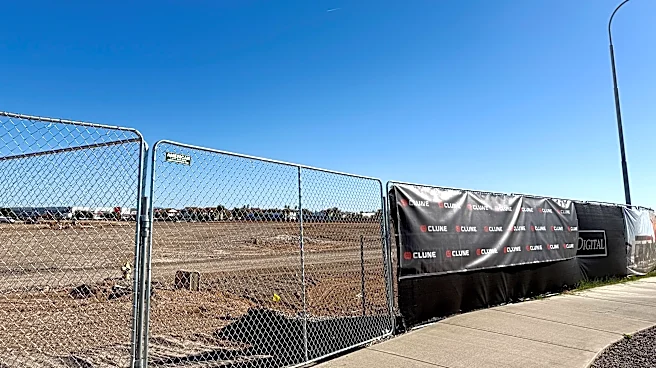
The moon hung big and yellow over the construction site on the morning of Aug. 26. A couple of minutes before 4 a.m., the headlights of a truck shone hazily through the mesh fencing around the property, but the site was still quiet.
At 4:27 a.m., a few rattling noises came from the site. Soon after, an engine turned over. A little after 4:30, the construction site woke up under a pitch-black sky. A long-armed vehicle beeped as it backed up.
A 2025 state law standardized early morning construction hours during the hottest months of the year, and prohibited municipalities from enforcing noise ordinances that could delay work. Between May 1 and Oct. 15, construction is allowed to start at 5 a.m. on weekdays. Quieter concrete pouring can start an hour earlier.
State Sen. Analise Ortiz, a Democrat representing Maryvale and Glendale, said she sponsored the 2025 legislation to give construction workers another hour in the morning to work before heat becomes deadly in the afternoon. Several cities around the state already allowed earlier start times during the summer, she added.
Just a few weeks after the legislation went into effect, a 23-year-old construction worker in Glendale died from heat exposure.
Before the bill was adopted, Phoenix allowed construction to start at 6 a.m. on weekdays between May 1 and Sept. 30.
Developer receives complaints, but avoids penalty
Emails from city staff show the developer narrowly avoided receiving a fine for starting construction too early.
The morning of July 22, someone called the city's hotline at 3:50 a.m., reporting that noise was coming from the site. City staff visited the construction site and gave the developer a warning. A supervisor claimed someone "slipped in early, turned on lights, and started a truck" before the designated 4 a.m. start time, according to an email from city staff to concerned residents.
The next day, city inspectors visited the site again but didn't find a violation.
A couple of weeks later, a resident called the hotline at 2:52 a.m., reporting that construction had started early again. Typically, a second violation would result in a $195 fine. But the city chalked the incident up to a "misunderstanding" about the law, according to a spokesperson for the department. The site manager agreed to keep the gate closed until 4 a.m. and start concrete pours at 4:30 a.m.
The early morning noise should end soon. The city's regular construction hours, 7 a.m. to 7 p.m., will resume in mid-October.
Marshall feels her complaints have been brushed off. She called the city's after-hours construction line several times over the past three months.
But she's worried the worst is yet to come. Weathering the construction period is one thing, but Marshall is worried about the long-term impacts once the project is completed. Residents near data centers around the country have reported a continuous, low-level hum, which has prompted lawsuits and health studies.
Marshall said she is planning to sell her home.
"It is not sustainable," Marshall said. "We cannot live in our homes."
City Councilmember Kevin Robinson, who represents the area where the project is being built, said inspectors have visited the site as early as 4 a.m. to make sure work doesn't start early. He recently met with representatives of Menlo Digital and communicated neighbors' concerns, including complaints about early morning construction. He said the developers assured him subcontractors have been made aware of the law, and that developers have agreed to maximum noise levels once the project has been built.
"I get that because of the heat, but there also has to be considerations of the peace and quiet of the neighborhood," Robinson said. "If you have a small child or a kid in school and they're getting woken up, that's not a good thing."
Remedies are scarce
The city adopted a data center ordinance in 2025, which limits where the projects can be built and sets noise standards. Data center developers now have to submit a third-party noise study, proof that ambient noise won't be raised above 5% and a plan to mitigate noise. They also have to comply with setbacks.
But the requirements adopted in 2025 can’t be enforced retroactively without exposing the city to liability. Earlier this year, several property owners demanded the city pay them $750 million to compensate them for what they said was lost property value as a result of the legislation, which they said imposed burdensome restrictions on data center growth.
A protest is planned for Sept. 26. The project even attracted the attention of Attorney General Kris Mayes, who made a controversial plea to state legislators and Gov. Katie Hobbs to pause new data center development in the state.
Mayes announced she would hold a town hall on the Ahwatukee project in October, although her office confirmed at the time it was not actively investigating any data center projects in the state. The Attorney General's Office doesn't have the authority to unilaterally impose a moratorium.
Ortiz said residents have valid concerns about the proximity of the project to homes, but that construction workers should still be protected from heat.
“Data centers shouldn’t be built near homes AND the people working to build them should be safe regardless,” Ortiz wrote in a text to The Republic.
Alaina Mencinger covers energy, utilities and tech for the Arizona Republic. Reach her at Alaina.Mencinger@usatodayco.com.
This article originally appeared on Arizona Republic: Why neighbors are losing sleep as a data center rises in Ahwatukee