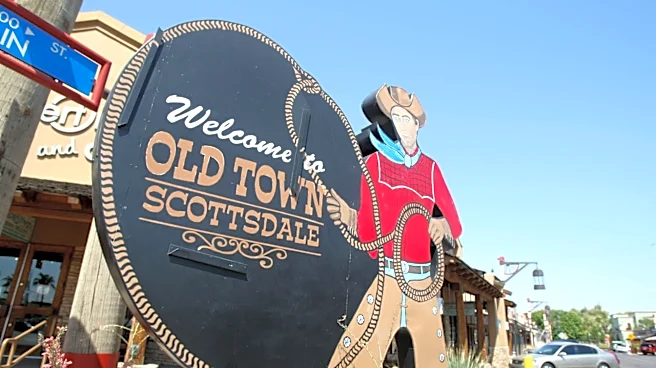



With roughly a month left to court voters, Scottsdale’s City Council candidates are making the rounds on the debate stage while keeping water security and overdevelopment in the spotlight.
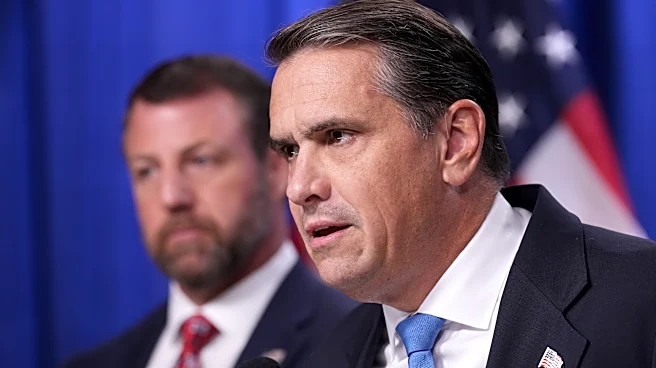
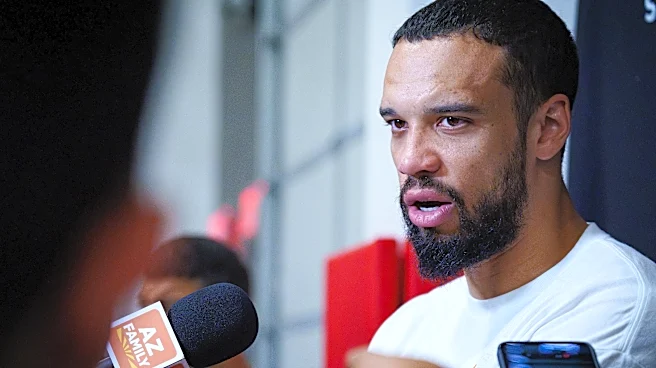
On Sept. 29, two council hopefuls — incumbent Councilmember Barry Graham and Raoul Zubia — participated in the Scottsdale Area Chamber of Commerce’s forum to tout their initiatives and priorities for public office.
The race’s third candidate, former Republican state lawmaker Michelle Ugenti-Rita, could not attend, the chamber said.
The three candidates are competing for two open City Council seats in the Nov. 3 general election, which is serving as a rematch following the summer primary race.
Only incumbent Councilmember Solange Whitehead secured a seat as the
top vote-getter in the July 21 election that saw a crowded field of eight candidates campaign for local office.
While Ugenti-Rita, Graham, Zubia and former Councilmember Bob Littlefield fell short of winning any of the seats outright, they earned enough to move on to the runoff race. Littlefield, however, exited the contest to give his political allies — Graham and Ugenti-Rita — a better chance of gathering votes.
Graham and Ugenti-Rita are continuing to run on a joint conservative platform against Zubia, a self-described political moderate. Throughout the election, each side has attacked the other, sharpening the partisan divide that already plagues the City Council.
During the Chamber’s hour-long question-and-answer session, though, the audience saw a different side to the race: civility.
Graham and Zubia remained cordial, exchanging pleasantries and jokes.
Where they continued to differ was how to address concerns of water scarcity. Scottsdale is bracing for cuts to the Colorado River, which supplies 70% of the city’s drinking water.
Zubia said Scottsdale needs to “stay ahead” of its water and make sure it’s secure. Graham stressed that the city’s water is secure and said the issue is being used by his political opponents to fear-monger. That security, though, he claimed, is being threatened by apartment developments.
Here’s what else the candidates had to say about the issue and other topics, and whether there are any merits to their remarks:
Claim: Multifamily developers hog Scottsdale’s water supply
Throughout the campaign, Graham, along with Ugenti-Rita and Littlefield, have railed against the influx of new apartment complexes that previous City Councils approved.
Their ire has mostly been directed at Axon, the Scottsdale-based Taser maker that’s planning to build an even mix of 1,200 apartments and condos beside its new headquarters.
A political action committee with close business and financial ties to the company spent $335,000 to defeat the anti-development slate of candidates in July’s primary election.
On the issue of overdevelopment, Graham has claimed that more multifamily projects will create additional demand for Scottsdale’s water supply, which is already at risk amid the federal government’s planned cuts to the Colorado River.
“We need to stop approving these massive apartment complexes because I see those as giving away your water and undermining your water security,” Graham said at the chamber forum.
That sentiment, however, stands in contrast to a report that the city’s water department recently presented to Graham and the rest of the council.
Scottsdale’s single-family homes used three times as much potable water as multifamily communities last year, according to Scottsdale Water. In its Sept. 22 presentation on large water users, the department noted that single-family residences used 61% of Scottsdale’s water in 2025, compared with the 20% that multifamily residences used.
Those stats are echoed in a nationwide study by Hazen and Sawyer, an environmental engineering consulting firm.
In the handful of cities it surveyed, including Denver, Phoenix and San Diego, Hazen found that the single-family sector used about twice as much water as the multifamily sector.
Claim: Advanced water purification project removed from budget
Scottsdale’s plan to deliver advanced purified water — recycled wastewater that’s been treated and drinkable — directly to residents’ taps has been the biggest wedge issue in this year’s elections.
Graham and Ugenti-Rita have been skeptical of the technology, making unfounded claims that purified water is contaminated.
Zubia believes the project is a critical strategy for Scottsdale to become more drought-resilient.
“We’ve been saying all night that we need to secure our water,” he said. “That’s the one big way that we do it.”
When asked about his top priorities if elected, Zubia said that the first thing he would do is put the project back into the city’s capital improvement budget, the long-term funding plan for public infrastructure.
Last year, the City Council approved a five-year funding plan to set aside money for the project.
This year, however, the city halted funding for the endeavor while it awaits new regulations and standards for water purification facilities that the Arizona Department of Environmental Quality is finalizing in the coming months. Those changes, the city noted, will affect construction costs for the project, which initially was estimated at $68 million.
In the meantime, the project has been replaced in the city’s budget with a $100 million line item listed as “water source and supply", a placeholder term describing a broader mix of potential projects and initiatives.
It’ll be up to city leaders next year to determine whether to proceed with the advanced purification project.
Claim: Scottsdale’s roads have deteriorated
Graham has campaigned on his and his conservative colleagues’ efforts to fund road maintenance projects, namely improving the pavement along Scottsdale’s streets.
He’s blasted the “years of deferred maintenance” that led to declining pavement conditions.
Reiterating the point this week, Graham noted that Scottsdale had a rating of 80 out of 100 in the 2019 pavement condition survey. That rating dropped to 63 last year.
“When I came to the City Council, our roads had deteriorated,” Graham said. He later added that after years of targeted investments, “I’m sure you’ve seen that your roads are finally catching up.”
The latest pavement condition rating represented a 10-year low, according to the city. Financial figures the city recently provided show that dedicated spending on pavement preservation has fluctuated over the same period.
Between fiscal years 2016 and 2023, the city devoted an average of about $10 million annually toward pavement maintenance. In fiscal year 2017, the city got a $12.5 million boost from a bond earmarked for pavement replacement projects.
Funding toward pavement improvements jumped to more than $17 million each of the past two fiscal years, according to the city.
Here’s how much the city spent annually on pavement preservation projects over the past decade and the pavement condition rating it received each of those years:
- 2016: $9.7 million spent; 75 rating.
- 2017: $21.7 million spent; 75 rating.
- 2018: $10.5 million spent; 78 rating.
- 2019: $9.5 million spent; 80 rating.
- 2020: $10.6 million spent; 78 rating.
- 2021: $9.5 million spent; 71 rating.
- 2022: $9.2 million spent; 66 rating.
- 2023: $11.9 million spent; 65 rating.
- 2024: $17.6 million spent; 64 rating.
- 2025: $17.3 million spent; 63 rating.
Claim: Scottsdale’s free trolley doesn’t go where it’s needed most
During the Chamber’s forum, the candidates were asked what transportation or infrastructure improvements Scottsdale should prioritize.
Zubia said Scottsdale should look at its public transportation, specifically its subsidized trolley service. He said the buses don’t go where they’re needed most, such as the northern end of Scottsdale and the city’s food bank at the Vista del Camino Community Center.
The free trolleys operate Monday through Friday, between 5:45 a.m. and 7:45 p.m., and run on 20-minute intervals along three fixed routes between north and south Scottsdale.
Annual ridership reports from Valley Metro show that the city’s Mustang route in north Scottsdale is sparsely ridden. In 2025, it accounted for roughly 16% of the program’s overall ridership.
In south Scottsdale, the city’s trolley runs along Roosevelt Street. While it passes by the food bank, between Miller and Hayden roads, there’s no designated stop there.
For Graham, his transit priority is to keep Scottsdale a “car-first” city.
In previous campaign events, he and his fellow conservatives on the council questioned whether Scottsdale is overpaying for a program they believe is hardly being used.
Since 2021, ridership aboard the free trolleys increased by nearly 86%, according to Valley Metro.
Over the same period, Scottsdale provided an annual average of about 260,000 rides. Each ride costs the city about $13, according to financial and transit reports.
“It’s outrageous,” Graham previously said of the “astronomical” cost.
Claim: Scottsdale leaders approved homeless shelter
While Graham and Zubia were civil throughout the forum, they disagreed over Scottsdale’s abandoned project at the Paiute Neighborhood Center.
At issue was whether city leaders three years ago OK’d a $16 million initiative to build a homeless shelter or to construct affordable housing at the center near Osborn Road and 66th Street.
Graham said it was the former while Zubia argued it was the latter.
In September 2023, the City Council voted 5-2 to develop 28 new affordable apartment units, providing housing at “low or no cost” to seniors and those with disabilities, the city announced at the time.
Graham and Councilmember Kathy Littlefield — Bob Littlefield’s wife — gave the two dissenting votes. They raised concerns over mixing cash from different funding sources and questioned whether the effort could exacerbate homelessness in Scottsdale.
COVID-era recovery dollars provided by Maricopa County and the federal government were set to cover half of the costs, while money from the city’s general fund paid the rest.
The plan was to build the units on the second floor of a separately planned community assistance office, which the city was building with money from a voter-approved 2019 bond program.
Months after first approving the housing project, however, city leaders scrapped it. The county said much of the money was instead going to be spent on projects in the West Valley, city officials explained to the council in February 2024.
Last year, the city presented an alternative use of its pandemic relief money: a partnership with the Scottsdale Unified School District to provide two years of rental subsidies and wrap-around services to local students and their families who are experiencing homelessness.
The council is set on Oct. 6 to tap the nonprofit Scholar Fund to run the Rental Initiatives Supporting Education, or RISE, program.
The Arizona Republic's candidate forum set for Oct. 12
The last day to register to vote in the Nov. 3 election is Oct. 5.
Ballots go out Oct. 7, allowing early voters to mail in their ballots or drop them off at some locations.
On Oct. 12, the public is invited to attend The Arizona Republic’s candidate forum in the Scottsdale City Hall’s Kiva at 3939 N. Drinkwater Blvd.
The Republic's First Amendment Reporter Taylor Seely will moderate the hour-long event that's scheduled to begin at 3:30 p.m.
Before the forum, voters can submit questions that could be asked of the candidates. Republic staff will screen the questions.
What do you want us to ask? Submit questions for the Scottsdale council candidate forum
Like this story? Get more East Valley news straight into your email inbox by signing up for our free weekly East Valley Newsletter, which comes out Wednesdays.
Shawn Raymundo covers Scottsdale and Maricopa County. Reach him at sraymundo@gannett.com or follow him on X @ShawnzyTsunami.
This article originally appeared on Arizona Republic: Are Scottsdale candidates' claims on water and roads true? We checked