





A third-party candidate for Arizona governor, who was already cast aside by her own political party for being a "sham" candidate, may be forced to repay public dollars that funded her campaign.
Gubernatorial candidate Risa Lombardo and two others are in hot water with the Arizona Citizens Clean Elections Commission, which handles campaign finance enforcement and distributed about $4.7 million in public dollars to the trio of candidates months ago.
Now, the commission may try to get its money back.
An investigation by commission Executive Director Tom Collins, as well as reporting by The Arizona Mirror, have raised questions about whether Lombardo, Republican gubernatorial candidate Scott Neely and Green Party secretary of state candidate Duwayne
Collier met the legal requirements to receive public financing. The commission heard initial findings of the investigation at its Aug. 27 meeting, and unanimously directed Collins to continue his probe and report back at its September or October meetings.
The commission also considered a matter that has dogged Republican Corporation Commission candidate Ralph Heap's campaign, who said through an attorney he would withdraw from the public funding program.
Collins found what he described as a "suspicious pattern of donations" when probing Lombardo, Collier and Neely's qualifying contributions. To qualify for public funding, the candidates must collect a set number of $5 contributions from voters to show support for their campaign.
Several pieces of evidence raised doubt that those $5 contributions actually occurred, Collins said.
Lombardo, Collier and Neely had many overlapping donors, including individuals with no history of political giving. Collins said there were 5,000 unique contributors among the three candidates, and of those, 74% gave to more than one candidate. Nearly half of the donors gave to all three, he said.
"We're not talking about 20 people or 50 people or even a few hundred people that might have been at a state party meeting," Collins said. "We're talking about something like 3,000 names associated with multiple candidates."
Each candidate deposited those contributions as a lump sum into their bank accounts, rather than in smaller or $5 increments that could show progress over time, without reporting any expenses paid to collect the contributions, Collins said.
In letters to the campaigns, Collins also cited reporting by The Arizona Mirror, which contacted some of the duplicate donors. The Mirror's Aug. 25 story found at least six donors who said they never gave the $5, though their signatures were on the campaigns' qualifying paperwork.
"All of these facts together, which as you can see are largely substantiated, represent a level of suspicious activity well beyond what I have witnessed in 16 years as the Commission's executive director," Collins wrote.
Collins wrote that it raised eyebrows that Lombardo and Collier shared so many similar donors, when their party — which typically would help candidates reach the threshold to qualify — had turned against them.
The Clean Elections Commission is the state's foremost voter education agency, and was created by a public vote in 1998. It is predominantly funded by the $5 contributions collected by candidates and a 10% surcharge on civil penalties and criminal fines.
The candidates or their attorney have rejected claims of wrongdoing.
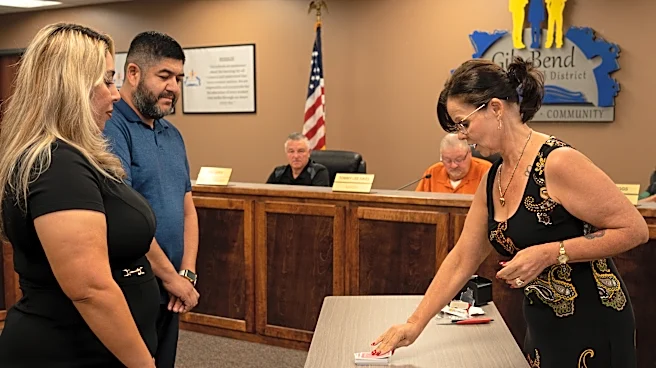
"I really don't have any comment on the matter," Neely told the commission members, who gathered for the Aug. 27 meeting on Zoom. "Haven't engaged in any fraud, and I'm confident I will be exonerated soon."
Neely, a GOP candidate for governor who came in third out of four in the July primary election, could be on the hook for $1.1 million if the commission votes to make him repay it in coming months. Collier may have to repay $739,000, and Lombardo between $1 million and $2.9 million depending on what the commission decides.
But Timothy La Sota, a Republican elections attorney who represents Lombardo and Collier, said they did nothing wrong and shouldn't have to repay anything. He attacked Collins' investigation as putting forward a "conspiracy theory."
"It is a complete smear and it leaves these candidates in limbo," La Sota said, noting that Lombardo and Collier are still on the November ballot. The time to raise questions about whether they were qualified was before they received public funding, La Sota said.
They followed the law, using volunteers to collect the qualifying contributions, La Sota said, though Collins had suggested that many volunteers would be a massive undertaking. The volunteers and candidates collected the contributions in cash, which was easier, leading to the lump sum deposits at the banks, La Sota said.
The commission's inquiry raises questions about the process to verify those contributors, which is handled by the Secretary of State's Office and county election officials. The Secretary of State's Office in May sent a message to Clean Elections, confirming election workers had verified Lombardo's qualifying contributions.
The scrutiny on Lombardo and Collier adds to pushback they've faced from their own party.
Both claim to be Arizona Green Party candidates, but the party has disavowed them and actively opposes their election. Lombardo is a former longtime Republican who the Green Party alleged is trying to do nothing more than siphon votes away from the two major party candidates in November.
In a state where election victories often come down to a percentage point or two, losing those votes could be decisive.
Reach reporter Stacey Barchenger at stacey.barchenger@arizonarepublic.com or 480-416-5669.
This article originally appeared on Arizona Republic: Clean Elections probes 'suspicious' public campaign funding pattern