

Arizona water officials reviewing a federal plan to curb Colorado River use say it has “fundamental legal flaws” but also offers a short reprieve from worse cuts and time to adapt or find new sources.
The Arizona Reconsultation Committee met Aug. 24 to provide its member representatives from the state’s water users a rundown of a federal plan that calls for reducing the state’s 2.8 million-acre-foot share of the river by 760,000 acre-feet per year, with the prospect of deeper cuts after two years. Members of the state’s river advisory panel voiced both anger and resolve for using the two years to adapt and find new water sources.
“The people of Arizona deserve an Arizona solution,” said Sandy Fabritz, a committee member representing Phoenix-based
mining company Freeport-McMoRan. She urged Gov. Katie Hobbs and state legislators to fund programs to develop other water sources. “We need money.”
State water officials were processing news that Nevada is suing the federal government over the plan, but said they were not prepared to comment further about that lawsuit or about Arizona’s own legal plans. They have pushed the government to adopt the cuts that the U.S. Department of the Interior announced on Aug. 21 for the next two years, but reject a 10-year framework that the government published asserting authority to as much as double those cuts in future years.
“We believe this ignores (Colorado River) Compact requirements that are reinforced by federal law,” Arizona Water Resources Director Tom Buschatzke said.
Buschatzke said he was still reviewing Nevada’s lawsuit and could not say whether Arizona would act similarly, though he said the state reserves its right to sue.
Arizona 'still reviewing' Nevada's lawsuit
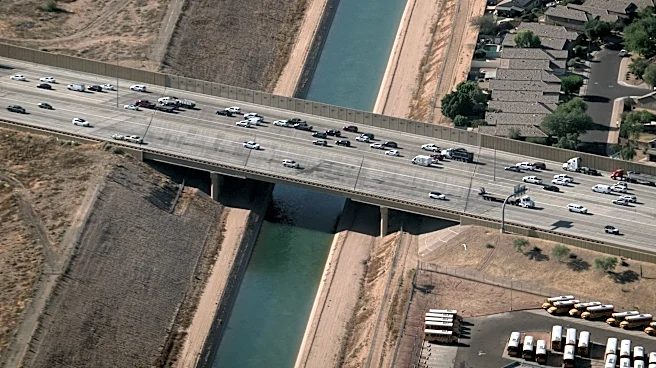
The cuts will fall hardest on the Central Arizona Project, which pumps river water to the Phoenix and Tucson areas. CAP officials have said the prospect that federal officials could cut 3 million acre-feet from the Lower Basin states of Arizona, California and Nevada in future years could cause the canal to go completely dry. The system provides more than a third of the tap water in metro Phoenix.
CAP General Manager Brenda Burman said the federal framework has legal flaws, but her first priority is to formalize the plan that would cap the Lower Basin’s cuts at 1.25 million acre-feet for the next two years.
“We're still reviewing the lawsuit,” Burman said. “We do believe Nevada, California, and Arizona want to reach a Lower Basin agreement.”
In Arizona, that will mean enlisting the state Legislature in signing off before the new water year begins in October.
Beyond those two years, Buschatzke said, Arizona objects to the federal plan. “Arizona does not consent to annual reductions up to 3 million acre-feet,” he said, and the state has not agreed to a framework lasting longer than two years. Instead, it seeks to negotiate a more favorable program that would ask more of Upper Basin states to solve the shortage after two years.
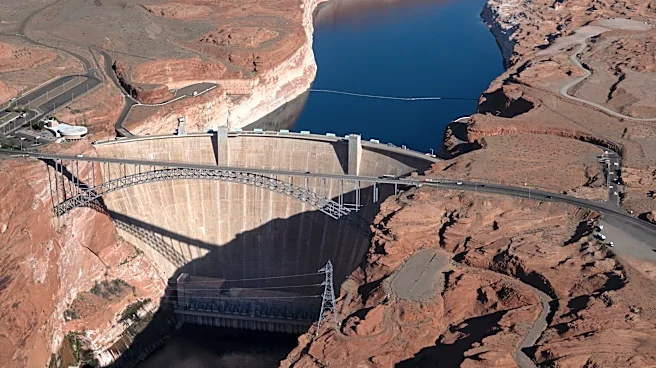
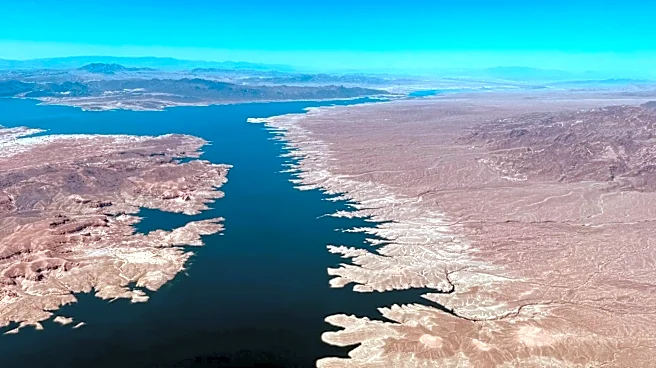
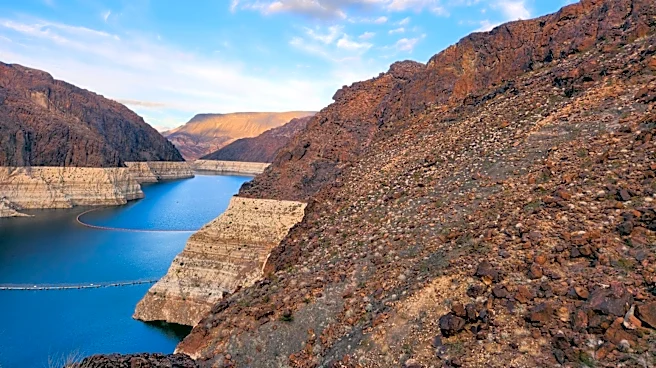
For now, the federal plan seeks voluntary conservation from Upper Basin water users and proposes to release some water from Rocky Mountain reservoirs to help keep Lake Powell from crashing. Though those reservoirs are much smaller than Lakes Powell and Mead in the Southwest, they currently hold more than 6 million acre-feet.
CAP board president Terry Goddard said that’s more water than Powell and Mead have available above their dam outlets, and the federal plan should insist on using more from them to fulfill the Southwest’s river compact allocations.
“What Nevada did in many ways is strike the alarm,” Goddard said. “I think Arizona has many parallels to what they’re saying in that lawsuit.”
Cities will need financial aid for infrastructure
Nevada’s lawsuit argues that Interior did not analyze the economic impact that larger cuts envisioned in the 10-year framework could impose on Las Vegas.
Phoenix’s water policy adviser, Max Wilson, warned federal officials that their decision to impose cuts solely on the Lower Basin puts them on the hook for billions of dollars in infrastructure that the region will need to adapt.
Arizona cities need to shift to pumping excess river water that they previously stored in the ground, and will need new pipes and water treatment plants to move the water. The state has also begun reviewing augmentation plans such as exchanges with California or investment in seawater desalination plants.
The federal government's responsibility to help its citizens weather this decision “doesn’t start with M’s,” Wilson said. “It starts with B’s,” as in billions.
“And we’re going to need a lot of B’s in order to build the amount of infrastructure that is necessary here.”
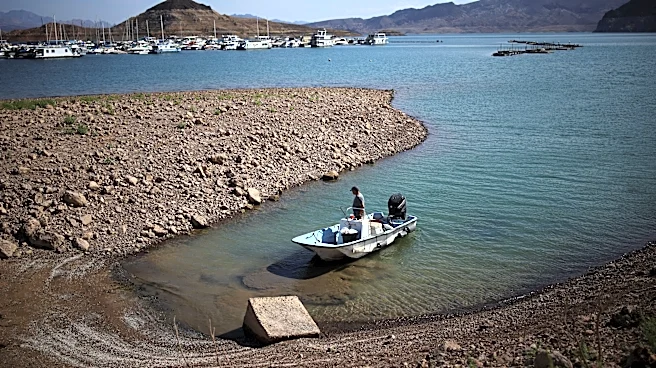
The federal plan includes the option for Arizona and the Lower Basin to conserve an extra 700,000 acre-feet of water voluntarily, with or without compensation, to keep Lake Mead from reaching critical levels over the next two years.
The sooner water users agree to deals under that plan, the easier it will be for the state to argue against even deeper cuts in coming years, Buschatzke said. His department is discussing options with tribes, cities, irrigation districts and other users around the state.
Brandon Loomis covers environmental and climate issues for The Arizona Republic and azcentral.com. Reach him at brandon.loomis@arizonarepublic.com.
Environmental coverage on azcentral.com and in The Arizona Republic is supported by a grant from the Nina Mason Pulliam Charitable Trust.
Follow The Republic environmental reporting team at environment.azcentral.com and @azcenvironment on Facebook and Instagram.
This article originally appeared on Arizona Republic: Arizona can survive Colorado River cuts for now, but will need help