



Turning Point is still reeling from the assassination of its co-founder, Charlie Kirk, one year ago.
But the financial motor that built the Phoenix-based conservative group into a national powerhouse has kept on turning.
Turning Point is raising more political campaign money than ever before, and appears to be coasting on an outpouring of financial support after Kirk’s Sept. 10, 2025, death, records show.
The group’s fundraising has outpaced even the blockbuster 2024 election cycle, when the organization became a core part of Republicans' swing-state campaign apparatus.
Turning Point PAC Inc., the group’s federal campaign wing, raised $7 million that year with Kirk in charge. This year, with months to spare before the 2026 midterms, it has raised $9
million.
The group’s nonprofit wing also reported a spike in revenues — $115 million for fiscal year 2025 — about 30% more than the prior year. Tax filings for the latest fiscal year weren’t yet public.
That's on top of a sizable $81 million endowment, as of June 2025.
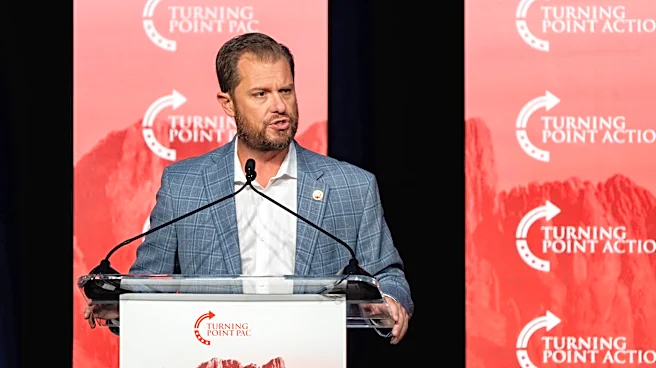
Eric Chalmers, a Democratic political consultant based in Phoenix, argued the coming election year could be a test of the group's campaign work, even if their finances are still riding high. Many of the GOP nominees in Arizona’s top statewide races are endorsed by Turning Point. Some have leaned heavily on the group’s network and campaign apparatus.
"They own this slate," Chalmers said. "Whatever the result is, it’s theirs."
Kirk’s death raised questions about the future of the organization he built. Turning Point’s sprawling national network was buoyed by his relationships with President Donald Trump, donors, and legions of young conservatives who watched his livestreams or attended his in-person conventions for right-wing youth.
Since Kirk's death, Turning Point’s network has toyed with different political arenas and income streams. In April, the group waded into a usually sleepy Arizona utility election, shortly after one of the candidates involved donated six-figures to Turning Point. Ahead of the November midterms, they have partnered with a political group funded in part by a gambling company to fund a get-out-the-vote operation in swing states.
Much of the group's campaign work has been routed through companies owned by state Sen. Jake Hoffman, a former Turning Point spokesperson, an unusual arrangement for a public official that analysts say raises conflict-of-interest questions.
Hoffman defended his work in a lengthy statement to The Arizona Republic, saying he is proud of his team and that those revenues translate into concrete election services such as media placements, printing and advertising.
Turning Point spokesperson Andrew Kolvet said the organization is still growing. He’s “incredibly proud” of how his team has navigated the last 12 months.
“They've hunkered down and … just thrown themselves into the work of fighting for Turning Point to make sure we didn't squander any of the momentum and just the outpouring of love that came after Charlie was killed,” Kolvet said.
“This is a team that wasn't afforded the opportunity to grieve, and they had to keep moving forward.”
The organization put some of those resources into additional staff. Turning Point was hiring nationwide for nearly 450 jobs ahead of the midterms, according to an analysis by The Republic.
Turning Point said in a memo provided to The Republic that it has more than 1,200 employees across its organizations.
The group’s federal campaign wing also has seen an uptick in grassroots donations of less than $200. Those totals rose from about $1.2 million in 2024, up to $3.2 million so far in 2026.
Turning Point’s campaign footprint has continued to spill across state lines. The group’s political wing has spent money supporting candidates aligned with Trump all over the country this year, such as Rob Adkerson in Georgia and Michael Alfonso in Wisconsin.
As in past years, many of the group’s top donors are not public. The tax-exempt status of the group’s political wing, Turning Point Action, has allowed it to skirt fundraising disclosures by arguing the money it had received was meant for social welfare purposes, even if it was ultimately spent supporting Republican candidates and causes.
It’s a common tactic used by many of the country’s big political spenders.
“That essentially hides where the original money came from,” said Brendan Glavin with the nonpartisan research group OpenSecrets.
Kolvet declined to say how much money Turning Point’s network was planning to spend on the midterms, but said in a memo the group has received cash from more than 1 million donors. A majority of donors gave less than $1,000, according to the group.
How a former Turning Point leader personally benefits from its spending
One of the beneficiaries of Turning Point’s spending used to be part of their leadership team.
Companies owned by Hoffman, who represents Queen Creek in the Arizona Legislature, have raked in more than $1 million in campaign spending so far this election cycle, records show.
Hoffman makes money as a political operative, giving advice to candidates and implementing the nuts-and-bolts of their campaigns. His firms handle services such as road signs, fundraising text messages and general consulting.
During the ongoing midterm election cycle, his book of business is stout and it leans almost exclusively on candidates backed by Turning Point.
One of Hoffman’s companies has collected roughly $120,000 from state Superintendent of Public Instruction candidate Kimberly Yee; $88,000 from Secretary of State candidate Alex Kolodin; and $4,000 from James Rogers, a lawyer with ties to Trump who is running for the state House. All three candidates were also endorsed by Turning Point.
Another of Hoffman's firms ran a $350,000 campaign to support the Turning Point-backed gubernatorial candidate, U.S. Rep. Andy Biggs.
Some of Hoffman's biggest windfalls have come from Turning Point’s political expenses at the federal and state level. The group’s super PAC and its state-level counterpart have paid Hoffman’s firms more than half a million dollars for services like text messaging, digital ads and advertising campaigns since the beginning of 2025.
The transactions from Kolodin and Yee previously were reported by Axios.
Hoffman has generated business off of Turning Point’s local initiatives. His firm collected thousands from the successful 2025 effort to unseat Republican Julie Spilsbury, a former member of the Mesa City Council who campaigned against Trump.
In his written statement to The Republic, Hoffman said his personal income makes up only a fraction of his organization's spending. The "overwhelming majority" of the money is ultimately spent on concrete campaign work like printing, production and advertising expenditures, he said.
Hoffman's firms this year have fallen under heightened scrutiny.
Tyler Montague, a conservative political consultant who has been critical of Turning Point, recently filed paperwork with Arizona’s Citizens Clean Elections Commission tying Hoffman to allegations of campaign finance violations by Ralph Heap, a Republican candidate for the Arizona Corporation Commission. Complaints submitted to Clean Elections had alleged discrepancies in Heap's spending on campaign road signs and signature-gathering efforts.
Hoffman has denied any allegations of wrongdoing.
The activity raises questions about the extent of the influential Arizona lawmaker’s political consulting work as he serves in public office.
Glavin, with OpenSecrets, said it’s not uncommon for political operatives to set up their own firms and become campaign vendors, even developing a book of business from many candidates on the same side of the aisle. There's no Arizona law expressly banning elected officials from doing paid political work.
But the scale of the activity is unusual for a sitting public official.
“Usually there’s a separation between the people who are doing all the campaign work, and the actual elected officials,” Glavin said. “Maybe that’s not illegal, but certainly it raises a lot of questions."
Montague argued in an interview that Hoffman’s political consulting business raises potential conflicts of interest even if the behavior is legal.
“His ecosystem here is in advising and supporting these candidates,” Montague said. “There’s some on the record. But we don’t know what else there is.”
Hoffman argued those criticisms subject him to a double standard.
"Arizona has a citizen legislature by design," he wrote. "Lawyers continue practicing law. Realtors continue selling homes. Contractors, doctors, ranchers and small business owners all serve while running businesses in their respective industries."
His firm, 1Ten LLC, is "a creative agency that competes for business and wins it on our results," Hoffman wrote. "We build campaigns for candidates and causes who defend the forgotten men and women of this country. I am proud of my team's incredible work."
Turning Point is a player in both 2026 and 2028
As they build up their operations for the 2026 cycle, Turning Point’s leaders are already looking ahead to the next presidential race in two years.
Kolvet said the group is putting “significant” financial and staffing resources into the 2026 election and is "light-years ahead” of where they were in 2024. The group is focusing on three states — Arizona, Nevada and New Hampshire — plus a handful of races elsewhere, such as Wisconsin and Iowa, Kolvet said.
He declined to share more about the numbers or staff, saying it’s proprietary.
“It's safe to say we're pouring a significant amount of significant resources, both from dollars and a finance standpoint, as well as a staffing resources standpoint,” he told The Republic.
Turning Point already set down its marker for the 2028 presidential race. Erika Kirk, Charlie Kirk's widow who now leads the organization, endorsed Vice President JD Vance last fall, three years before Election Day, and the group is openly positioning themselves to be a core part of Republicans' campaign apparatus.
“We're investing in states, and not just in races,” Erika Kirk told supporters at the organization's AmericaFest conference in downtown Phoenix in December.
“We are locked in and mission-focused for both 2026 and 2028.”
Laura Gersony covers politics for The Arizona Republic. Contact her at Laura.Gersony@usatodayco.com or 480-372-0389.
Stephanie Murray covers national politics and the Trump administration for The Arizona Republic and azcentral.com. She co-hosts “The Gaggle,” The Republic’s weekly politics podcast. Reach her at stephanie.murray@usatodayco.com, on X and TikTok @stephanie_murr and on Instagram @stephaniemurray.news.
This article originally appeared on Arizona Republic: Turning Point fundraising still riding high 1 year after Kirk death