


Amy Haley's daily routine with her 13-year-old son is playing endless "guessing games, trying to find out what Caleb needs and what Caleb wants."
The Chandler boy was born with a rare genetic condition that impacts his intellectual and physical abilities. He's unable to walk or speak and has daily seizures.
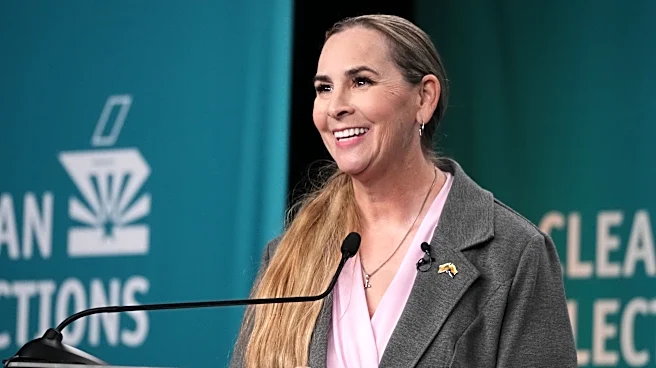
"He is the greatest accomplishment of my life," said Haley, a spokesperson for the disability advocacy group Raising Voices Coalition. "Watching him grow and mothering him is such an incredible challenge and incredible victory. We want to keep him in our home as long as possible. This is the place that provides him the most dignity."
A Stanford graduate who formerly worked in the finance industry, Haley can afford to stay home and take care
of Caleb in part because the state of Arizona pays her for the work. She's one of thousands of Arizonans who take part in the state's Arizona Parents as Paid Caregivers program. She estimates she earns about $26,000 a year from the state for about 30 hours a week of care. The state pays for other services for Caleb and if not for Haley, would pay someone else to provide the care he needs.
Yet concerns about the program's exploding cost to taxpayers threaten to bring a reduction in potential hours for parent caregivers, despite the benefit to people like Caleb. A fresh audit of the service drew new attention to its problems and whether it can be sustained over the long term.
The biggest takeaway of the audit is that Arizona could have saved up to half a billion dollars over the past year by following a 2025 law that implemented cost-saving measures. The report doesn't detail what would happen to disabled children when their services get slashed.
No easy fix exists for the “out-of-control” program, Senate Majority Leader John Kavanagh told The Arizona Republic. He believes an “in-depth” hearing needs to take place early next year to hash out the problems.
“This is really an economic and social issue that has to be worked out, Kavanagh, a Fountain Hills Republican, said. “I hope it's not going to be as expensive as it's going down the road.”
Politics have made the issue more difficult. The Republican legislative majority Kavanagh represents and Democratic Gov. Katie Hobbs, who leads the agencies that manage the parent payments, have been at odds on how to deal with the soaring cost.
The issue blew up in 2025 when Republican lawmakers resisted funding needed to keep the program running. Worried parents advocated for it at the Capitol in packed hearings rooms as Republican and Democrat lawmakers squabbled over what to do.

Rep. David Livingston of Peoria eventually sponsored a bill that would add a needed infusion of $122 million but included a number of cost-saving measures. Rep. Julie Willoughby, a Chandler nurse who's running for the state Senate this year, emerged as a strong advocate for disabled children in the 2025 fight over funding, voting against her Republican peers to force changes to Livingston's bill and telling parents it would be her "hill to die on" after emotional testimony in an hours-long committee hearing.
Hobbs signed the law with an emergency clause that allowed it to take effect immediately. Besides imposing new guardrails, it also required the Auditor General’s Office to investigate.
The July 30, 2026, audit report that sprang from the 2025 law criticized the state’s Medicaid program, known as the Arizona Health Care Cost Containment System, and the Arizona Department of Economic Security. for failing to roll out the guardrails.
Kavanagh acknowledged the complexity of the issue and said he believed it was possible children might end up in foster homes, costing the state more money in the long run.
"I toured a couple of those homes," he said, adding he was stunned by the level of intellectual and physical disability he saw in some of the children. "This is a big problem. The solution is not going to be cheap."
What the audit showed
One piece of the 2025 law required the agencies to implement a new assessment “tool.” It's a questionnaire or form that takes into account the child’s needs and criteria for the service, which is called Arizona Parents athe s Paid Caregivers.
The audit detailed how Hobbs, with fellow, Democrat Attorney General Kris Mayes' legal approval, stopped the use of the assessment tool about two weeks after it started. The mo,ve came after three legal advocacy groups threatened litigation unless the policies in the law were adopted as administrative rules.
Instead of moving forward with the new tool, Hobbs directed AHCCCS to submit its own series of guardrails for approval through the state's emergency rulemaking process, according to a news release at the time. That process is still ongoing.
Suspending the tool’s use meant the state “did not realize a potential cost reduction of between $133 million to $493 million in fiscal year 2026," the audit report stated.
The estimate assumed the tool would result in 30.5% to 45% fewer average hours of parental care paid for by the state. Yet "without additional cost-control measures, the Department may be at increased risk of future shortfalls and may need additional emergency supplemental appropriation requests," the audit found.

The audit also found AHCCCS and DES "had not fully implemented required cost-control measures for the parent caregiver program, risking additional cost increases and shortfalls."
Other guardrails not put in place, or enforced only recently, include a 40-hour weekly cap and a process to ensure payments aren’t issued when the child isn't home or for care between the hours of 10 p.m. and 6 a.m. without prior authorization.
Auditors advised looking at cost-control measures in other states for ideas and found the agencies didn't always check member assessments for accuracy, "which could result in incorrect payments, potential waste, and service authorizations that do not match members’ needs."
Roberta Harrison and Michael Wisehart, who are the heads of state’s Medicaid program and the Department of Economic Security respectively, pushed back on the findings in the report's appendix.
They cited the threat of litigation, data limitations, federal law and other reasons in explaining why they didn't implement the guardrails. The Economic Security agency also refused to deploy some guardrails, including a check that members and their parents have lived in the state for at least six months, saying the agency already used a method to assess residency.
'Runaway' program?
Parents of adult children with disabilities have been paid by the state since at least 1988, but the scope of the program widened to include minors in 2020 when caregivers became scarce due to the pandemic.
The federal government approved a state request to reimburse parents for the care under the Medicaid program. But when federal funds ran out in July 2024, the state had to pay the bills.
The actual cost of Arizona Parents as Paid Caregivers alone isn't known — it's embedded in the greater pool of money for the state's attendant care or habilitation services.
Together, including the parent caregiver program, the services cost the state $77 million in 2019, when only parents of adult children could be paid. That rose to nearly $615 million in 2025 — a 696% increase, according to the audit. Most of the increase started in 2023, and officials believe the parent caregiver program is the largest portion of the increase.
The program drew attention in mid-2023 as it moved from a temporary status to permanent. A state Medicaid program slideshow from mid-2023 shows the parent caregiver program had 3,469 minor children.
By fall of 2025, the new audit revealed that about 8,800 children were receiving care from a parent.
Livingston, who chairs the House Appropriations Committee, told The Arizona Republic the service is a “runaway program” and “the most out-of-control program that the governor manages.” He also said the program is rife with fraud, adding that The Republic should talk to AHCCCS about that. The agency didn't immediately comment on the allegation.
Livingston took heat in 2025 when he suggested children’s services would simply have to be cut. When parents protested in large numbers, he and other GOP lawmakers agreed to a compromise: the law signed by Hobbs adding supplemental funds for the program and required the new guardrails.
Christian Slater, Hobbs' spokesperson, said in a text message Livingston "is making baseless claims of fraud to justify his pursuit of slashing healthcare for Arizona kids with disabilities."
The audit found no evidence of fraud, he pointed out, but Hobbs has worked "relentlessly" to root out fraud in other areas.
Hobbs will continue to "implement safeguards to protect taxpayer dollars while also defending healthcare from politicians like Representative Livingston who want to rip it away from Arizonans with disabilities," Slater said.
Asked about the response from Hobbs' office, Livingston texted: "It will be great to see the results of 40 hour limit."
Caregiving could cost more without parents, GOP lawmaker says
Besides the state leaders, parents and activists in the disability community, Willoughby is also critical of the audit. She ultimately voted for the 2025 law after changes were made including more reporting opportunities for families to prove their needs but said the audit report's potential savings was presented "without critical context."
Willoughby told The Republic the higher spending was due in part to more people obtaining or performing services their children need. State workers determine the hours parents work, not the parents, she said, and the system already ensures every service hour assessed meets the criteria for "extraordinary care," the term for care that exceeds typical child rearing and housekeeping.
"Undelivered authorized care is not savings. It is unmet need," Willoughby said, adding that if parents weren't providing the service, the state would still pay another caregiver "at the same cost or possibly more."
Reach the reporter at rstern@arizonarepublic.com or 480-276-3237. Follow him on X @raystern.
This article originally appeared on Arizona Republic: Arizona's paid parent caregiver program fight reignites over audit