






Avondale residents will have a new way for the city and some health insurance companies to legally recognize their committed personal romantic relationships.
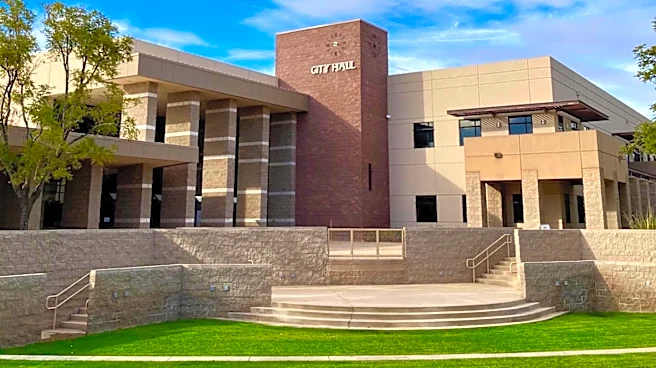
The Avondale City Council passed an ordinance that would issue and register domestic partnership certificates for qualifying couples in the city, effective Oct. 15.
A domestic partnership is a way for a couple to have their relationship legally recognized without the financial responsibilities like filing joint taxes and combining assets, said Benjamin Taylor, an Arizona-based civil rights attorney.
Domestic Partnerships were introduced in the late 1970s to legally recognize same-sex couples at the municipal level at a time when same-sex marriage was outlawed throughout most of the country,
according to The Gay and Lesbian Review. The ordinances were passed as a way to allow same-sex couples to get the same benefits of married straight couples.
Even though it was created as a framework for same-sex couples, "when marriage was not legally available to them," it is still widely used by straight couples in states and cities where domestic partnerships are recognized, said Ramiro Sarmiento, national press secretary for the Human Rights Campaign, a national LGBTQ+ advocacy organization.
The Avondale ordinance would allow couples with a Domestic Partnership Certificate to visit one another at healthcare facilities, such as hospitals, within the city, according to the ordinance. The certificate can also be used by the couple to get benefits such as health insurance if it is recognized by the company they choose.
The ordinance was proposed the Avondale City Clerk's office after it received requests from couples looking to get domestic partnership certificates, said Avondale City Clerk Marcella Sarmiento. The clerk's office did not issue domestic partnership certificates before the ordinance passed.
The ordinance passed on a 6-0 vote during the consent agenda portion of the meeting, reserved for routine, non-controversial decisions.
The stated purpose of the ordinance was to "create a way to recognize committed relationships."
To get a certificate of Domestic Partnership, Avondale couples must meet the following criteria, according to the ordinance:
- Both people reside within the city of Avondale
- Both people have shared a residence for a year
- Neither person is currently married or in another domestic partnership or civil union
- Each person is legally competent and at least 18 years old
- The individuals are not related by blood "closer than would bar marriage in the State of Arizona.
The Domestic Partnership is terminated when one of the partners dies or a "Notice of Termination of Domestic Partnerships" is filed at the city clerk's office, according to the ordinance.
There is a $50 fee to obtain a Domestic Partnership Certification.
Phoenix has a similar program to Avondale's, but it is only for residents of Phoenix. Tucson and Sedona have civil union ordinances that are not limited to residents of the cities.
Why don't people just get married?
Marriage does offer more financial security and other benefits, but "some people might need that financial security and may say, 'I don't want to mix my assets with my spouse's, in case something happens,'" Taylor said. "'I just want to make sure that we're separated, but we still love one another.'"
Couples typically seek out a domestic partnership because they do not want to go through the "legal red tape" of marriage, but they still want to "feel safer and feel more secure within the law," Taylor said.
The strengthening of domestic partnerships is critical as many LGBTQIA+ advocates fear the overturning of Obergefell vs. Hodges, the Supreme Court decision that legalized same-sex marriage nationwide, Ramiro Sarmiento said.
It is especially important in purple states like Arizona, where "the political winds are more changeable than in other states," Sarmiento said.
"We are oftentimes led to believe our rights are more secure than they are," Sarmiento said.
Domestic partnerships can serve as a tool for straight couples to form a family and "a safeguard" for same-sex couples who live in purple states where their marriage may not be constitutionally protected, Sarmiento said.
"It is not as secure as people have been led to believe because one single decision from the Supreme Court could do away with it, and then we're left with whatever mechanisms are left in the state that you live in or the city that you live in, which is why it is so important that cities and states continue to engage on the issues affecting the community," Sarmiento said.
David Ulloa Jr covers the Southwest Valley communities of Avondale, Buckeye, Goodyear, Litchfield Park and Gila Bend. Reach him at david.ulloa@azcentral.com. Follow him on Instagram & X, formerly Twitter, @davidulloa_ii.
Like this story? Get more West Valley news straight into your email inbox by signing up for our free weekly West Valley Newsletter, which comes out on Tuesdays.
This article originally appeared on Arizona Republic: Arizona city to recognize domestic partnerships. Why now?