



Clare was blue, her blood losing oxygen as her heart stuttered then stalled. Her husband Aaron was barely conscious, his face bleeding into a puddle near his head, trying but unable to move.
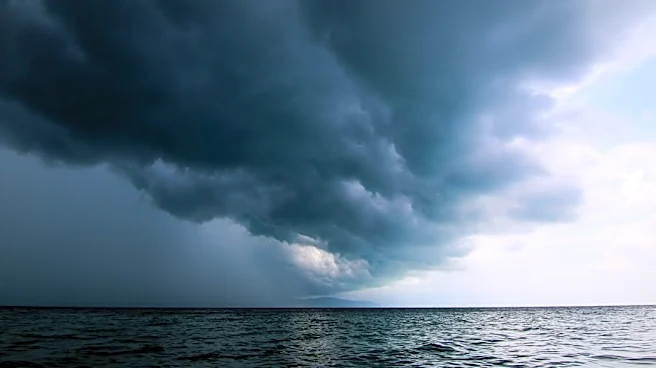
Moments earlier they were walking. Her arm was around his back in an embrace to keep them bothunder an umbrella. They laughed about his pants getting wet in the rain. Her shoes were making squishing sounds.
Then they were on the ground.
They lay in a drizzle on the West Orange Trail in Winter Garden. Aaron moaned, blinked water from his eyes, he thought he’d been shot or that they were hitby a speeding car.
But it was lightning.
Florida is the deadliest state for lightning strikes
On Sept. 2, just after 7 p.m., Clare and Aaron Walenga were struck by one of Florida’s deadliest natural killers.
It had already taken
the lives of five people in Florida. It would kill another less than a week after the Walengas were hit.
Florida annually racks up the most lightning-related deaths. Since 2006, 105 people have succumbed to the random threat.
The number of those injured is less known. National Lighting Safety Council specialist John Jensenius said the best estimate is that about 9 out of 10 people typically survive a lightning related injury, but fewer live to talk about the kind of strike that stops hearts from beating.
After Florida September lightning strike, 'I thought I was dying'
“There was no thunder or lightning and all of a sudden, I’m on the ground. It’s hard to explain the amount of pain I was in,” said Aaron Walenga, 48. “It didn’t make sense to me at the time. I thought I was dying.”
Clare was dying.
Michael Sachetti Weyand and Amber McManus had just passed the couple on the trail before the lightning struck. They saw a fence sparking and then Aaron and 43-year-old Clare face down.
Sachetti Weyand, who was with several others trying to help the couple, said he had never done CPR before.
“But in that moment, I knew I had to start,” he said in a WESH Channel 2 news story. “Clare was blue. I’d never seen anyone that color before.”
A person is struck by lightning in one of several ways including a direct hit or when it hits a nearby object and travels through the ground. If it strikes metal — a superconductor for electricity — it can reach a person that way. It can even jump from one object to another.
Aaron Walenga said he doesn’t know if lightning hit the fence that witnesses saw sparking or a nearby tree and arced to the umbrella he was holding.
A direct strike is the least common, but its effects can be similar to the others.
What will a lightning strike do to your body?
An electric pulse sears through the nervous system causing concussion, temporary loss of hearing or eyesight, or brain injury. The heart may stop beating entirely, or pump erratically. Blood vessels clamp down.
Electricity also travels on top of the skin, causing burns by heating metal, such as a belt buckle, or turning sweat or rain to steam that singes exposed skin.
“Lightning targets the electrical conduction system of the heart, and we have a very complex electrical conduction system responsible for coordinating the heartbeat,” said Jason Sevald, assistant director for emergency medicine at Palm Beach Gardens Medical Center. “The nervous system can also be affected, which could speak to the whole-body pain.”
And there can be lifelong effects.
“Your nerves aren’t meant for that much energy going through them,” Jensenius said.
Mark Johnson, of Hobe Sound, was fishingon the beach with his son Matthew Anderson in June 2020 when they noticed a thunderstorm bubbling to their north near Stuart. They decided to pack up and thought they were being prudent leaving before the storm started.
Then the lightning came, hitting them while they walked back to their car on Jupiter Island. Anderson was knocked unconscious.
Johnson’s heart stopped. First responders, including a beach lifeguard, began CPR. They later reported that there were no obvious wounds on Johnson, but some of his body hair had been singed.
Johnson, now 70, woke up in the hospital several days after the lightning strike thinking he was recovering from an operation. He had a burn from his shoulder to his hip where he believes the lightning entered and exited his body before jumping to his son.
Six years later, he still has trouble with his short-term memory and can’t feel the bottom of his feet. But he plays golf and fishes. He said his lifestyle hasn’t changed.
“When I tell the story I do get emotional,” Johnson said. “It was fairly traumatic. I was dead 15 minutes.”
CPR on his wife for an agonizing 3-4 minutes before, finally, a full breath
Aaron was in a fetal position, his back to Clare, when the Winter Garden police responded to the Sept. 2 call about a lightning strike.
Sachetti Weyand had been doing CPR for 3 to 4 minutes on Clare, he said in the video posted on WESH TV. It’s physically demanding, pushing on someone’s chest hard enough to squeeze the heart into pumping blood. He was getting tired. When another Good Samaritan readied to give Clare mouth-to-mouth resuscitation, Clare suddenly took a huge breath.
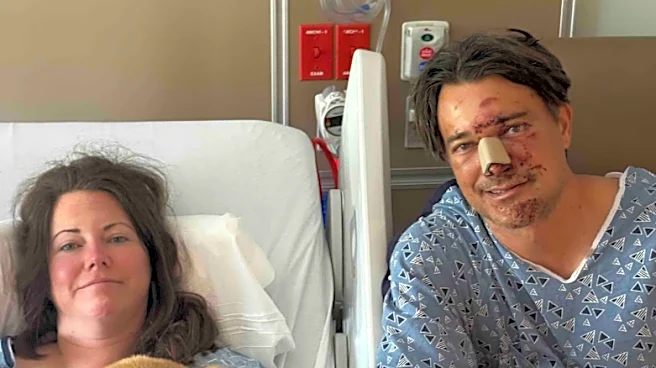
Aaron, who broke his nose and cut his head when he fell, said he began to realize what was going on when he was loaded into the ambulance. He still didn’t know what had happened to Clare, but he knew it was bad from what he was hearing on the first responders’ radios.
He had a burn on the arm that was holding the umbrella and under his watch where the metal touched his skin.
At some point in the hospital, he was asked if he wanted an update on his wife.
“I wasn’t in the head space to handle that update,” he said. “I wasn’t in a place to hear she was dead.”
But the CPR had saved her.
Lightning strikes can cause memory loss, lingering pain
Clare woke up in the hospital the day after the lightning strike with short term memory loss. She hit her head when she fell, suffering a bad concussion.
“I asked by brother the same five questions over and over again and didn’t know I was doing it,” she said.
Three weeks after the strike, Clare said she is still experiencing a stiff neck, pain in her shoulders, forearms, wrists and hands. She describes it as a constant throb. She will do physical therapy and is still home from her job as an admissions associate at Foundation Academy in Winter Garden.
Aaron, who retired from the U.S. Air Force in 2024 after 24 years of active-duty service, is already back to work. He is an upper school electives teacher at the academy.
The couple have three children aged 12 to 15 years old.
“We are devout Christians and we do live with a lot of purpose,” Clare said. “I wouldn’t say this reset our priorities, but we know God is not through with us. He brought us back and there’s a greater purpose and mission that we have now.”
Kimberly Miller is a journalist for the USA TODAY NETWORK FLORIDA. She covers weather, the environment and critters as the Embracing Florida reporter. If you have news tips, please send them to kmiller@pbpost.com. You can get all of Florida’s best content directly in your inbox each weekday by signing up for the free newsletter, Florida TODAY, at palmbeachpost.com/newsletters.
This article originally appeared on Palm Beach Post: Florida couple never heard thunder before lightning put them on the ground