



Google DeepMind’s artificial intelligence forecast for the path of Hurricane Isaias beat every other weather model’s prediction, notching another win for machine learning over physics.
But there was a chink in the AI armor when it came to tropical cyclone strength withDeepMind flubbing landfall muscle, although it got intensity readings right earlier in the forecast in a move that initially puzzled meteorologists.
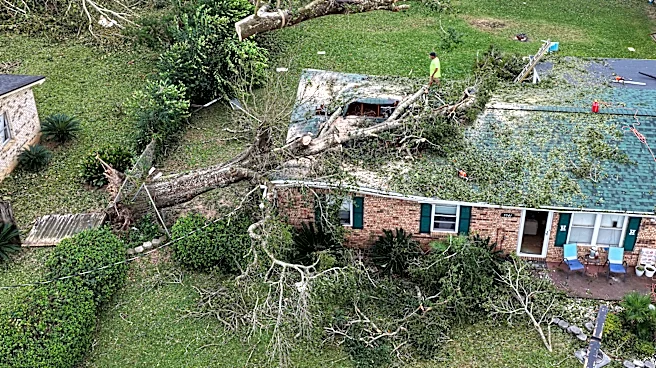
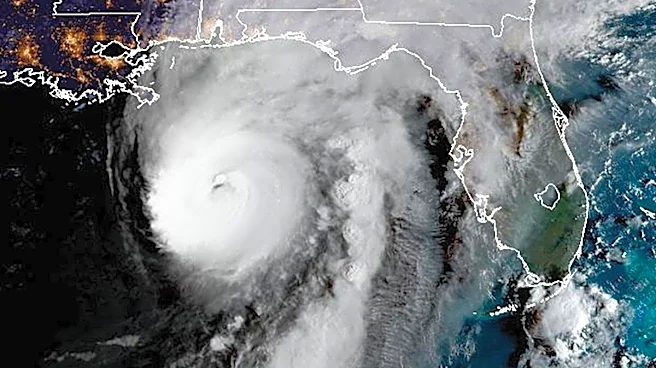
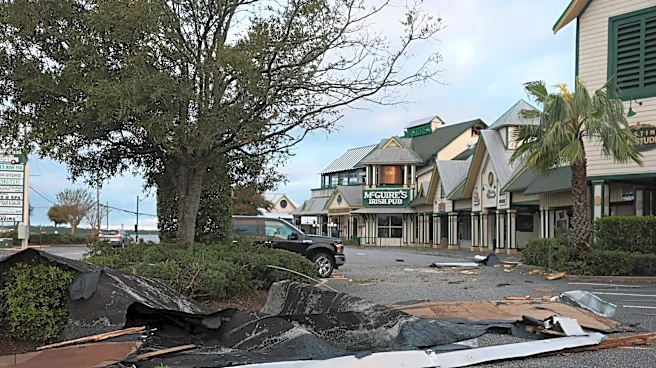
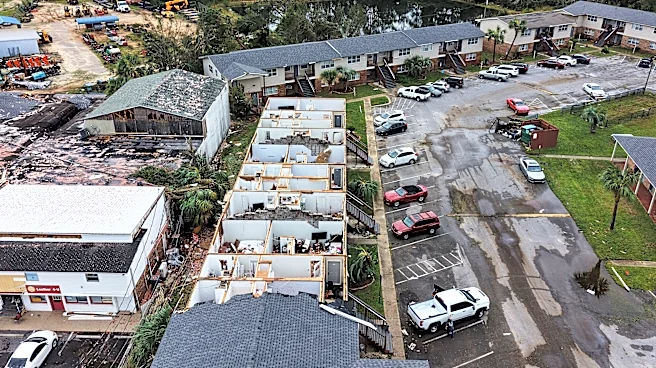
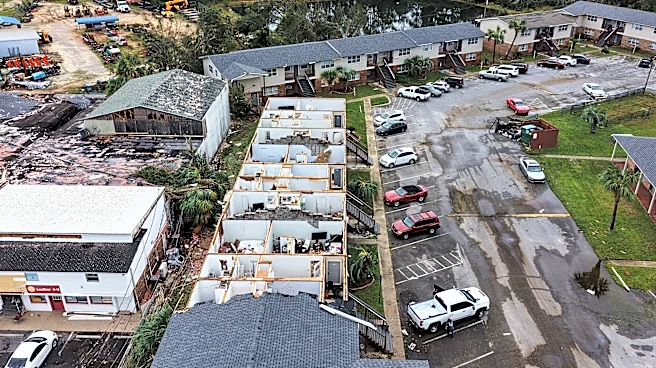
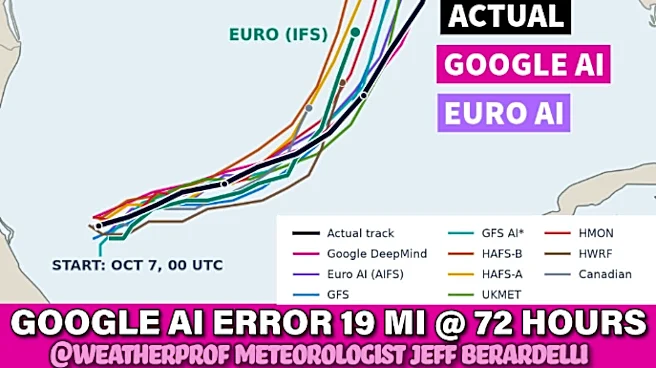
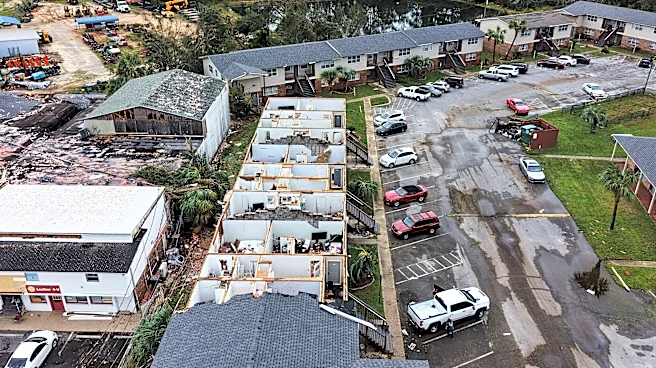
DeepMind was off only 19 miles during the final 72 hours before Isaias plowed into Destin on Oct. 9 with 105 mph Category 2 winds, according to data crunched by Jeff Berardelli, chief meteorologist and climate specialist with WFLA TV in Tampa Bay.
The European model’s AI forecast was runner up with a 36-mile error. The American GFS model was third
with a 119-mile error.
While the Euro AI pointed to Pensacolain the hours ahead of landfall, DeepMind aimed at a spot in between Pensacola and Destin, closer to where the storm actually hit.
“For track, it was just right on,” Berardelli said about DeepMind. “Also, the Euro AI. For days, they both showed the storm track leaning east and it did exactly what those two models showed. They nailed both track and timing.”
The National Hurricane Center began using artificial intelligence models, including Google DeepMind, operationally in June 2025 but had used them internally prior to that. By the end of the 2025 season, which saw three Category 5 storms, meteorologists were more than impressed with DeepMind’s skill.
“From a pure forecasting standpoint, I can’t think of another model during my time that so immediately jumped to the head of the class by such a wide margin,” said James Franklin, a former National Hurricane Center specialist unit branch chief.
How does the AI model differ from traditional forecasting methods?
Conventional physics-based weather models use a set of complex equations to mimic the current state of the atmosphere after being fed information from a multitude of sources including old-fashioned weather balloons and state-of-the-art satellites.
The equations are crunched looking at ingredients such as temperature, moisture levels and wind speed. They are run repeatedly and the solutions, eventually, can be put together to form a prediction of the future.
They don't learn, and they don't rely on climatology — what previous storms did in similar circumstances.
AI models take a snapshot of the current atmosphere and look at what has happened previously over decades and around the globe. They learn the relationships of the different elements, such as pressure, wind and temperature. Then they make a prediction, learn from that prediction, and recalibrate if necessary.
They don’t know how gravity works or how heat transfers from the ocean to the atmosphere, or the physics of raindrops.
Franklin said there were so few forecasts for Isaias’s limited time in the Gulf it’s not the best storm to examine for model performance, but that the breadth of DeepMind’s success since its development is outstanding.
“The interesting question is why does it do so unbelievably well for track but only really, really good for intensity?” Franklin said. “It’s one of the top intensity models we have but for track it’s just amazing. It’s almost incomprehensible to me.”
Meteorologists are still learning the nuances of AI storm forecasting
For meteorologists, the AI models are an unknown. They can’t see what’s under the hood so don’t know why they perform so well or why they stumble when they do.
Brian McNoldy, a senior research associate at the University of Miami’s Rosenstiel School of Marine, Atmospheric, and Earth Science, called AI models a “black box.”
“That’s really the fundamental struggle for me and many others; are we comfortable with trusting a model that does extremely well if we don’t know WHY it does so well?” McNoldy said in an email.
Part of the challenge in forecasting Isaias was the wind shear. Meteorologists knew at some point the shear would be strong enough to chip away at the hurricane. But there was also a sweet spot where the shear could help it deepen, ventilating it like opening a flu on a fireplace.

Berardelli said meteorologists generally thought Isaias would strengthen in the Southern Gulf where the wind shear was lightest and weaken in the Central Gulf as the shear increased.
In contrast, Google DeepMind showed the storm strengthening in the Central Gulf.
“And it turned out Google DeepMind was exactly right,” Berardelli said. “It diagnosed where the intensification was going to happen perfectly.”
What was the area where Google DeepMind faltered with Hurricane Isaias?
But DeepMind faltered when Isaias came closer to the coast. It weakened the storm too fast and had it as a low-end Category 1 hurricane about 90 minutes before landfall.
Berardelli said the unusual occurrence of a sting jet that pushed the worst winds and thunderstorms to the western side of Isaias at landfall may have contributed to DeepMind’s intensity error. The sting jet, or something like it, happened when dry air was entrained in the storm causing a rush of upper-level winds to gush toward the surface.
“Before Isaias, I would say DeepMind was one of the first models I’d look at. Now, I would say it’s the first,” Berardelli said. “It’s proven its worth over and over again.”
Franklin cautioned, however, that people shouldn’t look only to AI models. The official human-produced NHC forecasts and the top-performing consensus models still best AI at most points in the forecast.
“You don’t want people to think they can’t make mistakes, even for track,” Franklin said about AI models. “Yes, it is better than anything else we have but it’s not perfect.”
Kimberly Miller is a journalist for the USA TODAY NETWORK FLORIDA. She covers weather, the environment and critters as the Embracing Florida reporter. If you have news tips, please send them to kmiller@pbpost.com. You can get all of Florida’s best content directly in your inbox each weekday by signing up for the free newsletter, Florida TODAY, at palmbeachpost.com/newsletters.
This article originally appeared on Palm Beach Post: Google AI crushed forecasts for Isaias but missed a crucial detail