



The prospect of a permanent no-fly zone over President Donald Trump’s Mar-a-Lago estate has West Palm Beach residents and leaders worried that what once seemed like a temporary problem could become a way of life.
Federal records show that the U.S. Secret Service has requested permanent flight restrictions
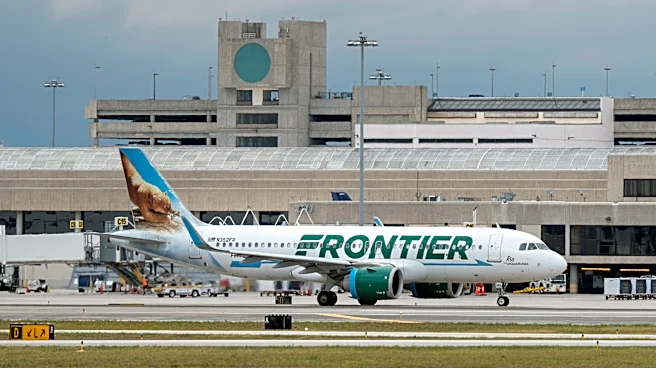
over Mar-a-Lago, and that the Federal Aviation Administration has outlined steps it could take to put them in place.The agency has yet to file notice of those plans, but the possibility is raising concerns about the long-term effects on West Palm Beach neighborhoods north of the traditional flight path, which officials say have become subject to near-constant flights that cause vibrations, noise and soot.
“I’m very disappointed,” said Nancy Pullum,
a resident of the El Cid neighborhood and chairperson of the Citizens’ Committee on Airport Noise. “It will definitely have a negative impact on an area that was never contemplated to be part of that flight path. I guess we wait and see.”
Pullum said that if the no-fly zone becomes permanent and endures beyond the end of Trump’s presidency, the county government will have to consider significant noise-abatement measures for President Donald J. Trump International Airport.
“It definitely points to looking at other options for the future,” she said. “It looks to me like we’re going to have to explore other options and noise abatement procedures.”
County Commissioner Gregg Weiss, who lives in the city’s Flamingo Park neighborhood and is running for West Palm Beach mayor, said the altered path that the majority of flights now take affects more residents than the traditional one.
He said the federal government should find some compromise that balances safety and life-quality concerns.
“The change they made has impacted many more residents than in the past,” he said. “We 100% support the protection of our president, but this needs a real hard look at what could be done, understanding the need to protect the president but how we minimize the impact to residents.”
Local leaders and residents were angered by new temporary restrictions issued last year that decreed that no aircraft can operate within a mile of Trump's home, regardless of whether he is there. Those are set to remain in place through Oct. 20.

Those year-round restrictions came on top of the existing, longtime restrictions when Trump is in town, which restrict flights for up to 30 miles from Mar-a-Lago.
Palm Beach County, West Palm Beach and Palm Beach have gone to court to block the new year-around restrictions, which they contend were put into place too quickly and without enough public input or consideration for historic sites and recreational areas.
As that legal challenge works its way through court, the prospect of federal efforts to make the year-round restrictions permanent raise new questions.
In a July affidavit, the Secret Service's deputy director said that security threats to Mar-a-Lago are considerable and persist regardless of whether Trump is in town.
"The airborne threat vector at Mar-a-Lago is persistent and substantial," Deputy Director Matthew C. Quinn wrote. "As the location of a primary residence of the President, from which he frequently conducts the business of the government's highest office, that threat vector must be mitigated to the extent possible whether he is in residence or not."
The FAA recently created permanent restrictions over Trump’s New York City home, which take effect in October.
West Palm Beach Mayor Keith James declined to comment through a spokesperson on the possibility of permanent restrictions, citing the city’s ongoing litigation.
A permanent no-fly zone could achieve Trump’s decades-old aim of quieter skies over his estate, now a private club.
Before he was elected president, Trump tried unsuccessfully for years to have flights directed away from Mar-a-Lago, even filing lawsuits against Palm Beach County.
City Commissioner Stephen Sylvester, who represented neighborhoods in the city’s South End, said the year-round restrictions have meant “qualify-of-life disruptions for thousands of residents in those neighborhoods.”
City leaders have been left out of a decision that affects thousands of residents, he said, and the federal government needs to allow “a lot more open dialogue.”
“To me that’s unacceptable,” he said. “We really need the Secret Service and the FAA to sit down with (city residents and leaders).”
Andrew Marra is a reporter at The Palm Beach Post. Reach him at amarra@pbpost.com.
This article originally appeared on Palm Beach Post: What happens to West Palm if Trump’s no-fly zone becomes permanent?