







Live in a home governed by a condominium, co-op orhomeowner's association? Have questions about what they can and cannot do? Ryan Poliakoff, an attorney and author based in Boca Raton, has answers.
Question: If a condominium board has decided not to use zoom (video) for their board meetings, can they prohibit an owner from zooming on their own to owners for viewing purposes only — and therefore not be subject to the new law which requires recordings of meetings to be stored? Doesn’t Chapter 718 give an owner the right to record if they don’t interfere with the board proceedings and can provide the board with the list of owners who sign on for the zoom? Signed, J.G.
Dear J.G.,
As you may know, the Condominium Act was amended to expressly authorize
condominiums to conduct meetings via Zoom (or by other videoconferencing methods), but also to provide elaborate rules when they do so. For example, there must be a physical location where owners can attend in person, along with the Zoom option; the hyperlink to the meeting must be posted on the notice; and they must keep a recording of the meeting (among other requirements).
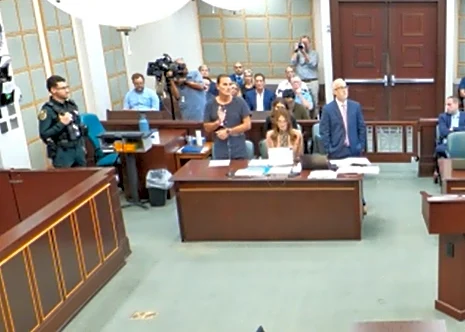
However, all of this relates only to the association itself conducting the meeting via Zoom. If an owner attends a meeting in person and opens Zoom on their phone, allowing other owners to join in and watch, that does not implicate the statutory requirements in any way.
Now, the board would not have to recognize any of the owners who are present on that third-party Zoom call (allow them to speak to the agenda items, for example), but the existence of that call also would not require the board to keep a recording of the meeting, or to comply with the statutory Zoom rules in any other way.
Whether the board could prohibit owners from conducting their own private Zooms during meetings is a bit less clear. I personally think that they could.
Yes, owners have a right to record meetings, but setting up a videoconference of a private meeting is quite different than simply recording it. The board would have no control over who is watching that Zoom and it could put private personal information at risk. I have not encountered a situation quite like this yet, but I would likely recommend that a client prohibit owners from broadcasting the meeting.
Question: I am a unit owner in a small condominium. I recently learned that several owners refuse to provide the management company with copies of keys to their units. Years ago, the association authorized the management copy to request keys for safety and emergency reasons, which is especially important during the off-season when owners are away for an extended period.
What are the guidelines, rules and/or state laws governing the association’s authority in this matter? On a related topic, what specific duty of care does the association and the management company have in the safekeeping unit owners’ keys? Signed, M.B.
Dear M.B.,
The Condominium Act provides that every condominium association has an irrevocable right to enter a unit if necessary to protect the common elements or other units, or to make repairs to the common elements or other condominium property.
Of course, it’s quite a bit easier to do so when the association has a copy of each unit’s key, but the lack of those keys would not change the association’s access rights.
If a condominium declaration or the association’s rules require owners to provide the association with keys and an owner fails to provide one, they run the risk that the association will be obligated to dismantle their lock or break down their door in the event they need to enter. And, if faced with an emergency, the association should absolutely do so.
Keep in mind the association is not obligated to inform owners if they need to enter their unit. Most associations do so, as a basic courtesy, but it’s not as if the association would be precluded from simply breaking down the door if a flood or fire were to occur and the association did not have an owner’s key. When I lived in a condominium, I was happy to give the association my key because I knew the situations where entry might be required, and that allowing the association to access my unit was as important for my own protection as for the rest of the building and owners.
With respect to safekeeping, everything the association does is going to be based on a reasonableness standard — did the association act in a manner that a similarly-situated, reasonably prudent association would act?
If the association takes all the keys and dumps them in a shoebox tucked inside the manager’s unlocked drawer, that would almost certainly not satisfy such a standard. But there are many good ways to safeguard owner property, up to and including elaborate computerized lockboxes that record every time a specific key is removed from the box. That’s a great system for a big condominium, and a reasonable investment. Otherwise, a simple safe, with very limited access, might instead be a reasonable way to go. There’s no one-size-fits-all solution—it all comes down to the individual situation.

Ryan Poliakoff, a partner at Poliakoff Backer, LLP, is a Board Certified specialist in condominium and planned development law. This column is dedicated to the memory of Gary Poliakoff. Ryan Poliakoff and Gary Poliakoff are co-authors of "New Neighborhoods — The Consumer’s Guide to Condominium, Co-Op and HOA Living." Email your questions to condocolumn@gmail.com. Please be sure to include your location.
This article originally appeared on Palm Beach Post: Can board stop you from streaming condo meetings on your own phone?