


With less than two weeks until Election Day, the incumbent Republican in the U.S. Senate contest race has a "slight lead" but the race for governor is "too close to call," according to a veteran Florida pollster.
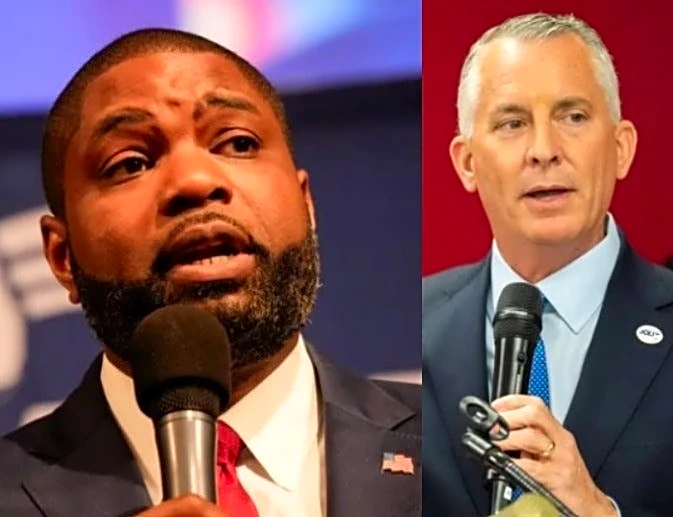
A new poll has Republican incumbent U.S. Sen. Ashley Moody ahead of Democratic nominee Angie Nixon by four percentage points (49%–45%), and GOP candidate for governor Byron Donalds over Democrat David Jolly by just two points (49%–47%). That's within the poll's almost 3-percentage-point margin of error.
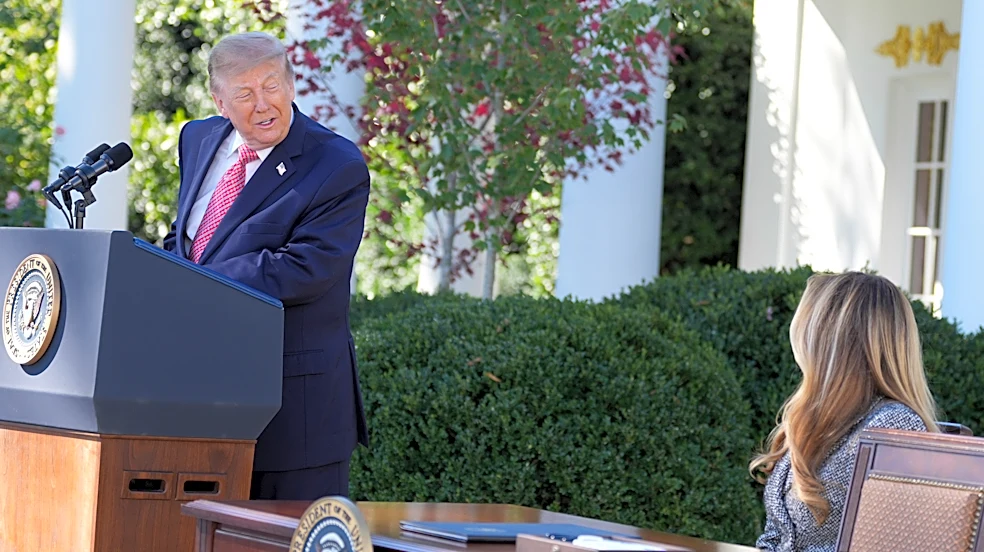
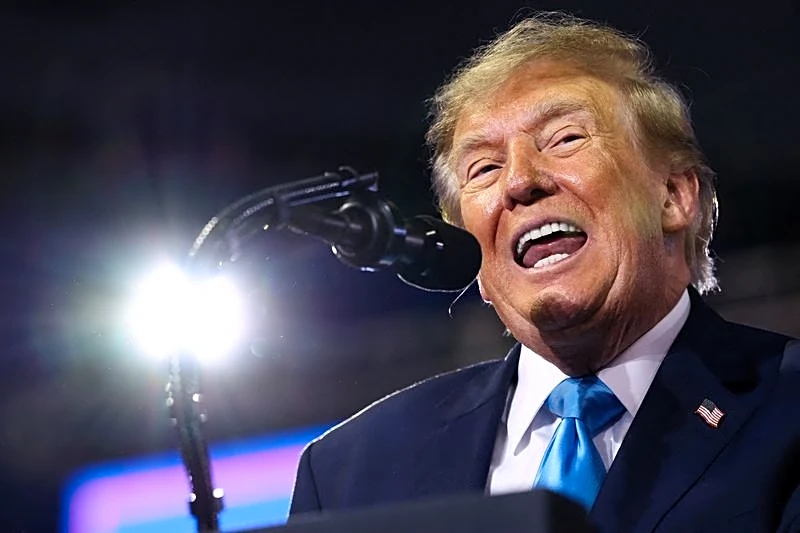
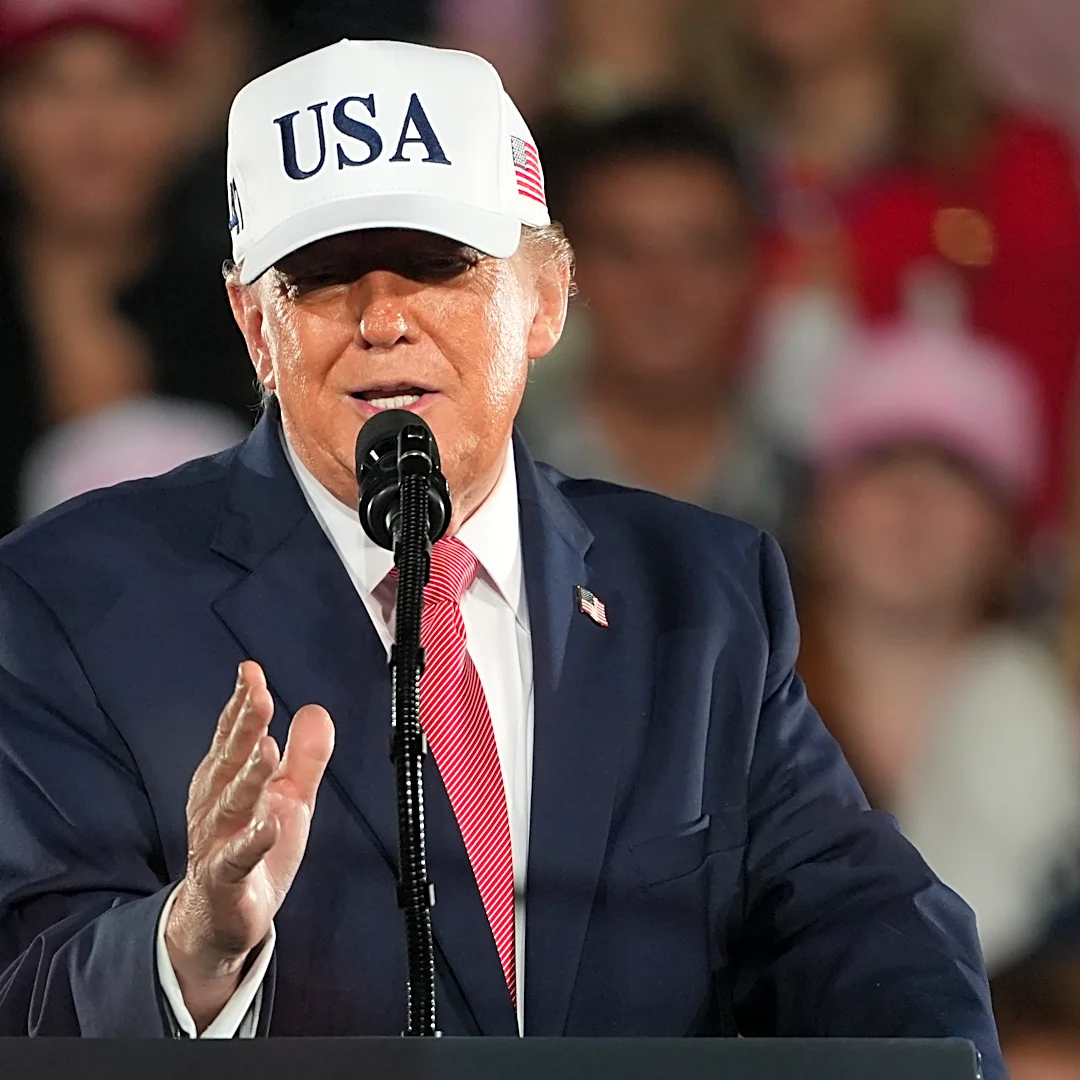
The results come as former President Bill Clinton made his first midterm-election appearance, campaigning for Jolly on Tuesday, Oct. 20 in Pembroke Pines. Clinton assailed President Donald Trump for “treating allies like dirt” and embracing
Russian President Vladimir Putin.
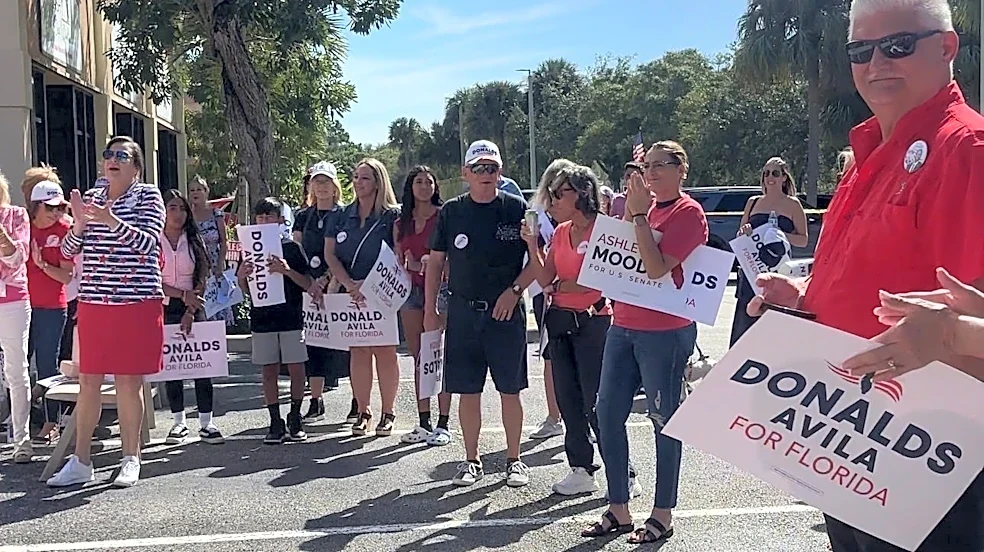
Also on Tuesday, Donalds was in Brevard County as part of his statewide bus tour, appearing alongside prominent Brevard County Republicans. Donalds implored the crowd of around 150 people to get out and vote, promising repeatedly not to allow Florida to become like California or New York.
The statewide survey of likely midterm election voters by the Public Opinion Research Lab (PORL) at the University of North Florida (UNF), led by Sean Freeder, was made public Oct. 21.
"These margins have narrowed notably since PORL’s July poll, which had Donalds up by five points and Moody up by eight," the poll's news release said. The general election is Nov. 3, with early voting already underway in 35 of Florida’s 67 counties.
These results also come as the polling average for the Senate race stands at 50.4% to 43.3% – about a 7-point margin in favor of Moody. For governor, it's 49.9% to 44% – a roughly 6-point gap – in favor of Donalds. Both averages are according to Decision Desk HQ.
"We've seen evidence that things really have been tightening in the direction of Democrats doing better," Freeder said in an interview with the USA TODAY Network. Jolly would be the first Florida Democrat elected governor since 1994 should he win in November.
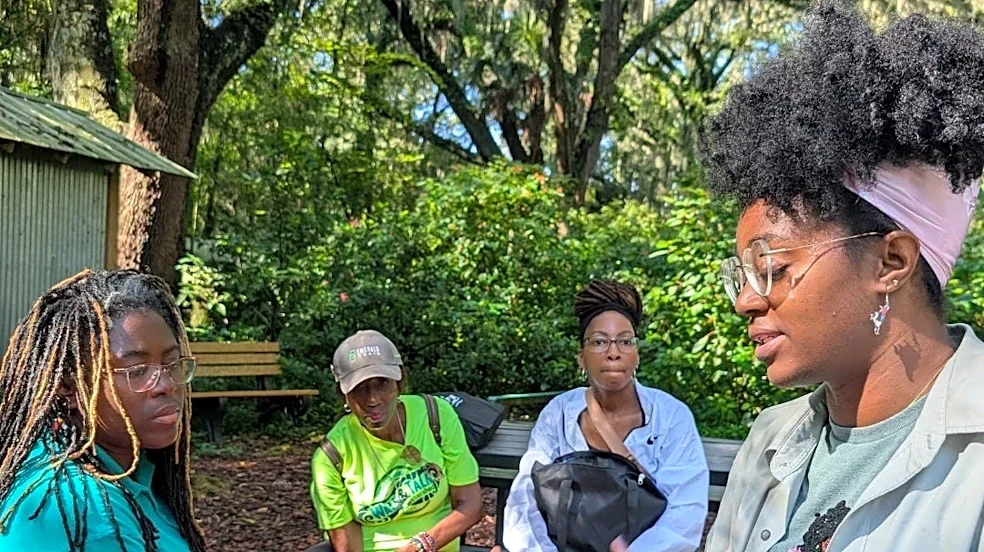
Donalds, who would be the nation's fourth elected Black governor if he wins, "has been putting a lot of effort into trying to do outreach with Black voters," he added. "We find very little evidence, if any, that that's helping him much.
"He's doing about as well with Black voters as Moody, which is to say, he's not doing very well at all. I think they have about nine and 10% respectively, of the African American vote."

Other highlights from the poll findings include:
• Crossover voters – Eleven percent of Republicans say they plan to vote for Jolly, while 5% of Democrats say they support Donalds. Independent voters favor Jolly by 16 percentage points. And independent voters favor Nixon by 15 percentage points.
• Who do voters trust more on issues? – On data centers, the split is Jolly 41%, Donalds 37%. On controlling the cost of living, it's Jolly 43%, Donalds 42%. On wrangling the high cost of property insurance, Donalds leads by 43% to Jolly's 38%.
• The 'labeling' effect – About a quarter of voters said Republican attacks tying Nixon to the Democratic Socialists of America make them less likely to support her. Meanwhile, 30% said Democratic attacks linking Moody to the Hope Florida controversy make them less likely to support the senator.

• An enthusiasm gap? – The poll found stronger enthusiasm among Moody supporters than among supporters of the other statewide candidates. Seventy-nine percent of Moody voters say they support her strongly, compared with 77% of Donalds voters, 75% of Nixon voters and 67% of Jolly voters.
• Property tax measure still underwater – Amendment 3, which would increase homestead property tax exemptions, currently has 50% support, below the 60% threshold needed to pass. Thirty-five percent oppose it and 14% remain undecided.
As always, Freeder said, predictions based on polling can always twist according to turnout.
“Polling ultimately can’t tell us with certainty what turnout will end up looking like,” he said in the news release. “Particularly strong turnout by Democrats would make Jolly slightly favored, and Nixon more competitive; on the other hand, if Republicans are more enthusiastic than expected, Moody and Donalds could have more comfortable victories.”
About this poll
- Pollsters interviewed 1,471 likely Florida midterm voters from Oct. 12-19, 2026. Voters were considered “likely” if they participated in at least one of the 2020, 2022 or 2024 general elections. Respondents who said they probably or definitely would not vote in the 2026 midterms were screened out. The margin of error is plus or minus 2.81 percentage points.
- The survey was conducted by live interviewers over the telephone using phone numbers from the September 2026 Florida voter file. Interviews were conducted in English and Spanish, with calls placed between noon and 9 p.m. and up to five callbacks attempted.
- Results were weighted in two stages to reflect Florida’s likely midterm electorate. The weighting accounted for education, party registration, age, race and ethnicity, sex, geography and past voting behavior.
- The poll was self-funded by UNF’s Public Opinion Research Lab, which was solely responsible for the survey’s design, data collection and analysis. The poll report notes that sampling error is only one potential source of error and that all public opinion research is susceptible to real-world, unmeasured error.
For more information, go to unf.edu/coas/porl.
John Pacenti contributed from West Palm Beach. This story also contains previously published reporting. Jim Rosica is a member of the USA TODAY Network – Florida Capital Bureau. Reach him at jrosica@tallahassee.com and follow him on X: @JimRosicaFL.
This article originally appeared on Palm Beach Post: Florida governor race 'too close to call' new poll shows