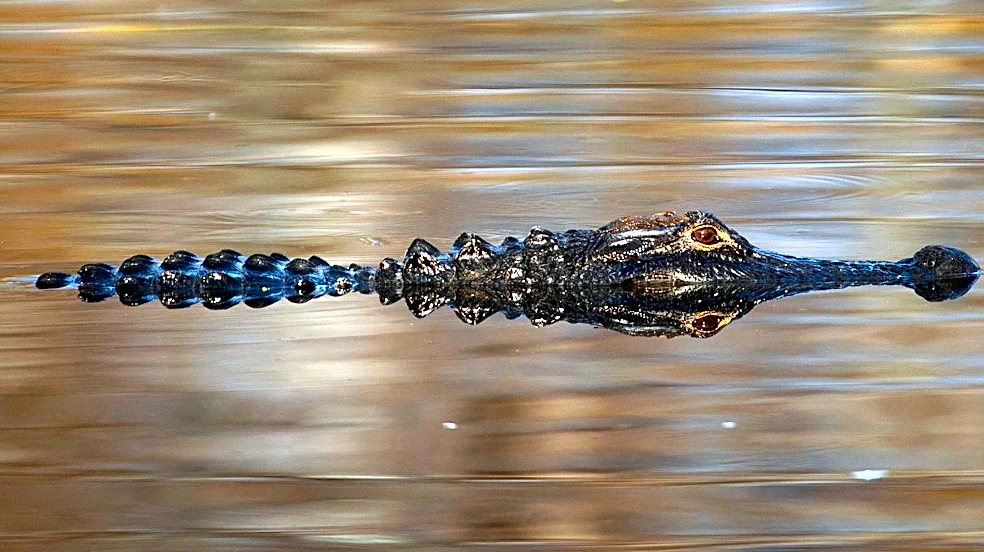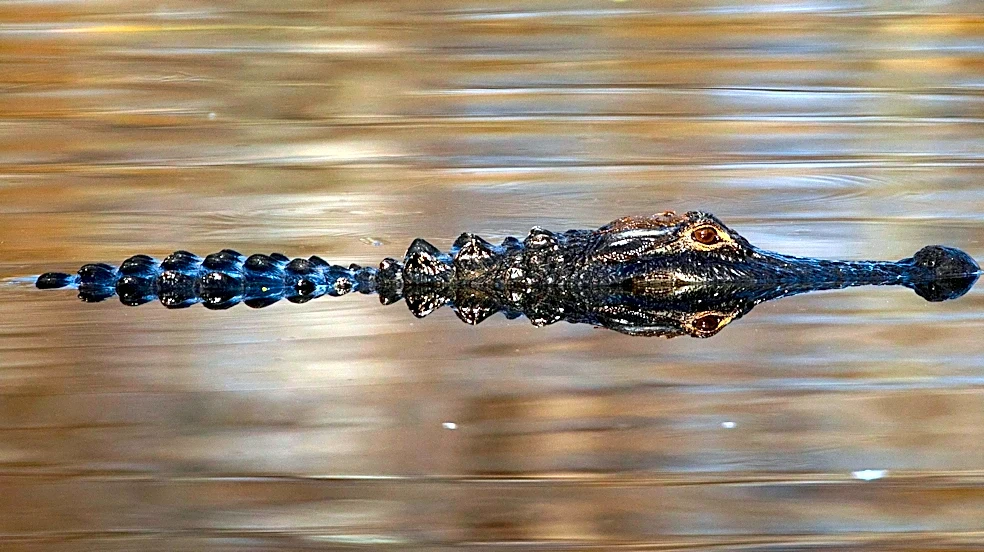





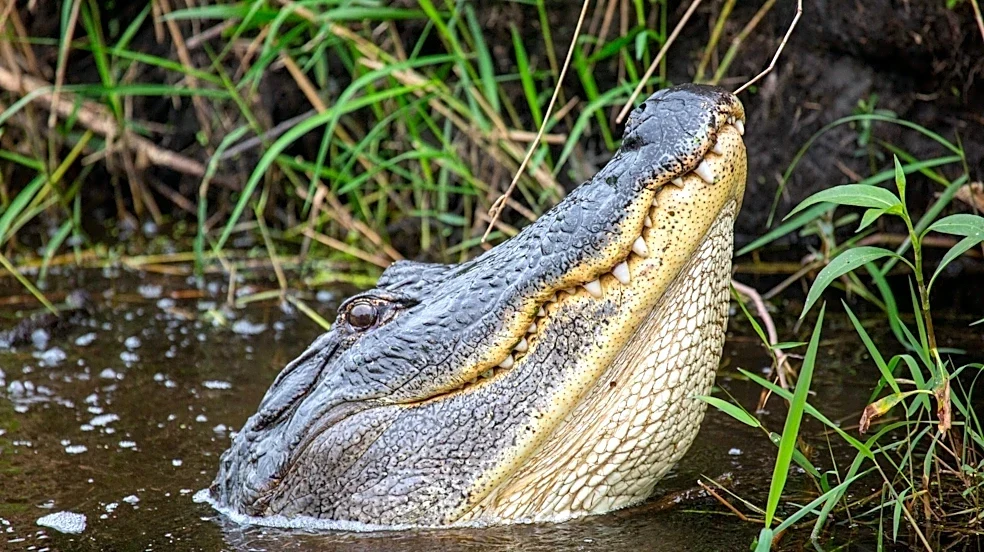

A Florida man was arrested this week after admitting to shooting an alligator and striking it multiple times in the head with a hammer, according to an arrest report.
Desmond Keogh, 60, of Palm Beach, was charged Monday, Oct. 19, by the Florida Fish and Wildlife Conservation Commission with illegal killing, possessing or capturing an alligator without a license and discharging a firearm in public.
An anonymous caller, who claimed the hammer was still sticking out of the alligator's forehead, alerted FWC to the incident. It was unclear from the report if the alligator was killed on his business's property.
This comes days after Winter Garden resident Steven Hamilton, 71, was found dead on Oct. 16 by first responders after he was attacked by an alligator
when he was taking a photo of a fish he caught. He was grabbed by the leg andpulled underwater, according to an initial medical examiner's report.
Are alligators protected under Florida law? Can I shoot a gator in my yard?

Don't try to "take care" of any gators yourself. If you don't have a permit to hunt gators and it isn't alligator hunting season, you can't shoot one.
Under Florida law, it's a level four violation to "intentionally kill, injure, possess or capture, or attempt to kill, injure, possess or capture an alligator or other crocodilian, or the eggs of an alligator or other crocodilian, unless authorized by rules of the commission."
If caught, violators could face up to five years in prison, major fines and the seizure of any equipment used in the violation, including weapons, vehicles, boats, and lines.
What makes an alligator a nuisance?
An alligator is deemed a nuisance if it:
- Is at least four feet long.
- If the caller believes it poses a threat to people, pets or property.
- Or if it is smaller than four feet and ends up in unacceptable places, like swimming pools or garages, it must be removed.
"You should never handle an alligator, even a small one, because alligator bites can result in serious infection and it’s illegal. If there's an alligator under four feet in your swimming pool, on your porch or in a similar situation, call the Nuisance Alligator Hotline," the FWC's website.
Can you defend yourself against an alligator?
Though Florida residents have learned to coexist with alligators, the FWC says conflict is always possible. The FWC recommends avoiding feeding alligators and keeping your distance if you see one.
"Swim only in designated swimming areas during daylight hours. And keep pets on a leash and away from the water," FWC's site states.
If you're already swimming and see an alligator, calmly swim in the other direction and get out of the water. Don't splash around; this will attract the alligator.
According to the FWC, "If an alligator bites you, the best thing to do is fight back, providing as much noise and resistance as possible. Hitting or kicking the alligator or poking it in its eyes may cause it to release its grip. When alligators seize prey they cannot easily overpower, they will often let go and retreat."
You can also trigger a gator's gag reflex by shoving objects into the back of its mouth, if you have to. If it gags and tries to reposition its grip on you, that's your window to escape.
Serious injuries caused by alligators are rare, but if you are concerned about a gator, call the nuisance alligator hotline at 866-392-4286 or visit myfwc.com.
Should you run zig-zag from an alligator?
Many native Floridians learned as early as preschool to run away in a zig-zag line if a gator crosses their path, but this has been debunked.
Gators can run fast on land, but only for short distances before they get tired. Simply run away in a straight line.
If you find yourself tempted to take a night swim in a lake, river, pond or any natural body of freshwater, the possibility of running into an alligator is rarely zero. If the sun is down, the gators are out.
What to do if an alligator is in your yard or pool

Removing a gator from your yard isn't the same as calling a private critter control service or your community's animal control. Call the state's Fish and Wildlife Conservation Commission.
The FWC has a Statewide Nuisance Alligator Program with a gator hotline. If a gator is in your yard or pool, call the free Nuisance Alligator Hotline at 866-FWC-GATOR (866-392-4286).
The Statewide Nuisance Alligator Program (SNAP) will issue a permit to one of its contracted nuisance alligator trappers, authorizing the removal of the gator.
The state pays its contracted nuisance alligator trappers for each job they are called out to. Calling SNAP's toll-free number and having a trapper come to your home won’t cost you anything.
What does FWC do with nuisance alligators?
The Statewide Nuisance Alligator Program trappers relocate gators under 4 feet long and kill nuisance gators that are longer than 4 feet.
"Relocated alligators often try to return to their capture site," according to the SNAP website. "They can create problems for people or other alligators along the way. If an alligator successfully returns, capturing it again would be necessary and likely more difficult the second time."
How to keep alligators out of your pool
The best way to keep roaming alligators from cooling off in your pool this summer is to enclose the area around it. If you think a chain-link fence around your backyard is good enough, think again. Alligators can climb fences.
If you already have a screened-in pool deck, check for holes or weak points that need repair before summer. Properly maintaining your pool enclosure can also help keep snakes, iguanas and bugs off your pool deck this summer.
Contributing: Kim Miller, Palm Beach Post
Samantha Neely is a trending reporter for the USA TODAY NETWORK-Florida, covering pop culture, theme parks, breaking news and more. You can get all of Florida’s best content directly in your inbox each weekday by signing up for the free newsletter, Florida TODAY, at https://floridatoday.com/newsletters.
This article originally appeared on Palm Beach Post: Is it legal to shoot an alligator on your Florida property? Don't get your gun yet