






The clock is ticking toward tens of thousands of Haitian health care workers losing their authorization to work in Florida, leaving gaping holes in staffing that advocates say will strain the system like never before.
An estimated 36,350 Haitians who work largely on the front lines of caring for the state’s elderly and sick are among the 145,000 nationals from the Caribbean nation now in Florida facing removal from the United States. It’s because of a June 25 U.S. Supreme Court ruling that allows the Trump administration to revoke Haitian nationals’ Temporary Protection Status (TPS) that started with Haiti’s earthquake in 2010.
Health care administrators are hoping for a more permanent reprieve than the one issued July 10 that extended Haitians’
TPS work authorization for two weeks until July 24.
A full-court lobbying effort to keep them working — bathing, feeding and tidying in homes and health care facilities — is underway.
“People are hoping that there will be an opening and there will be reasonableness and there will be a human side to governance that will see … the value of employing individuals and having neighbors who are Haitian TPS nationals, who for decades have contributed to the well-being of our South Florida economy ... ” said Miriam Singer, CEO of Jewish Community Services of South Florida, which employs 17 Haitian TPS holders out of its 300 certified home care helpers.
The end of these TPS holders’ ability to work is going to leave vacancies not only in home health care but also in hospitals and nursing homes in a labor market where thousands of these positions are currently unfilled, industry officials say.
The Florida Health Care Association is asking Homeland Security to extend the status of Florida’s Haitian TPS health care workers as they pursue a lawful path to immigration, but the plea has not received a reply. And legislation that would extend all Haitian nationals’ TPS status another three years was narrowly passed in the U.S. House of Representatives in April with three of the state’s Republican delegation saying “aye.” The legislation is currently stuck in a U.S. Senate committee as Congress’ summer recess looms.
“It’s a nail biter,” said Wiener, president of the Palm Beach County Partnership for Aging. “People don’t know what to do” about workers holding TPS status.
Marissa Sturner, a regional director and co-operator of Better Healthcare LLC, a nurse registry serving South Florida, had terminated a handful of her TPS holders starting July 10. And then came the extension that had her reversing course — at least temporarily in one case.
“The family loves this caregiver and truly considers her part of the family, so keeping her in place was very important to them,” Sturner wrote in an email.
What is TPS and why is it so important to Florida?
TPS is a U.S. government designation that allows nationals from other countries to stay in the United States and work because their home countries face ongoing armed conflict and natural disasters. Nationals from Burma, Ethiopia, Somalia, South Sudan, Syria, Venezuela, and Yemen are also facing the end of TPS protection from deportation due to Trump administration decisions.
Court challenges are underway, but on June 25, the U.S. Supreme Court ruled that the Trump administration had the authority to end the TPS status for nationals from Syria and Haiti.
The White House released a statement calling the ruling “a major victory” for putting Americans first. “The Biden Administration weaponized TPS as a backdoor amnesty to flood the country with millions of unvetted migrants — and that loophole is finally closed,” the statement said.
But these Haitian nationals have become an essential support for Florida’s health care system, according to a July 7 letter J. Emmet Reed, CEO of the state’s nursing home lobby, the Florida Health Care Association, wrote to U.S. Department of Homeland Security Secretary Markwayne Mullin.
“Replacing these workers is neither immediate nor easy, particularly in a labor market where thousands of long-term care positions remain unfilled,” Reed wrote, warning that not having this labor force will strain local hospitals and the entire health care system.
Will TPS be extended beyond July 24?
Health care industry officials are hoping another reprieve comes through by Friday, July 24.
About 350,000 Haitian nationals are in the United States under TPS and half of them are in Florida, according to estimates. The government hasn’t announced a date for these TPS holders to leave the country and face deportation if they don’t.
But the looming end of their ability to work legitimately has care administrators, especially those in South Florida, hitting the “refresh” button on the U.S. Citizenship and Immigration Services website, where the July 10 extension to July 24 was announced — and praying for some news.
If it doesn’t come through, Carole Hirsch, owner of Prepare to Care — Emergency Companions in West Palm Beach, predicts that agencies and nursing homes which oversee care for those who need it will be forced to employ lesser qualified people in places that had been staffed by people with higher levels of training.
“They are caught in a trap,” Hirsch said. “It’s expensive to hire qualified caregivers. It’s already harder than ever and the costs of care are so much. Good aides are $30 to $45, compared to when I started (20 years ago) it was $18 to $20.”
What are the jobs Haitian TPS holders do in Florida?
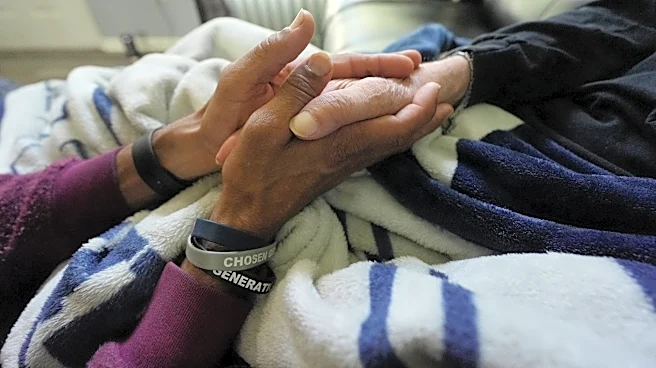
Besides hands-on care, Haitian TPS workers can be found in nursing homes washing dishes, mopping floors, preparing meals and feeding people who can’t feed themselves.
“There is an immigrant population doing the jobs that Americans don’t want,” explained Wiener, who, in addition to leading the Palm Beach County care group, is the director of guardianship and care management at the Alpert Jewish Family Service in West Palm Beach.
The loss in TPS health care workers, if it comes to pass, immediately will hit community care providers like Jewish Community Services of South Florida in the bank account — existing workers who are providing the care that keeps clients out of the hospital will have to be paid overtime to fill in the gaps, the organization’s CEO Singer said.
“It’s extremely difficult to hire (health care workers) right now,” Singer said.
But the real cost of this upheaval can’t be measured, Singer said.
“Our home care aides, many take care of individuals with memory care issues and needs, and the transition from one caregiver to another is all the more traumatic when the memory is not intact,” Singer said. “Those bonds that are formed are extremely precious, extremely impactful, and allow for our clients … to have a better quality of life, longevity, and also to avoid the cost on the taxpayer of urgent care visits, hospitalizations that result in large Medicare and Medicaid bills, allowing folks to age with dignity and respect in their homes, and be able to have social, emotional, and health interactions — the key to wellness.”
Community Jewish Services of South Florida has nearly 400 home care clients ranging in age from 80 all the way up to one who is 110. The home care aides are taking them to doctor’s appointments, bathing them, overseeing their food and medication.
“The majority of our clients who receive these services are Holocaust survivors who have endured the most horrific trauma in life and loss and torture through the experience of the Holocaust and World War II,” Singer said. “They are survivors of camps and loss of loved ones, and now to have their relationship with their trusted, long-term caregiver severed and to have to start a new relationship because … of this ruling and the potential actions that follow are devastating to individuals that have already suffered enough and have lost ones that care for them and that they care for … It's a re-traumatization of a population that doesn't need that.”
Anne Geggis is statewide reporter for the USA TODAY NETWORK FLORIDA, reporting on health and senior issues. If you have news tips, please send them to ageggis@usatodayco.com. You can get all of Florida’s best content directly in your inbox each weekday by signing up for the free newsletter, Florida TODAY, at https://palmbeachpost.com/newsletters.
This article originally appeared on Sarasota Herald-Tribune: Tens of thousands of Florida frontline health workers hours from firing