



Downtown West Palm Beach is booming. Is it also bursting?
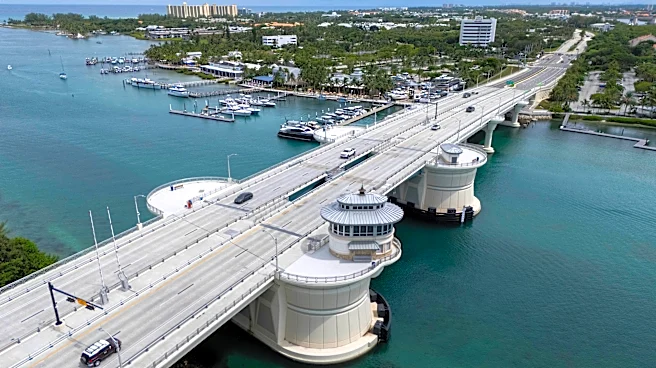
Stretching just eight blocks east to west, the growing city center is hemmed in by two waterways, bisected by two railways and must accommodate traffic across two bridges to Palm Beach island.
With so many chokepoints, it doesn’t take much to snarl traffic in the city. Passing freight trains, bridge closures, streets closed for downtown events — all prompt backups and outpourings of frustration.
West Palm Beach leaders, though, push back against claims that the city is facing significant traffic problems.
While there are occasional traffic delays caused by crashes, special events and even presidential visits, the city’s roads continue to have excess capacity, city leaders say.
In normal conditions,
the city says, getting in and out of downtown should take less than 15 minutes, even during peak hours.
“We are a growing city but we’re not a gridlocked city,” Deputy City Administrator Armando Fana said.
To bolster their case, city officials point to state figures showing that daily rides along Okeechobee Boulevard — the main gateway into downtown — were slightly lower last year than in 2019.
There were about 75,000 daily rides along Okeechobee east of I-95 last year, the records show. That’s 22% more than in 2010 but still lower than the 77,500 daily rides along the same stretch of road the year before the COVID-19 pandemic.
City has big hopes for 'West Palm Move'
Traffic remains a key concern though, and it is one of the driving forces behind a new wave of resident pushback against the city’s development decisions, led by residents who live in and around the downtown.
One of many residents’ chief fears is that the continued construction of taller buildings will bring more cars into downtown, further clogging the roadways.
Catherine Adler, a co-founder of the new nonprofit Save West Palm Beach, said she has had a front-row seat to growing traffic concerns from her condo at The Bristol condominium, at the corner of South Flagler Drive and Okeechobee Boulevard.
“I look out and I see traffic,” she said. “I see red taillights all the way up Okeechobee.”
City leaders acknowledge that with development continuing in the city center, more traffic is coming.
To combat it, they have been devising new strategies to get cars off the city’s main thoroughfares, with plans ranging from a new downtown road, an ambitious new mass-transit system and improved bike lanes and sidewalks.
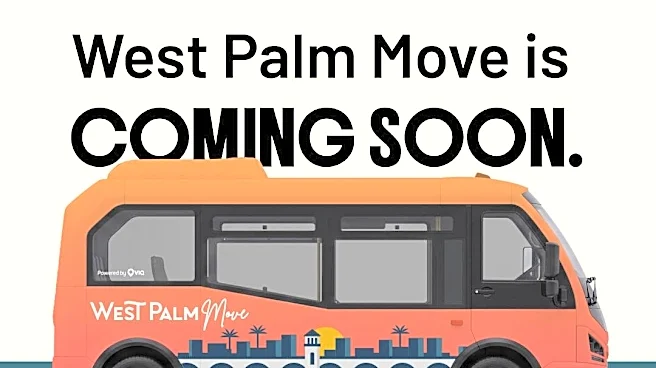
The biggest effort is West Palm Move, a low-cost mini-bus service combined with an on-demand Uber-like service.
Expected to start up in late August or early September, the initial fixed route will run from the Norton Museum on the city’s south side through downtown to the Northwood Village commercial district on the north end.
That route will be extended later, and a separate east-west route eventually will run along Palm Beach Lakes Boulevard.
City leaders are hoping to entice riders to the “premium service” with low fares and short wait times.
City leader: 'We're trying to create a premium service'

One-way fares for the fixed route system, which will be serviced by a fleet of shuttle-style mini-buses, will be $1, half the price of Palm Tran, Palm Beach County’s bus service.
The city says the company providing the service, Via, is required by their contract to make sure that wait times are no longer than 10 minutes.
Connecting with the fixed-route service will be an on-demand, Uber-style service that ferries people from their locations to the nearest fixed-route stop.
The on-demand service will serve anyone in the city east of Interstate 95 and will cost $2. Wait times for the service are intended to be no more than 15 minutes.
The service, which passengers can use with a cell phone app, is designed to be quick, clean and convenient, to entice as many commuters as possible to leave their cars at home.
“We’re trying to create a premium service so there’s no excuses,” Fana said. “Once people try it, we think they’ll be pleasantly surprised.”
The service will operate 6 a.m. to 10 p.m. during the first year and will expand until midnight in future years, according to a city brochure.
“It's designed to have people choose this service,” Jessica Keller, the city’s parking and mobility administrator, told a city committee in May. “I can confidently say to you that the program that's going to be launched here in the city of West Palm Beach will be unlike anything that you've seen anywhere in the country.”
More bike lanes, smarter traffic lights on horizon

The city’s long-term aim is to reduce downtown traffic by 25%.
To help nudge residents' behavior in that direction, the city is also proposing to allow developers to build fewer parking spaces in their buildings downtown and is weighing raising downtown parking fees.
Other plans are in the works, too.
The city is hoping to break ground this year on a project downtown to extend Fern Street across the CSX railroad tracks to Australian Avenue.
Doing so would give the city another east-west road into the city’s downtown, one that is projected to remove an estimated 11,000 vehicles a day from Okeechobee Boulevard and Banyan Boulevard.
The city also expects later this year to reveal a new citywide “mobility plan” that will expand the city’s network of dedicated bike lanes and widen sidewalks along key corridors. The plan would also implement more “smart” traffic lights, which use sensors to alter the light cycles based on the number of cars on the road at the time.
Many of the initiatives are being financed by a new money stream.
In 2025, the city established a mobility fee, replacing the impact fees that developers used to pay when they break ground on a new project. In previous years most of the money went to the county government, but the city now keeps most of it.
The fee is expected to generate about $20 million a year that can be used for transportation initiatives, Fana said.
Creating new transit options has drawn interest from the private sector, too.

A California company has proposed creating a self-driving car service along an elevated roadway that would circulate through the city’s downtown and the airport.
The elevated roadways would ensure that the cars could bypass regular traffic, and the self-driving cars would take passengers directly to their desired stop.
The stops proposed by the company, California-based Glydways, include stations at Donald J. Trump International Airport, the Palm Beach County Convention Center, CityPlace, the Brightline train station, the Palm Beach County Courthouse, the Nora District and the city’s Historic Northwest neighborhood.
The company is proposing the project to the Palm Beach County Commission but no official action has been taken.
City administrators say that more traffic is inevitable as the city grows. But they are hoping that alternative transit options made possible by new technology and new money will make the growth manageable and allow more people to rethink how they commute.
“We're not building a city where every single person drives,” Keller said in May. “If we were building that kind of city then we would be gridlocked right now.”
Andrew Marra is a reporter at The Palm Beach Post. Reach him at amarra@pbpost.com.

This article originally appeared on Palm Beach Post: Mini-buses, Uber-style pickups. How West Palm is tackling traffic