




For more than 20 years, Alex Calle has helped Canadians buy and sell West Palm Beach properties, many inCentury Village.
Canadians once owned nearly a third of the community’s 7,000 condo units, according to Calle, who oversees Masters Real Estate. That figure has fallen to about 10%, he said.
“So many Canadians, upset by the insults President [Donald] Trump has hurled at them, have told us they want to leave," Calle said. "We are seeing firesales. They don’t want to come here anymore. Some are just willing to get out at any price.”
The fractured diplomatic relationship between the United States and Canada, once the closest of neighbors and allies, is proving costly to Floridians.
In August, it was reported that Canadian tourism to the Sunshine
State was down 13.9% for the first half of this year. The decline is all the more startling given that, other than during the coronavirus pandemic or a deep recession, the state's visitor numbers annually set records
The commercial relationship — Canada ranks third among Florida export markets and fifth for imports — is especially strained. Since coming into office in January 2025, Trump has berated Ottawa, and called the country to the United States's north a "failed" nation.
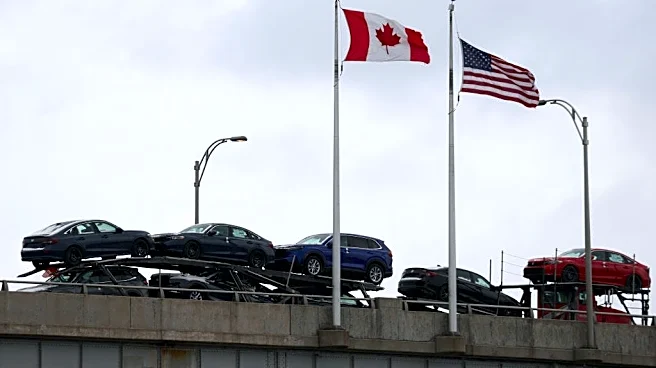
Subsequently, Washington has imposed steep tariffs on billions worth of lumber, furniture, cheese, and even hockey equipment bought by U.S. merchants for sale to American consumers. Canadian officials have imposed retaliatory, dollar-for-dollar tariffs on goods ranging from steel to aluminum to dairy products to electronics.
Politics aside, Palm Beach County businesses miss Canadian customers
Doug Williamson tints cars. He misses the Canadians.
“They are gone. They don't need to come here," he said. "They don't like Trump or MAGA but they are too nice to say anything so they just stopped coming. I miss them and hope things change enough for them to return.”
Williamson said that “at any time" Canadians in South Florida accounted for 10% to 20% of his customer base.
“They appreciate quality and service over price (unlike many other northern transplants). I could always count on their hospitality and generosity," Williamson said. "They always tipped my installers and would send me referrals too."
From penthouse condos to manufactured homes, Realtors, brokers and real estate agents told The Palm Beach Post a similar refrain — the neighbors from up north were great customers.
Joseph Hillner, a real estate agent with Guarantee Home Sales in Boca Raton, said the collapse of the Canadian market has contributed to the broader slowdown in South Florida.
Luxury properties are sitting longer on the market; rental demand in tourist-heavy areas has fallen, and seasonal restaurants and retailers are seeing slower business, he noted.
Financial issues at play in Canadians' departure from Palm Beaches
Trump has surely been antagonistic — he has called Canada "one of the worst countries in the entire world" in commerce and belittled the country saying they are being "taught a little lesson." But more more than the U.S. president's insults are driving away Canadians.
The exchange rate is at 70 cents on the dollar, making it much more expensive for Canadians to buy homes in South Florida or to vacation there.
Beginning in April 2025, also, many Canadians visiting the United States for 30 days or longer have had to register with U.S. immigration authorities.

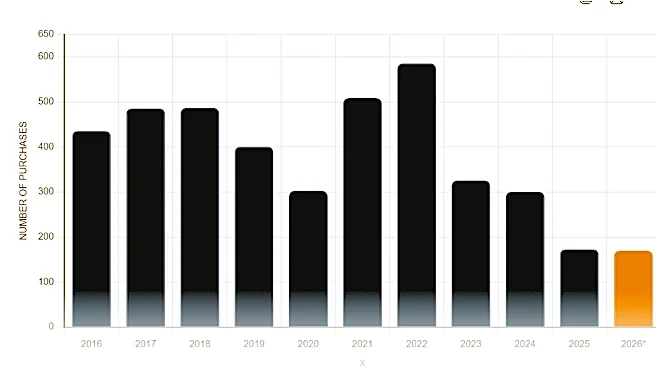
Canadian home purchases have fallen sharply. Nearly 600 Canadians bought homes in Palm Beach County in 2022. Last year, that number fell to 173, according to the county property appraisers office.
The number of Canadians searching for American homes was down 20% year-over-year in August among users of real estate brokerage Redfin. And the drop was the steepest in West Palm Beach; searches by Canadian snowbirds looking to purchase winter property fell 27%, with other Sunshine State hotspots Tampa and Orlando not far behind at 23% each, Redfin found.
The Redfin report was done well before the recent 50% tariffs imposed by Trump on Canada products.
One Canadian native, Karen H., she did not want The Palm Beach Post to fully identify her, said she has lived in the United States for more than 30 years. The only thing preventing her from selling her home now is the fear of a sharp decline in price, though she said she may sell anyway.
A holder of dual U.S.-Canadian citizenship, she said she has friends who went to a restaurant in Fort Pierce last year in a car with Canadian license plates. It was at the height of friction over tariffs, she recalled, and her friends reported their car was scratched on purpose.
“For the most part, people here are very supportive,” she said. “Some even apologize for the insults. But not everyone feels that way as evidenced by what happened to my friends at that Fort Pierce restaurant."
Canadian exodus is a nationwide trend
According to Statistics Canada, a government agency, total Canadian-resident return border crossings from the United States declined in 2025, down 25% from 2024. The pullback grew as the year progressed.
“Excluding the COVID-19 pandemic period, the resulting 11-month streak of year-over-year declines was the deepest and most sustained on record for border crossings from the United States,” said the agency in a report released in July.
Statistics Canada attributed the shift in sentiment to the implementation of America First policies.
Arthur Simpson, a lawyer who has closed real estate deals for Canadian buyers in South Florida for the past 20 years, noted in a column on his webpage that Canadian sellers now outnumber Canadian buyers for the first time.
“Some agents tell me they are listing triple the usual number of Canadian-owned units,” he said. “This is not a slowdown. It is a structural reversal.”
Simpson noted that Canadians bought 49,500 U.S. homes in 2012, compared with 10,700 during the most recent 12-month period.
“We are looking at a market that has shrunk by more than three-quarters in just over a decade, and the trend line is still pointing down,” Simpson said. "This is not a slowdown in Canadian demand — it is an orderly liquidation.”
Florida remains the epicenter, but the story there has flipped, Simpson said, noting: “In 2025, Canadians accounted for 33% of Florida properties sold by foreign owners — sold, not bought.”

Passengers flying Air Canada to President Donald J. Trump Airport in Palm Beach have also plummeted in recent years. Since 2019, it has fallen by 28%.
While Canadian travel to Florida has fallen sharply, Palm Beach County has recently reported gains in Canadian visitation.
According to Discover The Palm Beaches, Canadian visitation increased 1.8% during the first half of 2026, while Canadian visitation statewide declined by a double-digit percentage. Discover The Palm Beaches credited the growth to expanded marketing efforts.

The Canadian exodus of homeowners does not appear to be ending anytime soon.
A recent survey by Royal LePage, a Canadian-based association of realtors, found that 54% of Canadians who own U.S. property were planning to sell within the next year, with 62% citing the current administration’s actions as the primary reason.
“The situation we are in right now is really sad,” said Calle. “It is going to take years for these scars to heal.”
Another dual Canadian-U.S. citizen who resides in Palm Beach County pointed to an illustration Trump posted on Truth Social in September that she found upsetting.
It showed Trump playing ice hockey. He was looking down on Canadian Prime Minister Mark Carney, who was lying on the ice.
“Get up, Governor,” said Trump to Carney.
Trump has never played competitive ice hockey. In contrast, Carney was a goalie at Harvard and Oxford.
Mike Diamond is a journalist atThe Palm Beach Post, part of the USA TODAY Florida Network. He covers Palm Beach County government. You can reach him at mdiamond@pbpost.com. Help support local journalism. Subscribe today.
This article originally appeared on Palm Beach Post: ‘They Don’t Want to Come Here’: Canadians back off PBC | Exclusive