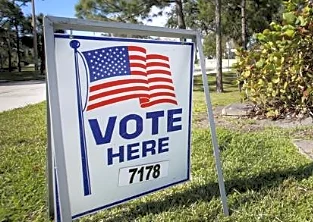



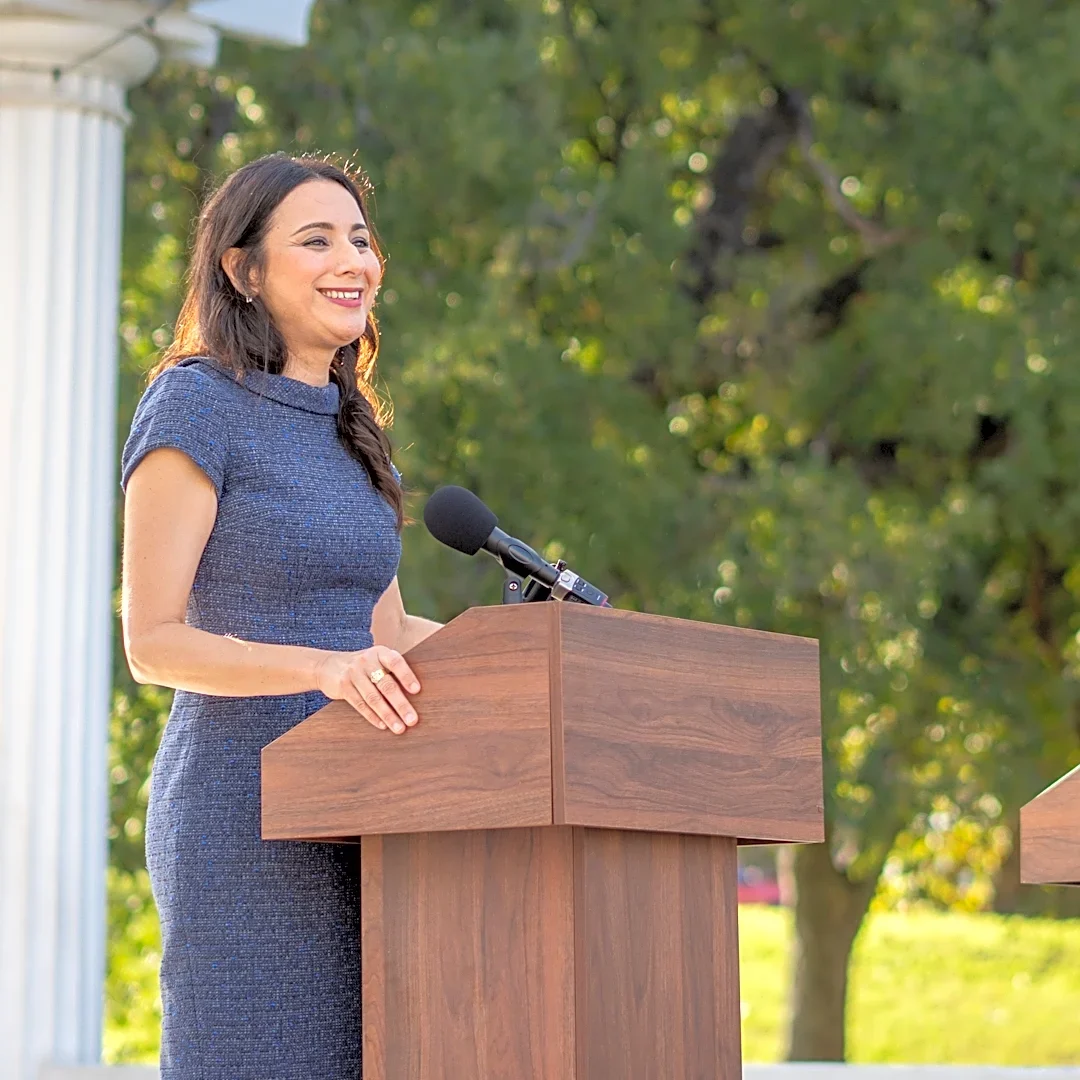
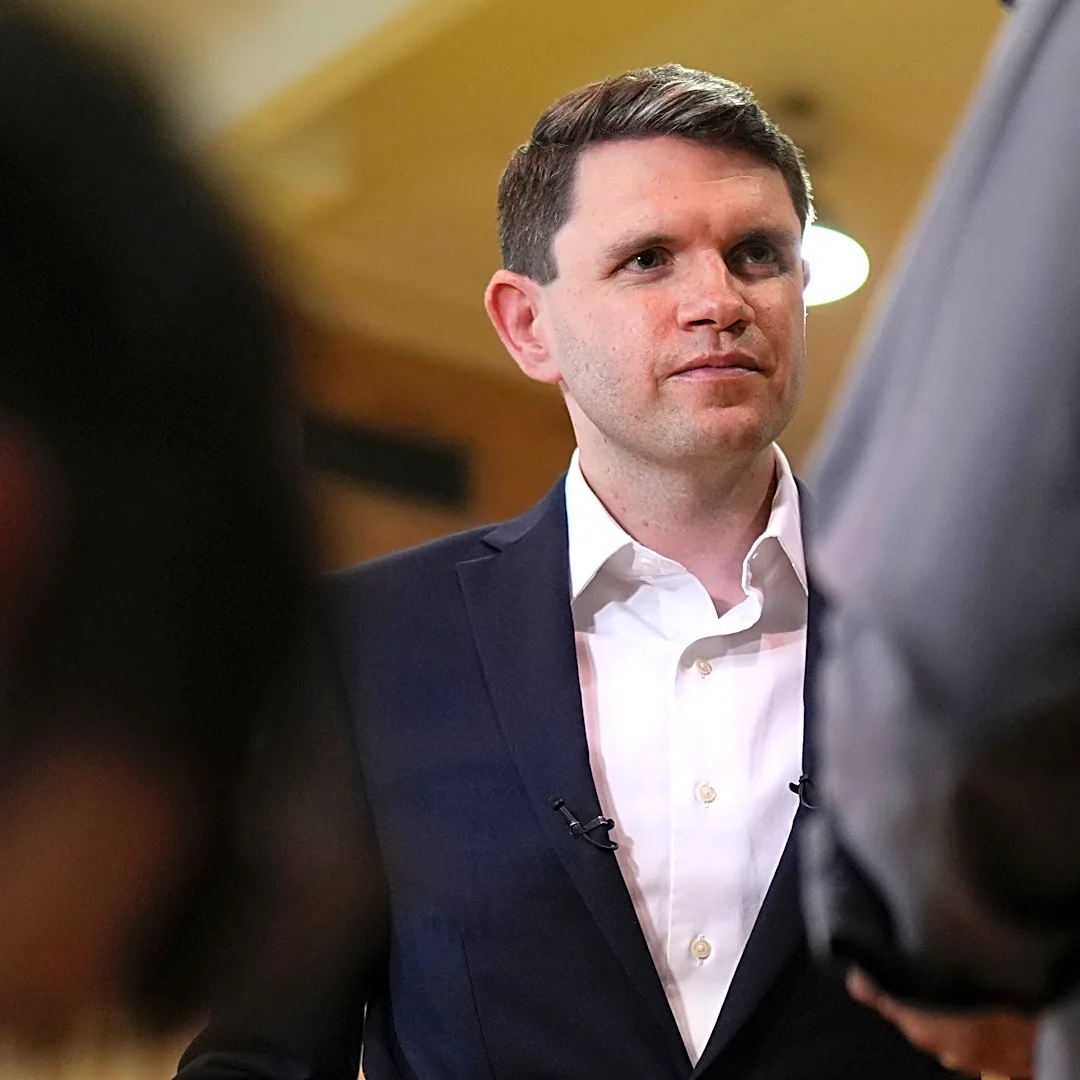




President Donald Trump demanded it, Gov. Ron DeSantis delivered it but congressional redistricting is far from the midterm election panacea Florida Republicans forecast.
Three races, including two in Palm Beach County, are rated as toss-ups by the highly-watched Cook Political Report. They are classed together with 18 other up-for-grabs congressional contests across the country that could effectively determine which party ends up with majority control of the U.S. House for Trump's concluding two years in office.
In recent days, national Republicans have acknowledged that the mid-decade redistricting they unabashedly bet on may not turn out the way their party envisioned.
In a network interview Oct. 13, House Speaker Mike Johnson conceded that redrawing
district boundaries raised a new set of challenges that have required him to make campaign appearances for House GOP candidates across the nation, from New York to California to Maine to New Hampshire to North Carolina.
"Some of these districts have been redrawn, as you know, over the last cycle," said Johnson, a Louisiana Republican, "And so you have new territory, we have even incumbents [that] moved into areas that have brand new voters. So we've got to do all the fundamentals and do it right. It requires us to be everywhere."
On Oct. 6, Axios reported that House Majority Whip Tom Emmer, a Minnesota Republican, said his party no longer was counting on winning 13 redrawn congressional seats, and he would be "shocked" if they won all four targeted in Florida.
Erin Covey, who leads the congressional race coverage for the Cook Political Report, pointed out that not only are three of the four Florida seats toss-ups, but two other Republican incumbents in the state are facing "quite competitive" re-election bids.
"Republicans went into this redistricting cycle hoping they could pick up four seats in Florida," Covey said in an interview with The Palm Beach Post. "It's still achievable but there's also a world in which, basically, they pick up zero on net, or even lose a seat on net."

Why did Florida change congressional district lines?
Typically, congressional district lines are redrawn on a decennial timetable. They follow the publication of U.S. Census survey results, and are intended by law to account for population changes within districts.
For this year's midterms, however, Trump aggressively demanded congressional map changes to boost his party's hopes of keeping their razor-thin House majority.
The blatant command to gerrymander districts, meaning to change boundaries not because of census changes but for political gain, drew lawsuits and sharp criticism, but Republicans across the United states complied nonetheless.
Those Republicans who did not comply with the president's demand soon incurred the president's wrath and signed their political death warrants by drawing Trump-endorsed primary opponents, including including a record seven state senators in Indiana.
The president certainly expected the redrawn districts to favor GOP House control. This spring, after the U.S. Supreme Court gutted Voting Rights Act provisions for minority districts, Trump was especially jubilant.
“The byproduct is that the Republicans will receive more than 20 House Seats in the upcoming Midterms!” Trump posted on social media.
In Florida, however, DeSantis was only too happy to comply with Trump's insistence. The governor committed time to the task during legislative gatherings, including a special session that produced the new maps in May.
In red Florida, congressional races toss-ups. What happened?
With Florida trending deep red, the GOP holds a 1.5-million registered voter advantage, the delegation's trajectory from purple to crimson has been visible in the age of Trump.
When the president concluded his first term, the delgation's split was nearly even — 14 Republicans to 13 Democrats. Currently, Florida Republicans hold a lopsised, supermajority in the congressional delegation, 20-8.
The plan was to halve the Democrats' share of seats to just four.
Five months later, though, the expected electoral cornucopia has proven a more difficult poltical harvest. The Post has not reviewed independent polling to ascertain how close the contests actually are, or not, but the conventional wisdom is the Republicans aspiring to those seats are in dogfights.
What happened? Politics. Or specifically, the public. Even in Trumpy Florida, people have soured on the president 22 months into a second term that he won in an election in which he carried the Sunshine State by an astounding 13-point margin.
The war in Iran has jacked up gasoline prices to a statewide average of $4.20 per gallon, up $1.25 a gallon from the $2.95 figure a year ago, according to AAA - The Auto Club Group. The surge in fuel prices has aggravated the cost of living crisis across the state.
Trump has adamantly backed no-questions-asked aritifical intelligence development, and demanded that communities approve controversial data centers, putting him out of step with popular sentiment, even in his adopted home county.
Just one of the four seats, the Orlando-area District 9 held by Democratic U.S. Rep. Darren Soto, is viewed as a "likely" Republican pick-up.
All told, the president's approval rating across Florida, revealed in an Oct. 5 YouGov/Economist survey, was 19 points underwater. Polls have also shown Trump losing Hispanic and independent voters in mass, two swing electorates in South Florida.
Covey at Cook Political Report notes that while Florida "swung hard towards Trump" in 2024, the president captured support from many who "are not staunch Republican" voters.
"Their support for Trump was driven by their belief that he could fix the economy," she said. "And since that obviously has not been the case over the past two years, voters' perceptions of Trump have really plummeted."
Covery added: "It shouldn't be too much of a surprise that these [contests] are toss ups.
Where are tightest Florida congressional races playing out?
Three of the seats, Florida congressional districts 14, 22 and 25, are rated as up for grabs, Cook Political's Covey said. District 14, in the Tampa area, is held by Democratic U.S. Rep. Kathy Castor, who faces Republican rival Mike Beltran and three other candidates.
District 22 straddles a broad swath of lower peninsula Florida, including western Palm Beach County. It is an open seat being sought by Republican Casey Askar and Democrat Pia Dandiya.
District 25 extends from eastern Palm Beach County to as far south as the Miami Beach area. U.S. Rep. Jared Moskowitz, who now represents a different congressional district, is seeking that post and is being challenged by Republican Scott Singer, a former Boca Raton mayor.
Two other Republicans are in competitive races. One them is Pinellas County District 13 held by MAGA star Congresswoman Anna Paulina Luna, who proposed adding Trump to Mount Rusmore in January 2025.
The other is Miami-area District 27 held by Republican U.S. Rep. Maria Elvira Salazar. A former TV personality, Salazar faces a challenge from former broadcast newsman Elliott Rodriguez.
Salazar's path to a fourth term on Capitol Hill got more complicated when she issued a video accusing Trump of "betraying" Hispanic voters with his immigration policies. Trump has not withdrawn his endorsement of Salazar, but has made his unhappiness with Salazar's salvo known on social media.
In the GOP's corner nationally is a late flood of cash from the world's richest man, Elon Musk. The world's first trillionaire is reportedly willing to spend as much as $366 million to rescue floundering Republican candidates, by far a record for any individual in any U.S. election ever.
Local Republicans have also long-stressed their prowess on grassroot campaigning, from knocking on doors to phone banks to registering voters. The latter effort has brought the Republican Party of Palm Beach County to the brink of overtaking Democrats in the ranks of voters in the Palm Beaches.
Covey said the moral of the 2026 redistricting may end up being that redrawing congressional lines based on previous elections, with different voter moods and priorities, may not get you the result you want in future ones.
"It's hard to anticipate future political trends," she said.
Yes, there are regions across the United States that are politically entrenched for Republicans or Democrats because of long-held and shared economic or cultural interests. But many other "very swinging parts of the country," including swaths of Florida, are populated by more fluid voters, she said.
She said there's a lesson to take away from the surprising gains Republicans made in 2022 and the fact that Democrats are now winning a lot of those voters back in 2024. It's "that these truly are more independent voters who are up for grabs," Covey said. "You can't assume that just because they voted for Trump by pretty wide margins in 2024 that they're going to keep voting for Republicans."
Antonio Fins is a politics and business editor at The Palm Beach Post,part of the USA TODAY Florida Network. You can reach him at afins@pbpost.com. Help support our journalism. Subscribe today.
This article originally appeared on Palm Beach Post: Trump demanded, DeSantis delivered but redistricted races toss-ups