





There's more to Amendment 3 than meets the outcry. Discussions vary widely regarding the impact property tax reductions will have on homeowners, its effect on county and city budgets and its effects on renters and businesses.
One thing is clear: the cost of living is extremely high and challenging. Property taxes increased statewide from $32 billion to $60 billion in the past five years. While people claimed their increasing taxes were high, they also questioned where the $28 billion was spent. They didn't see new infrastructure, bridges, roads or workforce housing. Show me the money, they said.
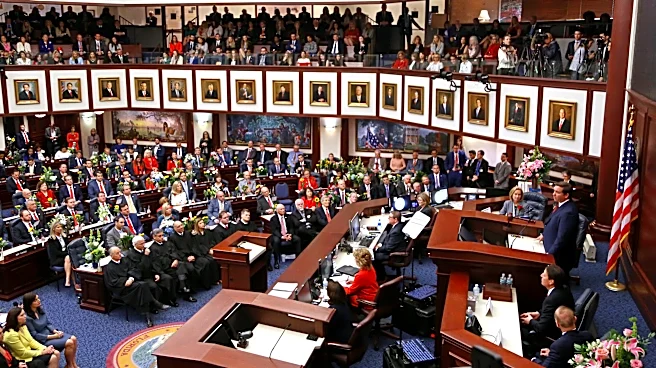
So, the Florida House of Repesentatives did something. They created the House Select Committee, headed by state Reps. Toby Overdorf, R.-Palm City and
former state Rep. Vicki Lopez, R.-Miami, to study the situation. Groups of lawmakers fanned out across the state and met county and municipal officials, along with budget leaders, tax specialists and other experts. Their goal was to cover the diverse communities in Florida's 67 counties and 411 municipalities.
The results were brought back to Tallahassee last fall, and beginning with the first Committee Week, representatives met many times to review the eight plans that members produced after the meetings around the state. Those plans included options to reduce taxes for seniors, first time homebuyers, young families and veterans. We debated the merits and demerits of each plan. The members didn't always agree, but that is the basis for productive conversations. In the end, the adopted plan included the largest number of benefactors ― longtime Florida homeowners.
Voters have approved changes to the Florida Consitution that boosted homestead exemptions before ― three times in fact. Amendment 3 would increase homestead exemptions from $51,411 to $150,00 in 2027 and $250,000 in 2028, with annual adjustments for inflation starting in 2029. This means homeowners next year wouldn't pay taxes on the first $150,000 value of the home's assessed value and $250,000 of assessed value in 2028. The plan simply adds to the property tax exemption. New homeowners may apply for these exemptions afer residing in Florida five years.
There are community groups and government organizations that oppose the amendment. They claim it will reduce essential services, increase fees and create havoc with local government budgets. The Florida House addressed those concerns in part by protecting taxes that support education, law enforcement and constitutional officers, like clerks of the courts and supervisors of elections. Representatives also considered the governor's tax proposal, which would have eliminated all property taxes. Ultimately, the Florida Legislature agreed on the amendment now before the voters.
I serve on the Joint Legislative Auditing Commitee, which reviews and audits local govenrment and special district budgets. Last year, 71 cities and counties didn't file an audit. A few haven't filed for multiple years. The audits we did receive uncovered a a few highly concerning operations, including the city of Daytona Beach that purchased Ford F-250 and used city-paid purchase cards for gas and maintenance without prior approvals. We found the city of Gainesville was carrying a $2.1 billion debt after it entered into a mismanaged utility agreement. These are some of the dozens of cases the committee and its investigators hear every year.

The most negative outcome, which we reviewed many times, concern communities with small business tax bases and renters. The legislature repealed the State Business Rent Tax and county surtaxes on lease rentals, which should help. State leaders have also discussed establishing a contingency fund for small towns that might be impacted.
Potentially some communities, like Palm Beach County's Lazy Lake may be forced to fold back into the county. To offset this, some communities have considered billing directly for services that they currently fund from taxes. Instead of using property tax revenue, they would pay directly for water, wastewater, fire rescue, and more. Many cities already tack surcharges on your bills, such as electricity and telephone--which you may not even realize.
The amendment was not "rushed in a day" as some who won't acknowledge our 14 months of work want to believe. If the amendment doesn't win voter approval in November, the legislature will review other options. However, the amendment may have already affected your tax dollars as many local governments scale down their budgets from previous years by cutting unnecessary projects, consolidating job duties, questioned recurring costs and eliminating potential waste.

Regardless of the outcome in Novemmber, Amendment 3 was response to a crisis in the making. Communities are talking and questioning local govenrments, and local governments are crafting tighter budgets. You may or may not agree with Amendment 3, and you may not appreciate the legislature's process in deciding on the amendment.
But, if the legislature had done nothing, then state lawmakers would not have done their job at all.
Peggy Gossett-Seidman is a Republican, representing the 91st. District in the Florida House, which includes Boca Raton and Highland Beach.
This article originally appeared on Palm Beach Post: Lawmakers took time and care to come up with Amendment 3 | Opinion