





Q: What role does the government actually play in keeping food safe?
Food safety is one of those issues that many Americans do not think about until something goes wrong. It has been in the news of late based on a series of recalls and outbreaks, such as the cyclospora outbreak linked to lettuce from central Mexico. When you are looking at produce in the supermarket or eating it in a restaurant, no one wants to worry if it might cause serious illness.
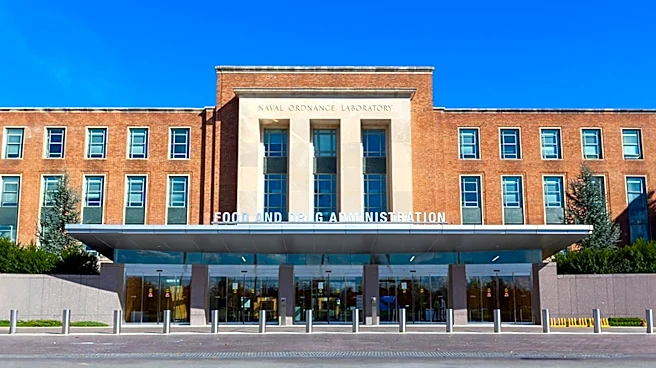
There is no single government food safety agency. The Food and Drug Administration (FDA) regulates about 77% of the U.S. food supply, including produce, seafood, shell eggs and most packaged foods. The U.S. Department of Agriculture's Food Safety and Inspection Service regulates most meat and poultry
and some processed egg products. The Centers for Disease Control and Prevention (CDC), along with state and local health agencies, helps detect and investigate foodborne illness outbreaks.
Put simply, the government does not have a single system that protects our food. It uses a collection of different agencies and institutions that have been built over time with expanding responsibilities as new issues arise. Why? The current fragmented system is largely a product of history, not design.
Modern federal food regulation took shape during the Progressive Era, particularly with landmark laws enacted in 1906, and Congress has continued adding authorities and responsibilities as new problems emerged. It's understandable, if a bit messy. Government institutions are often easier to understand through their history, because few people starting from scratch today would design the system quite this way.
The most significant recent change came in 2011 with passage of the FDA's Food Safety Modernization Act. The act tried to change the approach to food safety by shifting the focus from reacting to contamination toward preventing it. The law expanded FDA authority through preventive controls, produce-safety standards, inspections, import oversight, traceability requirements and mandatory recall authority. It was the largest overhaul of federal food-safety authority since the 1930s and was aimed directly at preventing many of the problems we are talking about today.
That doesn’t mean the government was going to test every head of lettuce or tomato but rather establish standards and systems that producers would need to follow to limit contamination. In the recent lettuce outbreak, epidemiological and traceback evidence allowed investigators to identify the implicated supplier and trace the lettuce to central Mexico, leading to a voluntary recall and further inspection and sampling. Most recalls are voluntary, and government typically only orders one if the producer does not act.
With these powers and systems, why does it seem the problems are worse?
There is evidence that some foodborne infections are up. Though, part of the reason may be that we are better at finding issues, some past outbreaks might have been seen as unrelated. However, in 2025, a GAO report found that the FDA has not met its mandated inspection targets and lacked performance measures to evaluate its inspection program, with the FDA noting that it needed more inspectors.

That is a recurring problem with government bureaucracy. Inspection and regulation can look like costly overhead until something goes wrong. More spending does not automatically mean safer food, but staffing and administrative capacity matter if government is expected to carry out the responsibilities Congress has given it.
Kevin Wagner is a noted constitutional scholar, political science professor at Florida Atlantic University. The answers provided do not necessarily represent the views of the university. If you have a question about how American government and politics work, email him at kwagne15@fau.edu or reach him on (X) @kevinwagnerphd.
This article originally appeared on Palm Beach Post: The federal government needs to fix food safety | Opinion