





In January 2026, my husband and I met with my financial planner, who told us about a 90-year-old client worth $25 million who lives like a pauper. I don’t have anywhere near that kind of money, but his message was clear: I can afford to spend more than I do.
Yet that very evening – after we had just agreed we needed to stop being so frugal – my husband looked at our nightly treat, a Yasso frozen Greek yogurt bar, and asked, “Do you realize how much these cost?”
At least we were self-aware enough to burst out laughing.
Naturally, we dug out our BJ’s Wholesale Club receipt and did the math: $1.20 per bar.
The horror.
Where did my penny-pinching come from?
I come by my frugality honestly. My dad worked a series
of jobs to put himself through optometry school, and my mom worked as a hairdresser. Still, they couldn't afford a place of their own, so they lived with Dad's parents for a while. Saving money wasn't just a habit — it was a necessity. And Benjamin Franklin's "A penny saved is a penny earned" wasn't just a maxim. It was a way of life.
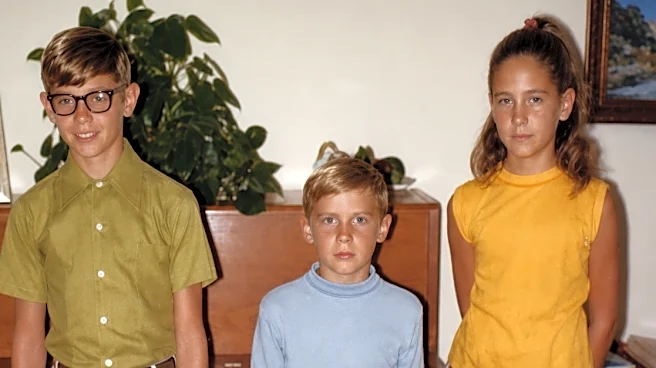
When my brothers and I came along, Mom shopped at thrift stores for curtains she turned into clothes for us — proving one person’s drapes are another person’s wardrobe.

At some point, my parents gave my brothers and me a choice: $1 per “A” on our report card if we put the money in the bank or 50 cents if we kept it to spend.
I wanted the dollar. Looking back, that was probably the moment I learned to value saving for tomorrow more than spending today.
When I was hired as a teacher at John I. Leonard High School in 1983, earning $13,500 a year, I thought I was rich. I even considered buying a small house. My parents had instilled in me the belief that the way to get ahead was to buy, not rent. But I quickly learned I couldn’t afford a house, so my parents let me live with them to save for a down payment.
Next level thrift
Just how frugal am I? I shopped at yard sales and thrift stores before thrifting was cool. And I'll try to sell anything people are willing to buy on Facebook Marketplace or at a yard sale.
At 6’2”, I find paying for extra leg room on a flight to be just as painful as cramming my knees into the seat in front of me. A year of plantar fasciitis taught me the importance of good sneakers, but I still wear mine longer than I should. Costco’s facial towelettes, designed to remove makeup, get torn into four strips.
If only one bug is stuck to a glue trap, I'll leave it there until I've gotten my money's worth and caught a few more. Apparently, my frugality outweighs my disgust. I'd rather stare at a dead cockroach for a few extra days than throw away a perfectly good glue trap.
Last November, when I treated my husband to a week at Atlantis in the Bahamas for his milestone birthday, I refused to pay for an international cell-phone plan. Instead, I convinced myself being unreachable for a week was a luxury.
If I need gas, I'll only put in enough at a regular station to get me to Costco or BJ's, where saving 20 or 25 cents a gallon feels like a financial victory.
It doesn't stop there.
Pay someone to do something I can do myself? Not happening on my watch. I groom my dog, trim my bangs, color my hair, wash my car, paint my house and mow the lawn when my husband's out of town.
The pay-off of not spending — and the cost

Laugh all you want, but being frugal has paid off. I own my home free and clear, have no car payment, and have retirement savings. Even on a teacher's salary and after a 2012 divorce in which our assets were divided and I received no alimony, I was able to retire at 64.
So, what exactly was I saving all that money for?
I remarried in 2020, and my husband sometimes asks me that question. I’d like to leave some for my children, but I've worked hard and would like to enjoy some, too.
But frugality doesn't come without a cost.
My biggest regret stemming from my frugality? When my dad's nursing home called early one morning to say he might not have long to live, I went to work, intending to spend the afternoon and evening with him. Dad was my rock, and I didn’t believe he would die. I also told myself finding a substitute teacher on such short notice would be nearly impossible, and I didn't want my co-workers to give up their planning period to cover my classes. But beneath those reasons was another one I didn't want to admit: I'd be paid for my unused sick days when I retired.
I did end up leaving work early and made it to Dad's bedside before he died, which helped me eventually forgive myself. But I've never forgotten the lesson. Money can be replaced. Time with the people we love cannot.

The main reason I save is I don’t want to become a burden to anyone. If I knew how long I’ll live or how much money I’ll need, I could calculate how much I can safely spend.
Even if I knew, could this old dog learn new tricks? I’m in the habit of saving money. How do I shift from saving for the future to spending in the present?
I hated hearing Dad grumble about Mom’s spending whenever their credit card bill arrived, especially because Mom wasn’t a big spender. I wish he had let her enjoy her spending sprees, which literally were trips to the dollar store.
Though my parents were reluctant to spend money on themselves, they modeled generosity toward others. They faithfully tithed 10% or more of their income to their church and were generous with family and friends. Dad also likely spent over $100,000 traveling on more than 80 mission trips to 23 countries.
I don’t think I love money. I just have a hard time parting with it. While pondering that distinction, I had a revelation: If I loved money, I wouldn’t have become a teacher. Being frugal helped me survive financially so I could teach, which is what I loved.
I've realized I can be financially responsible without being afraid to spend money, so I’m trying to loosen up.
When my daughter, who already had a 15-month-old, told me she was pregnant, I decided to retire so I could help her. Walking away from the highest salary of my teaching career – and knowing I’d have to pay $900 a month for health insurance until I turned 65 – wasn’t easy, but I’ve never regretted it.
My financial planner would be proud: I bought myself a brand-new 2025 Honda CR-V, a painful purchase but one I've thoroughly enjoyed. And I rented an Airbnb for my kids, grandkids and me.

I’ve also surprised myself by discovering I will spend money when necessary. I used to joke if a dog of mine needed surgery, it wouldn't happen – I'd get a new dog. Then a cat punctured my sweet Josie's eye. Despite antibiotics, when she became lethargic and stopped eating and drinking, my husband and I didn't hesitate to spend thousands to remove her eye and save her life.
Maybe there is hope for me after all.
But even baby steps sometimes require self-lecturing, which doesn’t always work.
When my granddaughter wants to ride the carousel at the zoo – which costs a whopping $3 – if I even think about talking her out of it, this:
"What is wrong with you? Do you want to die and leave your money in the bank, or do you want your granddaughter to enjoy herself?"
That one always works.
But in April, after spending two weeks with my son's family in Georgia following my grandson's birth, I was waiting for my flight home at the Atlanta airport when I got hungry enough to give myself a stern talking-to.
"You just spent more than $700 on groceries and gas for Jordan and his family. You're hungry. For crying out loud, buy yourself some lunch."
Then I looked at the prices.
"Okay... maybe just a chocolate milk. That'll fill you up."
Then I saw the price.
"Five dollars and fifty-nine cents for a 14-ounce container? You can buy a whole gallon of milk at Costco or BJ's for less than that."
Sigh.
Every coupon I’ve clipped, every yard sale and thrift store I’ve shopped at, and every last bit of toothpaste I’ve squeezed out of a tube have helped buy something far more valuable: financial independence. But at some point, the numbers on the page matter less than the life those numbers are supposed to support. The real point is enjoying life while we’re here.
Being careful with money is too deeply ingrained in me to stop, but I am trying to spend more on the people I love, experiences I want to remember, and, yes, even lunch at the airport when I’m hungry. Money was never meant to be the point. Life was.
Janet Meckstroth Alessi is a retired high school teacher and frequent contributor to Accent. She can be reached at jlmalessi@aol.com.
This article originally appeared on Palm Beach Post: Can a lifelong penny pincher learn to spend money?