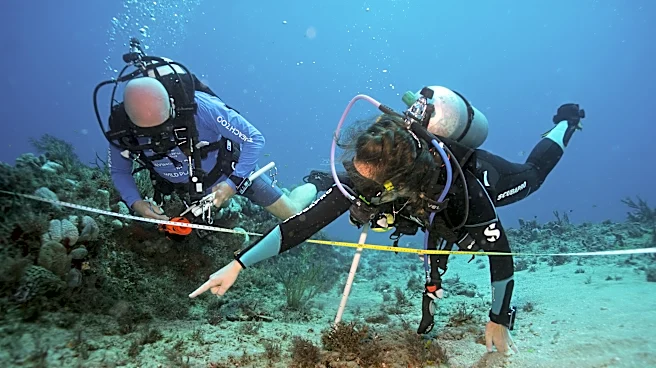






Dive teams are surveying Palm Beach County's coral reefs this summer to check on their health during peak ocean temperatures.
The Palm Beach Zoo & Conservation Society and Loggerhead Marinelife Center have teamed up to conduct underwater surveys through October 2026, according to a recent announcement. The effort, called Disturbance Response Monitoring, is designed to assess coral health, watch for bleaching and disease, and gather data on how reefs are coping with rising ocean temperatures.
Why the surveys matter
Coral reefs are vital to Florida's environment and economy. They protect coastal infrastructure, support marine life and contribute to industries like fishing, diving and tourism.
“Oceans provide at least 50% of the oxygen we breathe. For every other breath we take,
we have the ocean and marine life to thank. Florida’s Coral Reef is both an ecological treasure and an economic powerhouse, but it is vulnerable to what happens on land and in our warming waters,” said Michael Terrell, Director of Wildlife Conservation Impact and Coral Conservation Coordinator at Palm Beach Zoo & Conservation Society.
“As summers grow hotter, Florida is at risk of losing one of its most important natural defenses against hurricanes. Florida’s Coral Reef protects more coastal infrastructure than any other reef system in the world, while also sustaining countless jobs and supporting the seafood on our plates,” said Joanna Walczak, Vice President of Conservation at Loggerhead Marinelife Center.
A new partnership for reef monitoring
This is the Palm Beach Zoo's eighth summer conducting these surveys, but it's the first time teams are diving alongside Loggerhead's dive team. The collaboration builds on a coral restoration trip the two organizations took to the Florida Keys earlier this year.
The surveys involve careful, methodical work by divers who assess the amount of healthy coral, look for signs of stress, and document any changes. The data collected helps scientists and managers understand how reefs are responding to environmental pressures.
How you can help protect coral reefs
Reef health isn't just determined underwater; actions on land also play a significant role. The announcement outlines three ways individuals can help:
- Support sustained funding for restoration of Florida’s Coral Reef by contacting local, state, and federal elected officials.
- Use reef-safe sunscreen that is free of oxybenzone and octinoxate, two ingredients known to harm coral.
- Reduce fertilizer use, especially during rainy season, to help prevent polluted runoff from reaching the ocean.
About the organizations
The Palm Beach Zoo & Conservation Society has been connecting visitors to wildlife for over 50 years through animal encounters across 23 acres. The zoo participates in AZA Species Survival Plan programs and works to inspire guests to take action for wildlife. More information is available at palmbeachzoo.org.
Loggerhead Marinelife Center, located in Loggerhead Park in Juno Beach, is a sea turtle research, rehabilitation, education, and conservation center. The center manages the Juno Beach Pier and focuses on promoting conservation of ocean ecosystems, with a special emphasis on threatened and endangered sea turtles. Learn more at marinelife.org.
The collaboration between the two organizations aims to combine their expertise in conservation, data collection, and public education to better understand and respond to coral stress when reefs are most vulnerable.
This story was created by web producer Michele Kelley (mkelley@pbpost.com) with the assistance of Artificial Intelligence (AI). Journalists were involved in every step of the information gathering, review, editing and publishing process. Learn more.
This article originally appeared on Palm Beach Post: Palm Beach Zoo, Loggerhead Center team up to survey coral reefs