


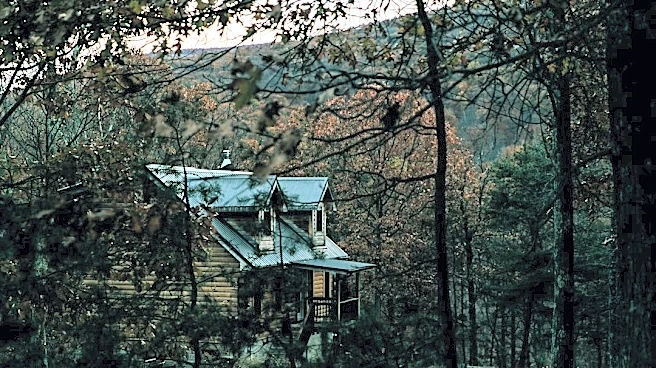


JUPITER — They came to Riverbend Park last March to shoot a documentary, a film capturing their return to the hammocks and woods their ancestors called home200 years ago.
A tribal elder, Chebon Kernell said he now understood why this land sustainably housed humans for thousands of years as he marveled at the diversity of fauna and flora.
"There's so much water, there's so much life around us," said Chebon Kernel, standing under towering oaks with dangling moss. "We can see why cultures of indigenous peoples were here for millennia upon millennia."
The Loxahatchee Battlefield, tucked into northeast corner of the Palm Beaches, is the location of an 1838 battle that expelled untold numbers of native people from South Florida to lands west of the Mississippi.
At the solemn site, the dozen Seminoles from Oklahoma reflected, paid homage and hoped.
"It's really, really surreal," said Kernell. "It's really just this moment of having this flood of emotions. As we think about these stories, it's not just mourning, not just a story of suffering, but also a hope for the future, If we can share this story in a way that helps us cultivate a world, a world that's better for all people, all creation. That's what my hope is."
Six months later, that hope, from South Florida to the different corners of the United States, is also found in renewed resistance over a centuries-old issue — land.
Trump land policies draw protests, lawsuits, competition
President Donald Trump's push to reopen federal lands — and scale back protections for others — has drawn numerous lawsuits from tribal quarters.
In South Florida, the Miccosukee Tribe of Indians of Florida joined a lawsuit last year in opposition to the Alligator Alcatraz detention camp, a now-defunct state facility hastily built within the Big Cypress National Preserve in pursuit of federal immigration enforcement.
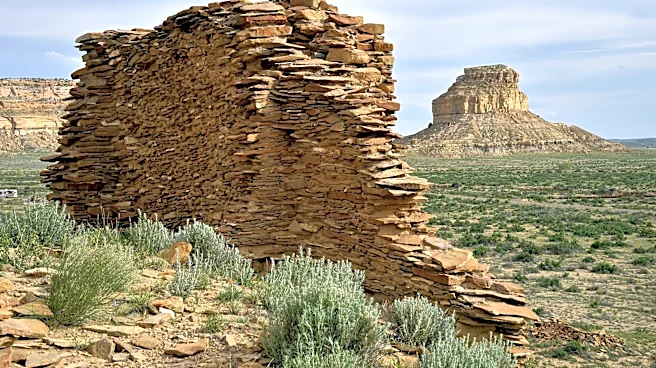
In New Mexico, the Hopi Tribe and the Mescalero Apache Tribe are among nearly 20 indigenous communities challenging the U.S. Bureau of Land Management's proposal to remove a 10-mile buffer around the Chaco Canyon to permit oil and gas exploration.

Further north, the Ute Indian Tribe and Pueblo of Zuni are opposing the administration's commercial mining designs on the Bears Ears National Monument in Utah.
In California, the Southern Sierra Miwuk Nation has vocally opposed an offer to grant a Las Vegas company, Kingsbarn Realty Capital, land bordering Yosemite National Park.
Then there are myriad challenges to the administration's intended rollback of habitat protections for a variety of species, including from the Swinomish Indian Tribal Community and the Squaxin Island Tribe in the Pacific Northwest.
Native tribal challenges to U.S. policies, whether from the federal government, states or local jurisdictions, are not new. What is different, tribal leaders and advocates say, is the second Trump administrations designs on exploiting vast tracts of public lands, including broad swaths that are of ancestral significance.

Early in this administration, Secretary of the Interior Doug Burgum suggested selling off large parcels of federal land to pay down the national debt, then at $36 trillion and now at plus $40 trillion. The suggestion infuriated indigenous activists.
"The notion that the nation’s debt — driven up by the far right and their tax giveaways to the wealthiest corporations and billionaires — must be addressed by developing federal public lands that hold great significance to Native peoples is offensive," bristled Judith LeBlanc, executive director of Native Organizers Alliance. "As Native peoples, we don’t view our lands, waters, and natural resources in terms of dollar signs."
First Trump administration drew Native American backing
There are nearly 600 federally recognized tribes of native and indigenous people across the United States. And in his first term, Trump enjoyed backing from a number of them for a number of reasons.
The president's prior administration drew applause for favoring hunters and sportsmen, including those in native tribes. Others agreed with the president's focus on reducing substance abuse and the illicit narcotics trade. They also cheered his nomination of U.S. Supreme Court Justice Neil Gorsuch, viewed by some tribes as friendly to Native American rights.
Former Navajo Nation Vice President Myron Lizer not only endorsed Trump's 2020 re-election campaign, he spoke via video at the COVID-19 adapted Republican National Convention that summer.
Lizer said Trump and GOP conservatives who stress work ethic, highlight family structures and call for local self-reliance were aligned with values traditionally held by indigenous people. He also praised a task force established by the administration to address missing and murdered indigenous people, as well as coronavirus health funding for tribes.
"Whenever we meet with President Trump, he has always made it a priority to repair the relationship with our federal family," Lizer said in the 2-minute-plus speech he delivered via video from Shiprock in the Navajo community of New Mexico.
Closer to home in South Florida, the Miccosukee also believed they had a cooperative, and personally warm relationship with the president, owing in part to Trump's interest in Everglades conversation.
In March 2019, while spending a weekend in Palm Beach, Trump flew out to Lake Okeechobee on Marine One from Mar-a-Lago to inspect work on the Herbert Hoover Dike and assess federal wetlands and Everglades efforts.
“The Miccosukee Tribe of Indians of Florida has long supported President Trump’s commitment to Everglades restoration, for the benefit of America’s public lands," the Tribe said in a statement in December 2025. "The late Chairman Billy Cypress, who served for 27 years as the chief executive of our tribe and passed away earlier this year, enjoyed a friendship with President Trump and was an early supporter of his campaign in 2016."
Tribe's relationship with Trump frayed over Alligator Alcatraz

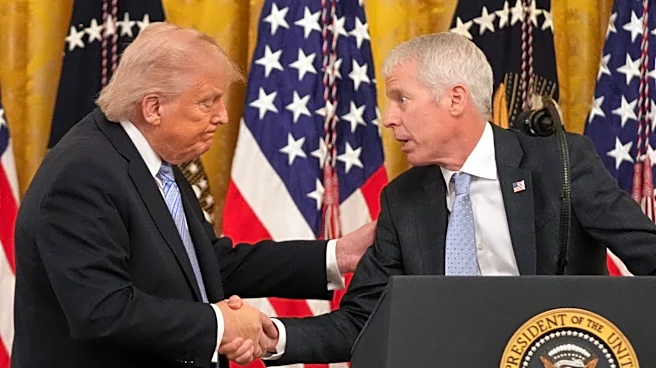
The relationship was strained at the end of last year. Trump took offense to the Miccosukees' involvement in the lawsuit against the state over Alligator Alcatraz, and punished the Tribe in a costly manner.
On Dec. 30, Trump vetoed the "Miccosukee Reserved Area Amendments Act" that had been approved by Congress in a bipartisan vote.
The legislation would have given the Miccosukee Tribe the right to implement flood control measures to protect structures in an area of Everglades National Park, called the "Osceola Camp," which is occupied by its members.
"The Miccosukee Tribe has actively sought to obstruct reasonable immigration policies that the American people decisively voted for when I was elected," Trump's statement read.
The Miccosukee Tribe did not respond to a request for comment for this story. But in an interview in the summer of 2025, just weeks after the detention center camp opened, Curtis Osceola, a senior executive policy adviser, said the Miccosukees were not making a statement on U.S. immigration policy.
Rather, he emphasized the Tribe held "major concerns" about the placement of the detention center on the grounds of the Big Cypress. Some adverse impacts were already evident, he said, including light pollution at night and the chemical spraying for mosquito control, both striking at the diet of the Florida bonneted bat.
The camp's Big Cypress location, Osceola added, could also impact drinking water quality for millions of people and risk the massive financial investments made to restore the sensitive ecosystem.
He insisted the Tribe had a constitutional, legal and moral obligation to the Big Cypress. He noted tribal ancestors have lived in the area for millennia, and sought refuge and safe harbor there 200 years ago during the Seminole Wars of the early 19th century.
"We fled and hid out in the Big Cypress hammocks," Osceola said. "Those are the lands that protected us from removal and annihilation. So these are very sacred mother lands to us."
Trump, tribes value lands differently
In his public statements, Trump decidedly embaces development over conservation of the natural world.
He touts buildings and golf courses he owns and has developed or refurbished, and rarely talks about the grandeur of America's landscape. As president, Trump trumpeted the engineering feat at Mount Rushmore, the carving in stone of the faces of U.S. presidents, but not the beauty of the Black Hills. Nor Yellowstone or the Grand Canyon or the Florida Everglades or the Alaska frontier.
At a rally in May 2024, he waxed about Manhattan and "the city I helped build," arguably the world's most famous urban skyline.
"What you see around you was nothing more than wilderness and marsh," he said. "But by the muscle and backbone and genius of the people of New York we built this city into the towering forest of iron, aluminum, concrete and steel."
In March of this year, as he prepared to depart for Washington for a weekend at the Winter White House in Palm Beach, Trump pivoted from questions about inflation and the war in Iran to a topic he said was far "more pleasant" — construction at the White House ballroom site.
"It makes me happy when I hear those piledrivers ... I love the sound," he said. "I love the sound of concrete, I love the sound of piledrivers."
LeBlanc at the Native Organizers Alliance said the second Trump administration's push to exploit the natural world is the "biggest danger" to public lands and in utter disregard "of traditional cultures" and native people.
"We now have an administration where public lands are up for anything that fossil fuel industry would like to do with them," LeBlanc said. "This administration has pledged, and is opening up areas that have never been drilled in before. And that escalates the damage."
Indigenous advocacy organizations have sued to impose guardrails and force compliance with laws and treaty rights. But the resistance toolkit also requires making the case to the American public, she said.
"It's a generational struggle, and we have to commit, no matter what happens in the courts, to raise awareness and organize, to protect those lands," LeBlanc added. "There's the legal, there's the spiritual, and there's the narrative work that needs to be done in order to, to engage a broader cross section of people."
LeBlanc said the tribes view their relationship with land via a "holistic worldview" that goes beyond just protecting water and air quality, but an appreciation for the natural landscape as it is, from rivers to forests to mountains and all life living in them.
"It's not just for American Indians, for native peoples. It's for the good of humanity. It's for the good of the natural world," she said. "I'm saying that because our relationship to this land is not about ownership. It's not a resource to be bought and sold. It is a place of things that need to be protected."
Antonio Fins is a politics and business editor at The Palm Beach Post,part of the USA TODAY Florida Network. You can reach him at afins@pbpost.com. Help support our journalism. Subscribe today.
This article originally appeared on Palm Beach Post: Trump's exploitative land use policies anger Native American tribes