






Why is daylight saving time after Halloween?
Despite efforts to permanently end daylight saving time in Florida and beyond, it'll soon "end" in 2026. For states that observe daylight savings, we will “fall back” the first Sunday in November, which, for fall 2026, is the day after Halloween.
Why does it matter?
In Florida, the time before the time change gives parents and trick-or-treaters more daylight and more opportunities to collect candy on Oct. 31. Whether it will be hot and muggy and eerily sunny at 6 p.m. when trick-or-treating traditionally starts remains to be seen.
Daylight savings deal: Walmart products
On the flip side, for those wanting Halloween festivities to start at night when it’s dark out — trick-or-treating, haunted houses, Halloween parties
— that means a later start time.
There’s also the theory that candy makers had something to do with daylight saving time since Halloween ranks up there in terms of candy-giving holidays (Valentine’s Day and Easter also are popular).
Below are things to know about Halloween in Florida, daylight saving time, fall back and spring forward.
When is Halloween in 2026?
Halloween is on Saturday, Oct. 31, 2026.
What time does trick-or-treating start on Halloween?
This is subjective. While most of Florida is in the Eastern Time zone, the time change and when to trick-or-treat can be a challenge for residents in Panhandle cities that observe Central Time.
For young children up to age 5, it's not uncommon for parents to ring the doorbell with their costumed-kids yelling "Trick or treat!" at about 5:30 or 6 p.m. EST Halloween night. Older children ages 6 and up typically start trick-or-treating when the sun sets and continue while it's dark, regardless of time zone.
What is daylight saving time?
According to timeanddate.com, "daylight saving time is the practice of setting the clocks one hour ahead of standard time to make use of more sunlight in the spring, summer and fall evenings. Daylight saving time (DST) is used to save energy and make better use of daylight. It was first used in 1908 in Thunder Bay, Canada."
Daylight saving time became a national standard in 1966 when President Lyndon B. Johnson signed the Uniform Time Act, which was established as a way to continue to conserve energy. The thinking was, if it's light out longer, that's less time you'll need to use lights in your home.
When does daylight saving time end in 2026? When is daylight savings in 2027?
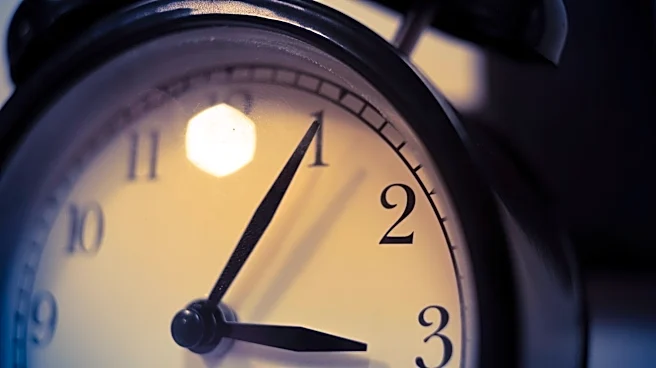
Daylight saving time "ends" at 2 a.m. ET Sunday, Nov. 1, 2026 (Halloween weekend!), for "fall back."
Daylight saving time starts (again) at 2 a.m. ET Sunday, March 14, 2027, for "spring forward."
Daylight saving time then "ends" at 2 a.m. ET Sunday, Nov. 7, 2027, for "fall back."
Why all the hype around daylight saving time?
We live in a time-obsessed culture. What time is it? When's dinner? How soon till I take my 30-minute lunch break from work? What time can I start trick-or-treating on Halloween? What time should I start my Halloween party? How many days or hours until we celebrate Diwali, Thanksgiving, Hanukkah or Christmas?
And, of course, one of the most popular holidays of all time revolves around a clock — New Year's Eve. Worldwide, we love that holiday so much, we dress up, drink Champagne at midnight, or watch a ball drop (in person, virtually or on TV). So when we have to alter our schedules or time, it has a big impact on our lives.
Was daylight saving time affected by Halloween or candy makers?
This has been a popular search topic: Did candy makers have anything to do with daylight saving time changes?
An NPR report in March 2007 addressed the query during an "All Things Considered" interview with host Melissa Block and Michael Downing, author of "Spring Forward: The Annual Madness of Daylight Saving Time."
"This may be kind of an urban legend, but I thought I had heard that one of the backers behind extending Daylight Saving Time into the beginning of November was the candy industry, and it all had to do with Halloween," Block said in the NRP excerpt.
"This is no kind of legend," Downing responded, adding, "this is the truth. For 25 years, candy-makers have wanted to get trick-or-treat covered by Daylight Saving, figuring that if children have an extra hour of daylight, they'll collect more candy."
A 2020 story in USA TODAY also mentioned the Halloween-daylight saving time tie: "Lobbyists for the golf industry told Congress in 1986 that just one hour of extra natural light during the day would result in about $200 million in extra sales; the barbecue industry estimated that extra revenue for them would be around $100 million. The candy lobby wanted to benefit as well, claiming that one more hour of sunlight on Halloween would result in more trick or treating and therefore more candy purchases," the story states.
In reality, the Energy Policy Act of 2005 extended daylight saving time from the first Sunday in April to the second Sunday in March (three or four weeks earlier than the previous law), and in the fall from the last Sunday in October to the first Sunday in November (one week later than the previous law), according to a U.S. Department of Energy report. It went into effect in 2007.
Sangalang is a lead digital producer for USA TODAY Network. Follow her on Twitter or Instagram at @byjensangalang. Subscribe to the free Florida TODAY newsletter.
This article originally appeared on Palm Beach Post: Daylight savings to end. Did Halloween, candy makers affect time change?
Our editors independently choose our recommendations. Some content is produced with paid support from a third party, however our editorial decisions remain independent. If you buy through our links, the USA TODAY Network may earn a commission. Prices and availability may change.