
The Atlantic hurricane season continues to show signs of being quieter than normal, with the latest outlook from the National Oceanic and Atmospheric Administration still calling for below-average activity
this year.
But a slow season does not mean Florida residents can let their guard down. Residents should remain prepared, stay informed and continue monitoring the tropics as conditions can change quickly.
➤Track all active storms
Shop Amazon to stay prepared for hurricane season
Colorado State University had some good news in its updated hurricane season forecast released Aug. 5: a below-normal season is still predicted.
From Maine to Texas, Florida remains the most likely to feel impacts from a storm in 2026 among the states listed by CSU.
➤ Weather alerts via text: Sign up to get updates about current storms and weather events by location
An average season — using data between 1991 and 2020 — has 14 named storms, seven hurricanes and three major hurricanes.
In 2025, no hurricane made landfallin the continental United States for the first time since 2015, according to NOAA's National Environmental Satellite, Data, and Information Service.
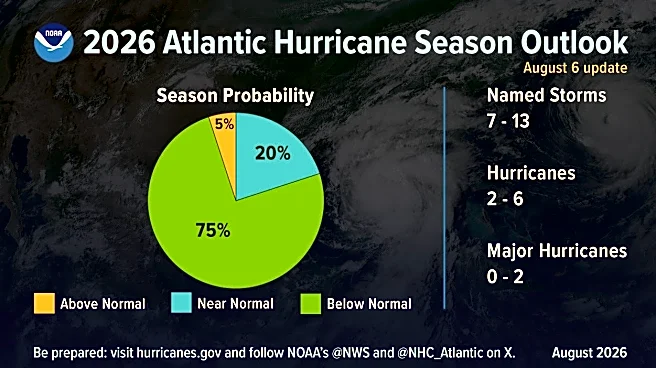
NOAA predicting 7 to 13 named storms for 2026 Atlantic hurricane season
NOAA forecasters predict:
- Named storms: 7 to 13 (May forecast: 8-14)
- Hurricanes: 2 to 6 (May forecast: 3-6)
- Major hurricanes: up to 2 (May forecast: 1-3)
A major hurricane is a Category 3 storm or higher, with maximum sustained winds of at least 111 mph.
Why is this hurricane season so slow?
NOAA considered several factors in its prediction for a below-normal hurricane season, including:
- Strong El Niño conditions creating wind shear across the tropical Atlantic, making it harder for storms to organize and strengthen.
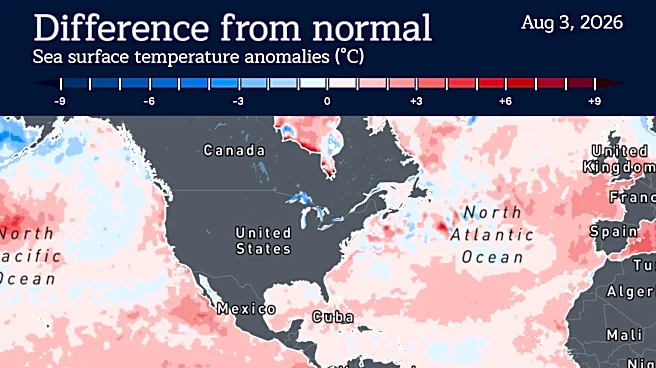
- Only slightly warmer-than-average sea surface temperatures in the Atlantic's main development region between Africa and the Caribbean.
- Persistent dry air from the Sahara Desert spreading across the tropical Atlantic and suppressing thunderstorm development.
- High confidence that El Niño will continue through early 2027 and potentially strengthen into one of the strongest events on record, further limiting Atlantic hurricane activity.
"When El Niño emerges, it usually becomes the dominant factor in total hurricane season activity, and this El Niño continues to get stronger every month,” said Matt Rosencrans, lead hurricane season forecaster with NOAA’s National Weather Service. "Compared to a mature El Niño, other mechanisms play a smaller role in determining the number and intensity of tropical storms in the Atlantic basin.”
Colorado State University predictions for 2026 hurricane season
Colorado State University held firm on its predictions last updated in July, which dropped from the original forecast in April. Compare this year's predictions:
- Named storms
- April: 13
- June: 11
- July: 9
- Aug. 5:
- Hurricanes
- April: 6
- June: 5
- July: 4
- August: 4
- Major hurricanes
- April: 2
- June: 2
- July: 1
- August: 1
A major hurricane is a Category 3 storm or stronger, with maximum sustained winds of at least 111 mph.
How does El Niño affect Florida's hurricane season?
El Niño usually suppresses Atlantic hurricanes by increasing the wind shear which tears developing storms apart or prevents them in their infancy.
➤ El Niño odds rise again, which could mean fewer hurricanes for Florida
"Simply put, El Niño favors stronger hurricane activity in the central and eastern Pacific basins, and suppresses it in the Atlantic basin," NOAA said.
For Florida, the return of El Niño through the peak months of the 2026 hurricane season is good news and could mean fewer tropical cyclones during some of the busiest weeks of the season.
Does El Niño mean Florida is safe from hurricanes this year?
No. Despite the presence of El Niño, Florida could still feel the impacts from a tropical storm or hurricane this year.
➤Confused? Here's what ENSO, La Niña, El Niño mean for Florida
On Aug. 5, Colorado State University forecasters predicted Florida faces a 44% chance of a named storm passing within 50 miles of the state in 2026.
That's why forecasters constantly remind people they should prepare for hurricanes, no matter what the forecast is.
Don't wait. Prepare now for hurricane
"There is still uncertainty in how each season will unfold,” Graham said.
“That is why it’s essential to review your hurricane preparedness plan now. It only takes one storm to make for a very bad season.
➤ Everything to know about NOAA tips from Hurricane Preparedness Week 2026
"NOAA’s outlook is for overall seasonal activity based on large-scale weather and climate patterns. It does not indicate where or when any storms may affect land as that is determined by short-term and variable weather patterns is not a landfall forecast.
“Preparing now for hurricane season — and not waiting for a storm to threaten — is essential for staying ahead of any storm."
When is hurricane season in Florida?
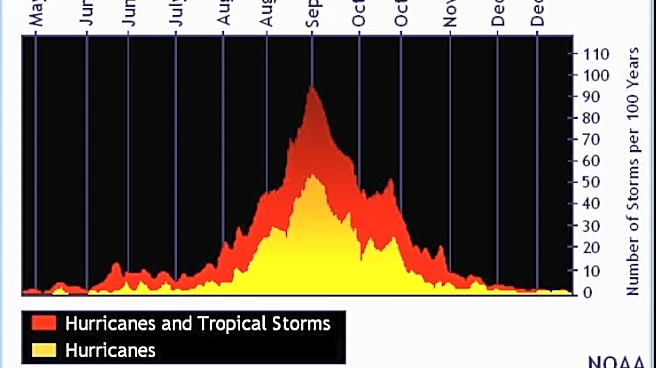
The Atlantic hurricane season runs from June 1 through Nov. 30.
Ninety-seven percent of tropical cyclone activity occurs during this time period, NOAA said.
➤ Hurricane Center testing new cone: What's changing this season?
The Atlantic basin includes the northern Atlantic Ocean, Caribbean Sea and Gulf of America, as the Gulf of Mexico is now known in the U.S. per an order from President Trump. NOAA and the National Hurricane Center are now using Gulf of America on its maps and in its advisories.
What are names for 2026 Atlantic hurricane season?
Names for the 2026 Atlantic hurricane season, and how to pronounce them, are:
ArthurBertha- Cristobal, krees-TOH-bahl
- Dolly, DAH-lee
- Edouard, eh-DWARD
- Fay, fay
- Gonzalo, gohn-SAH-loh
- Hanna, HAN-uh
- Isaias, ees-ah-EE-ahs
- Josephine, JOH-seh-feen
- Kyle, KY-ull
- Leah, LEE-ah
- Marco, MAR-koe
- Nana, NA-na
- Omar, OH-mar
- Paulette, pawl-LET
- Rene, re-NAY
- Sally, SAL-ee
- Teddy, TEHD-ee
- Vicky, VIH-kee
- Wilfred, WILL-fred
When is the peak of hurricane season?

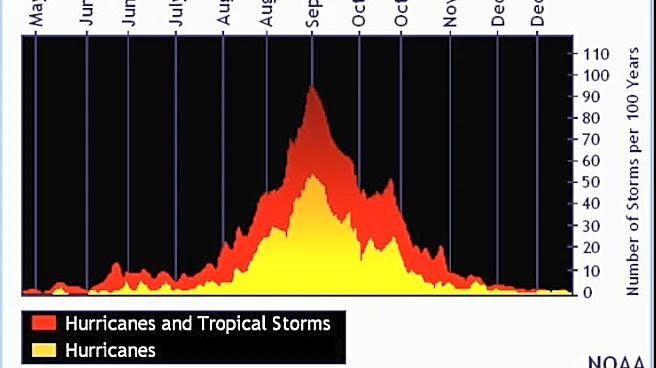
The peak of the season is Sept. 10, with the most activity happening between mid-August and mid-October, according to the Hurricane Center.
Interactive map: See how many hurricanes, tropical storms have passed near your home
Stay informed. Get weather alerts via text
What's next?
We provide daily tropical weather coverage to bring you the most current information you need to protect your home and family.
Cheryl McCloud is a journalist for the USA TODAY Network-Florida's service journalism Connect team. You can get all of Florida’s best content directly in your inbox each weekday day by signing up for the free newsletter, Florida TODAY, at https://palmbeachpost.com/newsletters.
This article originally appeared on Palm Beach Post: New hurricane forecast is out, and Florida should still be prepared