
As Florida voters consider Amendment 3 on the November ballot, The Palm Beach Post is seeking information about how the proposal could affect taxpayers, local governments, public-safety agencies, special
districts and the broader economy in Palm Beach County.
The amendment would expand homestead tax exemptions, reduce future growth in some property tax assessments and place new constitutional restrictions on how certain property tax revenues may be used.
Supporters say it would provide meaningful tax relief and promote fiscal discipline. Critics contend it could reduce revenues that support local services and limit the budget flexibility traditionally exercised by local governments under Florida's home-rule system.
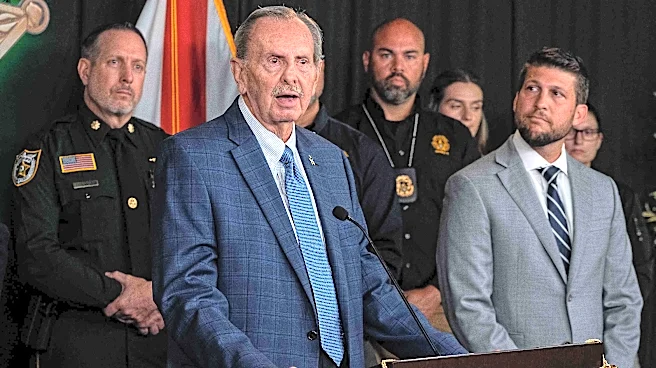
The following answers are from Wellington's Village manager Jim Barnes.
How much would the average homeowner in Wellington save?
The answer depends on the homeowner's taxable value, length of time in the home and the other taxing authorities included on the property tax bill. Because the proposed $150,000 exemption in 2027 and $250,000 exemption in 2028 would apply to non-school property taxes, the Village cannot accurately state a single "average homeowner savings" number for the entire property tax bill.
For the Village of Wellington, however, we can quantify the impact. Wellington's current millage rate is 2.47 mills. At that rate, every $100,000 reduction in taxable value represents approximately $247 in annual Wellington ad valorem taxes. The Village's FY2027 budget anticipates approximately $32.7 million in ad valorem revenue. So, for example, the full $250,000 exemption would represent up to $617.50 in annual Wellington municipal property taxes for a property with sufficient taxable value to receive the full exemption.
That is the Village portion only; the homeowner's total savings would be greater because the amendment also affects other applicable non-school taxing authorities.
The important point is that the benefit will not be uniform. Some Wellington homesteaded properties already have relatively low taxable values because of the Save Our Homes assessment limitation and existing exemptions. In fact, approximately 5,973 Wellington homesteaded parcels, roughly 41.4% of homesteaded parcels, have taxable values below $250,000 under the Village's analysis.
How much revenue would Wellington lose?
Based on the Village's analysis of the current property tax roll, we estimate that the increased homestead exemption would reduce Wellington's ad valorem revenue by approximately $3.2 million in the first year. In the second year, when the exemption increases from $150,000 to $250,000, the additional reduction is another approximately $3.2 million, resulting in a cumulative reduction of approximately $6.4 million annually from the homestead exemption component.
There is a second component. Amendment 3 would reduce the annual assessment-growth cap for non-homestead property from 10% to 5%. Based on the current Wellington tax roll, our analysis indicates that provision could reduce municipal property tax revenue by as much as approximately $1 million annually under the maximum modeled scenario.
Consequently, the Village's current modeling indicates a potential approximately $7.2 million annual reduction in Wellington's ad valorem revenue once both components are fully reflected. That is significant in the context of our budget. Wellington's FY2027 budget anticipates approximately $32.7 million in ad valorem revenue, representing about 45% of General Fund revenues.
It is also important to put that number in context. Wellington is not approaching this from a position of fiscal distress. We have maintained healthy reserves, a stable millage rate and a long history of managing growth in expenditures.
In fact, the proposed FY2027 governmental budget is approximately $7.8 million below the FY2026 adopted budget, reflecting completed capital projects, elimination of vacant positions and deliberate reductions or pacing of certain maintenance and capital expenditures. But a $7.2 million recurring revenue reduction would nevertheless be a substantial structural change to the Village's financial model.
Would police and fire services be affected? If so, how?
We have to be careful not to say that Amendment 3 automatically requires reductions in police or fire services. It does not. In fact, the proposed constitutional language specifically identifies public safety — including law enforcement, fire service and emergency medical services as — an allowable use of county and municipal ad valorem revenues.
The issue for Wellington is different. Public safety is one of the services we would be trying to protect while absorbing a significant recurring revenue reduction. Our FY2027 budget includes approximately $13.9 million for public safety within the General Fund, and the Village's overall budget provides funding for law enforcement, emergency management, building and code enforcement.
Our first responsibility would be to maintain essential public safety services. But if a recurring $6.2 million to $7.2 million reduction were ultimately realized, the Village Council would have to examine the entire expenditure structure of the Village. That could mean slower growth in staffing, postponement of capital purchases, changes in service levels or greater reliance on other legally available revenue sources.
I would not tell residents today that a particular service would be eliminated, because that would be speculative. What I can say is that no recurring $7 million reduction can be absorbed indefinitely without affecting the choices available to a governing body.

Would fees for parking, recreation, permitting or utilities rise?
There is no provision in the amendment that automatically increases those fees. Nor would I characterize fee increases as a predetermined response by Wellington. Our water and wastewater utility, for example, is operated as an enterprise system with its rates are established through a separate utility rate structure based on the cost of providing service, operations and maintenance, and the Village's five-year financial plan. The utility is not funded by ad valorem taxes. The FY2027 budget currently includes a 5.08% annual indexing adjustment, resulting in an average monthly water and wastewater increase of approximately $4.79. That decision was made independently of Amendment 3.
Similarly, Wellington's solid waste assessment is based on the cost of the collection contract. The FY2027 residential collection assessment increased from $320 to $325 per unit. Again, that is a cost-of-service decision rather than a response to Amendment 3. Like the utility fees, this is also not funded with ad valorem taxes. If Amendment 3 becomes law and the Village experiences the modeled recurring revenue loss, the Village Council would have to evaluate the appropriate mix of taxes, fees, service charges, expenditures and capital timing. But it would be premature to say that Amendment 3 will result in a specific increase in recreation, permitting, or other fees.
Would renters, condo owners and businesses ultimately pay more? If so, how?
There is a potential shift in the distribution of the local property tax burden. The amendment increases the homestead exemption for qualifying homeowners while simultaneously reducing the annual assessment-growth cap on non-homestead property from 10% to 5%.
In Wellington, our modeling indicates that the homestead exemption would reduce taxes paid by year-round homesteaded property owners by approximately $6.4 million once the $250,000 exemption is fully implemented. At the same time, the 5% non-homestead cap would shift some of the tax burden back toward non-homestead property, although the amount of that shift would depend on future property values.
Our current modeling estimates approximately $1 million in additional municipal contribution from non-homestead property relative to the alternative scenario, but that does not make non-homestead owners whole for the overall revenue reduction. That matters because non-homestead property includes commercial property and rental property, as well as other properties that do not receive the homestead exemption.
Whether those costs ultimately reach renters or consumers is an economic question that depends on individual landlords, businesses, leases, market conditions and other factors. I would not claim that a renter's rent will increase by a particular amount because of Amendment 3. What we can say is that when the tax burden on one class of property is reduced while a local government still has to provide the same roads, drainage, public safety, parks, planning and other services, the remaining tax base becomes relatively more important.
What new revenues would you be looking at to make up for the loss?
Our first response would not be to identify a single replacement tax. It would be to look at the entire financial structure. That includes continuing to pursue efficiencies, prioritizing expenditures, reviewing capital schedules, maintaining appropriate reserves, evaluating cost recovery and examining legally available revenue sources.
Wellington already has a diversified revenue structure. The FY2027 budget includes approximately $43 million in charges for services, $33 million in ad valorem taxes, $19 million in local taxes, state revenue sharing and franchise fees, and approximately $28 million in permit fees and special assessments.
That diversification is an important strength. But I would also caution against suggesting that fees can simply replace property taxes dollar for dollar. Fees generally need to have a reasonable relationship to the cost of the service being provided, and many municipal services, public safety, roads, drainage, parks and general governmental functions, for example, cannot simply be converted into user fees.
Ultimately, the Village Council would have to determine what combination of service efficiencies, expenditure reductions, capital timing, existing revenue growth, fees and potentially tax policy is appropriate.
What decisions by the council could become more difficult or restricted?
The most significant issue, in our view, is not that Wellington would suddenly lose the ability to budget. It is that the Village Council would have less flexibility in deciding how to allocate a recurring source of revenue.
The proposed constitutional language identifies specific allowable uses for county and municipal ad valorem revenues, including public safety, education and schools, infrastructure, natural resources, bond debt service, retirement benefits, and operations and administration. It also includes a provision for expenditures approved by county or municipal governing bodies unless prohibited by general law.
The practical question will be how those constitutional categories are interpreted and implemented through future legislation, administrative rules and court decisions. That creates uncertainty for local governments.
For example, a Council today can look at its overall financial position and decide that a particular capital project should be accelerated, deferred or funded differently. It can balance investments in roads, parks, drainage, public safety, facilities, technology and other community priorities based on local circumstances. Under a constitutional framework that prescribes allowable uses for a portion of local property-tax revenues, some of those decisions could become more constrained or require additional legal analysis.
Amendment 3 would place constitutional limits on how counties and municipalities may use certain property-tax revenues. Do you believe those provisions would reduce your city's home-rule authority and local control over budgeting? Why or why not?
Yes, we believe there is a meaningful home-rule issue here, although I would distinguish that from saying the amendment eliminates local control.
Florida's system of local government is built around allowing local elected officials to make decisions for their communities within the framework established by state law. The reason that matters is that communities are not all the same. Wellington has different infrastructure needs, different recreational assets, a significant equestrian community, a large parks system, extensive stormwater responsibilities and a municipal utility. The Village Council is elected by Wellington residents to balance those competing priorities. The proposed amendment would move some of those decisions from the local policy arena into the Florida Constitution. That is a significant change.
For example, Wellington's FY2027 budget invests in roads and pathways, stormwater management, parks and recreation, public safety, facilities, utilities, technology and capital replacement. Our Council has to decide not simply whether each of those things is important, but when it should be funded, how much should be invested and how those investments should be balanced against one another.
The amendment would not prevent Wellington from doing those things. Public safety and infrastructure, for example, are expressly identified in the proposed constitutional language. But putting expenditure categories into the Constitution changes the nature of local budgeting. A future Council would have less ability to respond to circumstances using the broad discretion that local governments traditionally exercise.
The most important question for local government is therefore not simply, "Will Wellington be allowed to spend money on roads or public safety?" Clearly, those uses are contemplated. The more important question is: "How much discretion will a future Wellington Council have to decide what this particular community needs most, when it needs it, and how to balance those needs against one another?" That is the home-rule concern.
The final word on Amendment 3
I would add that Wellington's position is not that property taxes should never be reduced. Property-tax relief can be meaningful to residents, particularly in a state where housing costs and insurance costs have increased significantly. Our responsibility as local government is to recognize both sides of that equation.
Residents want and deserve responsible taxation. They also expect the roads to be maintained, drainage systems to work, parks to be safe and clean, public safety services to be available, water to come out of the tap, wastewater to be treated, permits to be processed and the community to be maintained. Those services have real costs.
Wellington has worked hard to build a financially sustainable organization. Our millage rate has remained at 2.47 mills for eight consecutive years, which is also the average millage rate over the last 18 years, and we have continued to build reserves, manage expenditures and make difficult choices about capital investments and service levels.
The current FY2027 budget is actually an example of that discipline. We reduced governmental spending by approximately $7.8 million from the prior year's adopted budget, eliminated four vacant positions and reduced or deferred several capital and maintenance expenditures while maintaining full funding for public safety and the core services residents depend upon. But there is a difference between being fiscally disciplined and being able to absorb a permanent structural reduction in revenue without making choices.
If Amendment 3 passes, Wellington will adjust. We have done that throughout our history, and we will continue to do so. But I think it is important for the public to understand that tax relief does not eliminate the cost of government. It changes who pays, how much is paid, and how much flexibility local elected officials have to decide how those resources are used.
That is ultimately a policy decision for Florida's voters. Our role as local government is to make sure our residents understand the financial and operational consequences so they can make an informed decision.
This article originally appeared on Palm Beach Post: Amendment 3 could cut Wellington revenue by $7.2M, manager warns