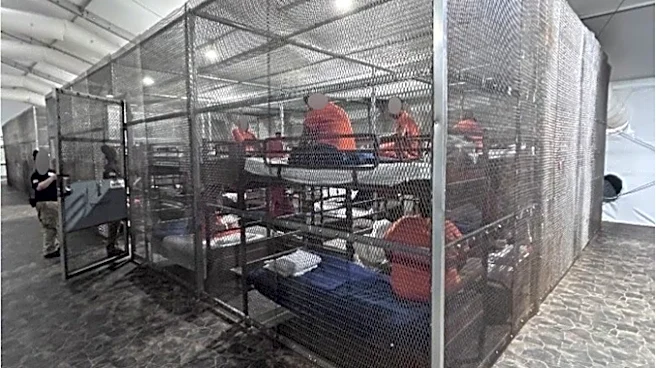

The men of Alligator Alcatraz lived in the equivalent of cages, drinking dirty water out of dirty cups and eating food stored at temperatures that let it spoil.
They lived with 30 men crammed into quarters
built for 11. They bathed in bug-infested showers when they were allowed to bathe at all.
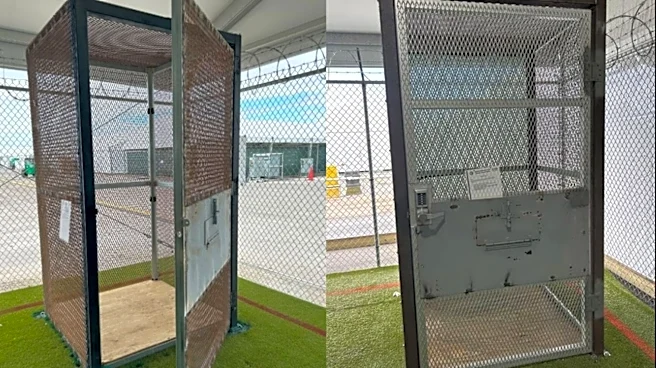
Nearly 80 of them spent days and weeks in cages the size of telephone booths, a move that "does not align with standards for humane treatment," says a new Department of Homeland Security report on the immigration detention center in the Everglades that recently closed.
That report said the center, which opened with a visit from President Donald Trump and praise from Gov. Ron DeSantis on July 1, 2025, met every critic's worst fear about the conditions in which immigrants detained for being in the U.S. without documentation were made to live.
The 33-page Office of the Inspector General report, issued on Sept. 11, detailed the findings from an unannounced visit to the site in January 2026.
The inspection found the facility didn't meet federal standards in areas including environmental health and safety, medical care, food service, personal hygiene and recreation.
Here's what to know about Alligator Alcatraz, the inspector general's findings and the reaction from Florida officials.
What is Alligator Alcatraz?
Alligator Alcatraz was a state-ran immigration detention facility built in eight days on a remote airstrip in the Florida Everglades, considered a protected wildlife sanctuary. It opened on July 1, 2025.
The center was part of Florida's contribution to President Donald J. Trump's enforcement efforts against immigrants in the U.S. illegally. Upon taking office for his second term, Trump promised the largest mass deportation in the nation's history, targeting those immigrants who had committed crimes.
Gov. Ron DeSantis, a supporter of Trump's policies, took over a Collier County training field via an emergency order in 2025 to build the detention center at a Florida taxpayer cost of $1.2 billion, according to the Inspector General's report.
Daily operation costs alone ranged between $1 million to $3 million, or about $350,000 daily per detainee. Most of the funding came from Florida's emergency reserve funds, typically used for hurricane and wildfire protection.
Florida has received $84 million in reimbursements out of a promised $608 million from the Federal Emergency Management Agency.
Florida officials shut down Alligator Alcatraz on June 15. The 1,400 remaining detainees, mostly men accused of illegally entering the country, were transferred to other detention facilities.
What inspector saw inside Alligator Alcatraz

The inspection found that detainees were living in "cramped" conditions and showered in bug-infested bathrooms and that the facility did not meet food, health, recreation and safety standards
Tents with metallic housing units designed for 11 detainees held more than 30 people, according to the report. The metal units contained bunk beds, three toilets, three wash basins and four telephones, according to the report.
Detainees were only allowed to shower three times a week. Inspectors also found that detainees drank contaminated water from dirty cups and reported that freezers storing perishable food were operating at temperatures above the recommended levels, creating food safety risks.
Alligator Alcatraz staff lacked clear procedures governing detainee discipline and confinement, according to the inspection report.
Alligator Alcatraz detainees held in small cages known as 'the box'

The Inspector General's report found 79 Alligator Alcatraz detainees were held in 4-foot-by-4-foot metal cages — known as "the box" — for periods ranging from a couple of minutes to nearly two hours between July 17, 2025, and January 18.
The site's staff described the small metal enclosures as "calming areas" for detainees to de-escalate and have time alone, according to the report.
"Use of these small metal enclosures for any reason is unprecedented among detention facilities OIG has inspected," states the DHS report. "Use of such restrictive spaces is highly unconventional and does not align with standards for humane treatment."
Former detainees had previously reported being placed in "the box" as punishment. The cages were placed in direct sunlight on 90-degree days and detainees were not given food or water, detainees reported.
The inspector general concluded that DHS would have recommended immediately ending the practice if the detention center had remained open
Florida officials react to Alligator Alcatraz report
The report drew renewed criticism from Florida Democratic officials who had previously denounced conditions at the Everglades detention facility as "inhumane" and "cruel."
U.S. Rep. Lois Frankel called the findings "appalling."
"Those responsible must be held accountable. This cannot happen again," Frankel said in a prepared statement.
U.S. Rep. Maxwell Frost, D-Orlando, visited the facility twice. He said the report "confirms what we already knew: What happened at Alligator Alcatraz was disgusting, inhumane, and a stain on Florida’s history.”
"Both times, I was assured the cages were no longer being used," Frost said. "Now we know that wasn’t true. The federal government’s own watchdog confirmed people were being held in outdoor metal cages barely larger than a telephone booth, sometimes for nearly two hours."
U.S. Rep. Debbie Wasserman Schultz led a coalition of Florida Democratic lawmakers in sending a letter to DeSantis and to U.S. Homeland Security Secretary Markwayne Mullin seeking answers about the treatment of detainees and the use of confinement cages.
"This is not how America should treat human beings in our custody, regardless of their immigration status," read the letter. "We can enforce our laws without abandoning basic human dignity."
"And in a nation of laws, there must be consequences when elected officials and their appointees rob taxpayer funds to inflict environmental damage, violate Constitutional protections, and commit acts of torture in our backyard," the letter went on to say "Those responsible for these conditions must be held accountable and we must make sure nothing like this happens again in Florida."
The lawmakers also questioned whether state officials properly preserved records about the facility and whether similar confinement practices have been used elsewhere in Florida.
Eve Samples, the executive director of the Friends of the Everglades, called building of the detention center a "reckless stunt that cost taxpayers more than $1 billion and left scars on a beloved landscape" in a news release.
DeSantis denies knowing that Alligator Alcatraz used 'the box'
At a Sept. 14 news conference in Lakeland, Gov. Ron DeSantis did not directly answer questions on whether he was aware of "the box" used at Alligator Alcatraz.
"No, look, I know that it was inspected," DeSantis said, shaking his head when asked whether he was aware.
Alex Lanfranconi, a spokesman for DeSantis, disputed the inspector general's criticism of the facility's metal cages.
"The left-wing media wants to focus on a confinement area for violent criminal aliens who have proven they cannot remain peaceful while awaiting deportation,” Alex Lanfranconi said in a statement. "While it adheres to all federal standards for criminal confinement, we’d make it even smaller if we could.”
Valentina Palm covers immigration and breaking news for The Palm Beach Post. Email her at vpalm@pbpost.com and follow her on X, the platform formerly known as Twitter, at @ValenPalmB. Support local journalism: Subscribe today
This article originally appeared on Palm Beach Post: Cages, filth and 'the box.' What Alligator Alcatraz inspection found