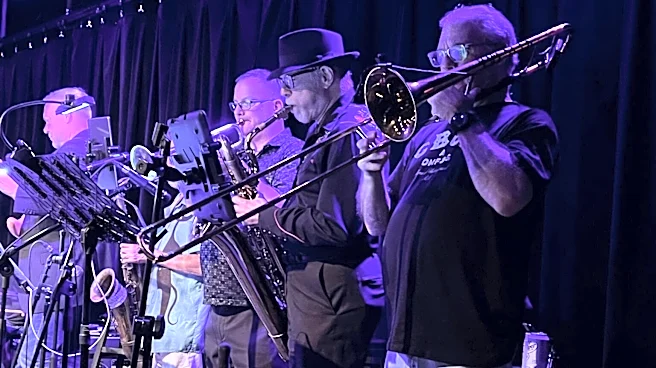

Every week, someone walks through the doors of Arts Garagefor the first time and leaves changed.
A child discovers she has a voice worth hearing. A retiree finds connection after years of isolation. A resident
sees high caliber artistry for the first time, right in his own neighborhood. For fifteen years, we have been part of the fabric of Delray Beach. That is why I am asking you to do your own research on Amendment 3 before you vote on Nov. 3.
The cost of living in South Florida cannot be easily dismissed, and the promise of property tax relief is genuinely appealing. But for communities like ours, the cost of what it takes away is far greater than what it gives back.
If approved by 60% of voters, Amendment 3 would expand the homestead exemption from $50,000 to $150,000 in 2027, and then to $250,000 in 2028. For homeowners with values in the mid $400,000 range, this could mean saving about $2,000 annually in the second year. For cities and counties, it means a fiscal cliff.
➤ What is Amendment 3?Impact to Palm Beach County and Florida explained
Legislative analysts project the measure will reduce local government revenues statewide by $4.6 billion in its first year and $8.4 billion in the second. Cities cannot raise assessed values to compensate since existing homestead protections prevent it. What they can do, however, is raise fees — for fire protection, stormwater management, library cards, police and fire assessments, even reserving a park pavilion or using a public pool.
For Delray Beach specifically, city officials project an annual revenue loss of $7 to $12 million. Property taxes fund more than half of our city's general fund. That is not abstract. That is police, fire rescue, parks, and the support that allows organizations like Arts Garage to exist.
Amendment 3 no friend to nonprofits
Here is what rarely gets mentioned: Amendment 3 will hit nonprofits twice. First, cities facing revenue shortfalls will have no choice but to cut funding to cultural organizations, social service agencies, and arts institutions. Even services listed as "protected" under the amendment — like police and fire — will feel the strain, because the overall funding pool shrinks regardless of what is legally prioritized. Organizations not on that list, including arts and cultural institutions, after-school programs, senior services, and mental health resources face the sharpest risk.
As public services shrink, the people who relied on them will turn to nonprofits to fill the gap. Demand will rise at precisely the moment resources disappear.
The Florida Policy Institute has documented that Children's Services Councils — voter-approved organizations funding early learning, PreK programs, mental health support, school nurses, and childcare across 14 Florida counties — stand to lose $278 million statewide over the first two fiscal years. In Palm Beach County alone, that figure is nearly $50 million, putting programs that serve 166,000 children and families at risk.

The Florida Sheriffs Association is "significantly concerned." The Sierra Club — the nation's largest environmental organization — warns it will gut local governments' ability to prepare for hurricane season. Police unions, firefighter unions, library systems: organizations with nothing in common politically are all saying the same thing.
At the Arts Garage, we generate an estimated $3.8 million in local economic impact annually. We serve more than 31,000 patrons each year and provide free access to arts education for thousands of children and seniors who would otherwise go without. The Florida Cultural Alliance has documented that government investment in the arts carries a nearly 9-to-1 return on public investment. The arts are not a cost center. They are infrastructure.
If Amendment 3 passes, organizations like Arts Garage will face impossible choices — cut programs, cut staff, pass the cost on to the community — all of which reduces access to the experiences we have spent fifteen years working to make available to everyone.
This Is a Tax Shift, Not a Tax Cut
The revenue must come from somewhere. If you save $1,000 in property taxes, there is a likelihood you will pay a meaningful portion of that back through higher fees for the services your city can no longer fully fund. Cities will raise fees that fall on everyone, including the homeowners the amendment claims to help. Even the Governor who proposed the original plan has said publicly he will not campaign for the version on the ballot — essentially a proposal that promises savings while offering no plan to protect the communities those homeowners live in.
There is also a deeper issue. The amendment limits not just how much revenue municipalities can raise, but how local governments can spend it — restricting spending to a narrow list of essential services. We vote for city and county leaders we trust to represent us as they make local decisions that determine the kind of community we live in. When the state limits not just how much revenue municipalities earn, but also how local governments can spend those dollars, we lose something important — the local control that allows a city like Delray Beach to invest in the things that make it worth living in.

Before you vote on Nov. 3, I encourage you to look at what your city stands to lose and think about what that means for the services and institutions that matter to you and your neighbors. We have spent fifteen years building Arts Garage into a place this community can be proud of. The decisions made this November will shape our future — and our ability to keep doing this work for the next fifteen years.
Marjorie Waldo is president & CEO of Arts Garage in Delray Beach. Learn more at https://artsgarage.org/advocacy/
This article originally appeared on Palm Beach Post: Amendment 3 will hurt Florida's nonprofit community | Opinion