




Everybody hopefully knows that it's dangerous to be outside during a lightning storm.
But did you know it could be dangerous to be inside also? Or that there are things you can do to prevent your personal things from being damaged by a lightning strike?
I learned the hard way.
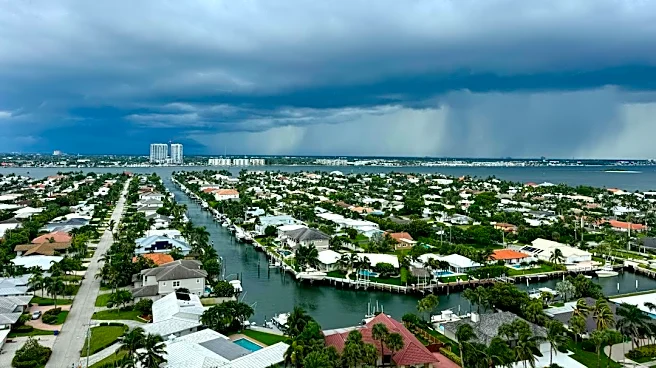
During a powerful, fast-moving thunder storm the night of Aug. 26, I experienced firsthand, for the first time, the power and danger of lightning.
At about 8 p.m., a powerful lightning bolt struck on or near our house. It destroyed random things in the house and apparently hit close enough to our car to render it undriveable and, later when insurance and mechanics were involved, totaled.
never heard thunder before lightning put them on the ground
It may not have been a direct strike, because we never found a hole in our home's roof or on our car, but we were certain we got struck. We heard the thunderous boom, and house felt like it rocked off its base. You could feel the energy pulsate for about a second through the ceilings and walls. Lights flickered and we heard what we thought was crashing glass. My 8-year-old daughter, who I taught never to fear thunder (as it's only weather, I'd tell her), began to bawl and the 40-pound, hard-of-hearing English bulldog we were watching jumped about a foot off the ground.
After it passed, we learned it knocked out our oven, our built-in microwave, a ceiling light, my computer hard drive and monitor and my internet router. It also apparently moved through a drain pipe, exploding out of a shower drain like a volcano, shooting the metal grate straight to the ceiling and blowing gray dust and debris all over the bathroom.

The next day, we learned that it totaled our car, parked in front of our house. We think the lightning struck about a foot from the car, judging by a small hole in the ground and dirt sprayed on the side of the car.
The car was in the shop for about 10 days before the insurance company called it a total loss. Most cars have a ton of wiring these days and it's not unheard of for them to be affected by lightning strikes, though one of the mechanics who worked on the car said it's fairly rare to sustain a total loss.

As someone who's lived in Florida for about 24 years, I've always taken hurricanes seriously but, stupidly, not lightning. There's even a picture framed in my office, given to me by one of my friends, of me golfing, teeing off into ominous gray storm clouds.
I never took lightning all that serious outside. Inside, I thought I was safe.
Not anymore.
There are dangers in your house during a lightning storm
If we had been on a device plugged into a wall, like a washing machine, or a corded phone, or taking a shower ...
When a house is struck, the lightning typically enters the wiring or plumbing system, said John Jensenius, meteorologist and lightning safety specialist for the National Lightning Safety Council. "Once it gets into those systems, it can travel throughout the house and damage anything connected to them."
Lightning, Jensenius said, is random and doesn't necessarily spread evenly through every electrical pathway; it follows whatever routes are available.
It's why, after tripping my breakers, our oven came back to life, but nothing else. Of our recessed lighting, only one blew out. My Mac Mini computer hard drive and monitor were toast, but not the old computer plugged in next to it.
And, yes, both were plugged into surge protectors.

Protecting yourself and things from lightning while inside
Here are suggestions from Jensenius:
- Unplug sensitive electronics before a storm arrives. He understands that in Florida, that may not be practical because storms occur so often, but I lost a fairly new Mac mini that was plugged into a surge protector, so it might be worth it to at least unplug some things.
- Stay away from plugged-in electronics. Anything connected to wiring or plumbing may become dangerous if lightning strikes nearby or directly. He said there have been fatalities involving people using corded telephones during lightning storms. Most households no longer have corded phones, but the principle remains the same. If you're touching something connected to electrical wiring or plumbing, there is risk. That means avoid taking showers, baths, dishwashing and laundry.
- Plumbing is another concern. "Washing dishes, doing laundry, taking a shower or bathing during a thunderstorm all expose you to risk because plumbing systems can conduct electricity," he said. Lightning is an overwhelming amount of energy that ultimately seeks a path to ground. It may travel through wiring, plumbing, or both. It doesn't always follow a predictable route.

- Check your house. If you think your house was struck by lightning, have your house checked with a thermal camera to make sure there aren't hidden hot spots that could start a fire. "Often, lightning-caused fires can smolder for hours before becoming visible," he said. He suggested contacting your local fire department because many departments have thermal cameras and may be able to check your home.
- Consider a whole-house surge suppression system, built to protect against power surges associated with lightning. He said it's much more than a single lightning rod. A complete lightning protection system includes: lightning rods installed along the roofline and vulnerable points of the structure, conductors running down the sides of the building and grounding rods that safely transfer energy into the earth.
"These systems provide a preferred path to ground so lightning doesn't travel through the house itself," he said.
Florida is always among the top states for lightning strikes
As Kim Miller of USA TODAY NETWORK - Florida reported, while Florida traditionally wears the crown of lightning strike capital of the nation, or at least earns a runner-up, this year has been especially sparky.
From Jan. 1 through mid-September, 3.34 million cloud-to-ground lightning strikes have hit Florida, according to Martin Murphy, a senior scientist at Vaisala XWeather.
That’s about a 15% increase over the six-year average and more than any year going back to 2021.
Six people have died in Florida this year because of lightning
Six people have so far died in lightning-related incidents in Florida this year, which is nearly 40% of the total deaths nationwide, Kim reports.
Many lightning deaths are preventable, Jensenius said.
Many of the Florida victims were caught outside because they likely either underestimated the danger, waited too long before seeking shelter or were in the wrong place at the wrong time.
The six victims of lightning deaths in Florida this year
- May 31: Michael Aiden Vargas, 18, was kayaking in Santa Rosa County.
- July 3: Viktar Kiryk, a 51-year-old male, was in the water on Fort Myers Beach.
- Aug. 23: Kenya Glasgow, 31, and her 2-year-old daughter Kennedi were on a sidewalk walking from from a car to their Margate home.
- Aug. 29: Steve Matheson, 41, was jet-skiing in Fort DeSoto.
- Sept. 8: Matthew Eric Jenkins, 20, was walking on a pathway in Celebration.
Myths and truths about lightning

Does lightning always strikes the tallest object?
Jensenius said lightning tends to strike the tallest object in the immediate area, but it's not a guarantee. He said he's seen situations where it strikes right next to the tallest tree rather than the tree itself. Lightning descends relatively randomly and searches for a connection as it approaches the ground. Usually it connects with the first suitable object within roughly 30 feet or so, but lightning makes its own rules, he said.
Am I safe in my car because of its rubber tires?
That's a myth, Jensenius said. The tires do not protect you.
"What protects people is the metal shell of the vehicle. The amount of rubber in a tire is insignificant compared with the voltage involved in a lightning strike," he said. "Lightning easily travels through miles of air. A few inches of rubber won't stop it. The metal shell of a car generally protects occupants. Once lightning hits a vehicle, it still must find its way to ground. It can travel through the vehicle's systems and then jump into the ground nearby."

Can I drive during a lightning storm?
Generally, driving is safe, Jensenius said. The concern is holding or touching electronics that are connected to the vehicle's electrical system. If those systems are affected by lightning, occupants might experience a shock or jolt.
Is boating especially dangerous?
Boats are different from cars in that, unless you're inside a fully enclosed metal cabin, you're exposed, Jensenius said. "On open water, you're often the tallest object in the area. If lightning strikes and renders someone unconscious, being in the water creates an even more dangerous situation because drowning becomes a serious concern."
Is lightning attracted to metal?
Jensenius said that's completely false. Lightning isn't attracted to metal.
Metal conducts electricity, but it doesn't attract lightning. Carrying golf clubs, wearing jewelry or having other metal objects on you doesn't increase your chances of being struck, he said.
What if you're caught outside during a lightning storm?
Unfortunately, there is no truly safe place outdoors during a lightning storm, Jensenius said. He said the National Lightning Safety Council does not recommend sheltering under trees.
The best advice is to move as quickly as possible to a safe location, such as a substantial building or enclosed vehicle, he said. The key mistake people make is waiting too long before seeking shelter.
"If you're golfing, boating, fishing or participating in any outdoor activity, start heading for safety before thunder is audible. By the time you hear thunder, you may already be at risk," he said.
The bottom line to lightning safety
Jensenius said lightning safety ultimately comes down to one thing: People have to be willing to be inconvenienced.
"If you want to be safe, you have to be willing to change your plans, stop what you're doing and seek shelter. If you're not willing to be inconvenienced, you can't be safe."
John Bisognano is Executive Editor of The Palm Beach Post. He can be reached at jbisognano@pbpost.com
This article originally appeared on Palm Beach Post: Lightning totaled my car and damaged my home. Here's what I learned