


The City of Boca Raton is reconsidering itsban on feeding invasive iguanas after a council member who voted for the rule had a change of heart.
A narrow 3-2 vote approved the ordinance on Aug. 25, which came with a $100 fine for anyone willfully filling the bellies of the pervasive nuisance reptile and other specific pests such as pigeons, rats and mice.
Less than a month later, council member Stacy Sipple asked that the tony South Florida city known for its historic Mediterranean revival architecture and posh gated communities reconsider the rule because “based on information learned after its adoption, she would vote differently if the matter were presented again.”
According to a Sept. 15 agenda item, the repeal of the iguana feeding ban is scheduled
to be voted on at an Oct. 13 council meeting. Iguanas were added to Florida's "Dirty Dozen" list of invasive species this year partly because of the expensive damage they do by burrowing into flood control levees and canals.
While a February freeze was a blow to the cold-sensitive population of iguanas in South Florida they have already rebounded to an unknown extent.
Sipple did not return messages requesting comment for this story or an email asking what she learned after the feeding ban adoption that changed her mind.
But during the Aug. 25 meeting, she questioned whether the rule would make having a bird feeder in your yard illegal and how it would impact feral cat colonies that residents feed.
“I’m sure if you are putting out a drum of bird food that would be different, but they want to verify those things would be excluded,” Sipple said about questions asked by residents.
Does the law also apply to feral cats and bird feeders?
City officials assured her feral cats and bird feeders were exempt and that the law specifically focused on the quantity and manner in which food is provided and whether it is likely to attract a congregation of iguanas, rats, mice or pigeons specifically.
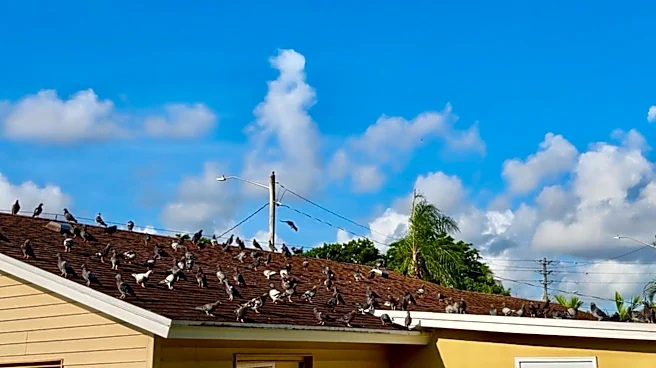
Boca Raton resident Mark Stahlbaum has pressed for the ban for years because of a dispute with his septuagenarian neighbor whose pigeon feedings attract scores of birds that sit on his roof and skylights, swoop around in loud flocks and leave feathers and poop.
He sent videos and photos to council members and said he finally felt heard after the August vote. Now, he’s afraid he’ll be back to square one.

“It’s horrible, it’s mentally draining to have to deal with this and wake up with them on my roof, sitting on my skylight, you can see them all over from inside my house,” Stahlbaum said. “There is no law or ordinance for anyone to gain relief in this situation.”
Florida wildlife officials are generally against feeding wild animals citing problems with poor nutritional value of the food, and concerns about encouraging large numbers of wildlife to congregate in small areas.
Which animals, reptiles and birds does Florida prohibit feeding?
“Wildlife does not need to be fed,” said Frank Mazzotti, a professor of wildlife ecology with the University of Florida/IFAS Fort Lauderdale Research and Education Center. “It tends to be something people do to make themselves feel better.”
In an August interview, he said Florida specifically prohibits feeding alligators, crocodiles, black bears, coyotes, bald eagles, manatees and non-human primates. He also warned against feeding Muscovy ducks and peacocks.
“They don’t need it,” he said. “They are smart enough not to poop where they eat, which means they go to your neighbor’s yard and poop.”
Lilia Perez, the alleged pigeon perpetrator who lives next door to Stahlbaum couldn’t be reached for an interview but was defiant during the August meeting about her intent to continue to feed the pigeons regardless of a fine.
She acknowledged there are a lot of pigeons around her house and iguanas and squirrels and “other different animals.”
“If you want to start fining me now, let’s do it,” Perez said during public comment.
Ileana Olmsted, a community relations manager in the Boca Raton public affairs department, said on Oct. 6, 2026 that a code case is open on Perez's property but no violations have been found.
Boca Raton City Councilmember Yvette Drucker, who voted against the ordinance, said during the August meeting that she didn’t know whether to laugh or be annoyed at the rule. Councilmember Michelle Grau, who also voted against the ordinance, said she didn’t want to create another level of government to address a single situation between neighbors.
Boca Raton Mayor Andy Thomson did not return messages for comment for this story. In August he defended the ordinance.
“Believe it or not, not everything we do is landmark legislation,” he said. “It is issues affecting residents.”
Kimberly Miller is a journalist for the USA TODAY NETWORK FLORIDA. She covers weather, the environment and critters as the Embracing Florida reporter. If you have news tips, please send them to kmiller@pbpost.com. You can get all of Florida’s best content directly in your inbox each weekday by signing up for the free newsletter, Florida TODAY, at palmbeachpost.com/newsletters.
This article originally appeared on Palm Beach Post: Florida city's iguana feeding ban faces reversal after change of heart