

Colorado State University had some good news in its updated hurricane season forecast released Aug. 5: a below-normal season is still predicted.
That doesn't mean Florida residents shouldn't remain prepared and stay informed on what's happening in the tropics.
From Maine to Texas, Florida remains the most likely to feel impacts from a storm in 2026 among the states listed by CSU.
"Coastal residents are reminded that it only takes one hurricane making landfall to make it an active season for them," CSU said. "Thorough preparations should be made for every season, regardless of how much activity is predicted."
➤ Weather alerts via text: Sign up now to get updates about current storms and weather events by location
For the first time, CSU said it also
used Ai2 Climate Emulator when compiling its forecast.
Here's what you should know about the most recent predictions and which Florida counties face the highest risk for the remainder of the season.
Colorado State University keeps its predictions for hurricane season
Colorado State University held firm on its predictions last updated in July, which dropped from the original forecast in April. Compare this year's predictions:
- Named storms
- April: 13
- June: 11
- July: 9
- Aug. 5:
- Hurricanes
- April: 6
- June: 5
- July: 4
- August: 4
- Major hurricanes
- April: 2
- June: 2
- July: 1
- August: 1
A major hurricane is a Category 3 storm or stronger, with maximum sustained winds of at least 111 mph.
How many hurricanes, named storms are in an average season?
The 30-year average for number of storms:
- Named storms
- Average: 14
- CSU: 9
- Hurricanes
- Average: 7
- CSU: 4
- Major hurricanes
- Average: 3
- CSU: 1
'Powerful El Niño' to influence Atlantic hurricane season
"We are extremely confident that we will have a strong El Niño for the peak of hurricane season," the August CSU prediction said.
"We anticipate the powerful El Niño being the dominant factor for the upcoming hurricane season, driving very high levels of tropical Atlantic vertical wind shear. We are forecasting a well below-average probability for major hurricane landfalls along the continental United States coastline and in the Caribbean."
Don't let predictions for below-normal season leave you unprepared for hurricane
"As with all hurricane seasons, coastal residents are reminded that it only takes one hurricane making landfall to make it an active season," CSU said.
"Thorough preparations should be made every season, regardless of predicted activity."
What can Florida expect from 2026 Atlantic hurricane season?
Colorado State University's August forecast kept Florida at No. 1 for possible impacts this year.
Probability of an "event" within 50 miles of Florida:
- Named storm: 44% (down slightly from 49% in July)
- No. 2 was North Carolina at 29%
- Hurricane: 22% (down slightly from 24% in July)
- No. 2 was tied at 14% for Louisiana and North Carolina
- Major hurricane: 10% (down slightly from 11% in July)
- No. 2 was tied at 5% for Texas and Louisiana
Predicting major hurricane impacts for Florida, US
CSU predicted the probabilities for at least one major hurricane landfallfor these areas in 2026:
- Entire continental U.S. coastline: 16% (down slightly from 17% in July)
- average from 1880-2020 is 43%
- U.S. East Coast Including Peninsula Florida (south and east of Cedar Key): 7% (down slightly from 8% in July)
- average from 1880-2020 is 21%
- Gulf Coast from the Florida Panhandle (west and north of Cedar Key, Florida) westward to Brownsville, Texas: 9% (down slightly from 10% in July)
- average from 1880-2020 is 27%
Florida No. 1 when it comes to storm risks. See the breakdown
CSU broke down the odds of storms tracking within 50 miles from Texas to Maine for the remainder of the 2026 Atlantic hurricane season.
"Landfall probabilities are well below their long-term averages," CSU said.
Florida comes in with the highest odds of a storm coming within 50 miles, followed by these states:
- Named storm
- Florida: 44%
- North Carolina: 29%
- Louisiana: 28%
- Georgia: 26%
- Texas: 25%
- Hurricane
- Florida: 22%
- Louisiana: 14%
- North Carolina: 14%
- Texas: 13%
- Georgia, Mississippi, South Carolina: 10%
- Major hurricane
- Florida: 10%
- Louisiana: 5%
- Texas: 5%
- Alabama: 3%
- South Carolina: 3%
Breakdown by Florida county on hurricane threat for remainder of season
Here are the odds by Florida county of a named storm tracking within 50 miles:
- Bay: 12%
- Brevard: 15%
- Broward: 7%
- Charlotte: 13%
- Citrus: 12%
- Collier: 15%
- Dixie: 12%
- Duval: 13%
- Escambia: 14%
- Flagler: 12%
- Franklin: 12%
- Gulf: 12%
- Hernando: 12%
- Hillsorough: 13%
- Indian River: 13%
- Jefferson: 11%
- Lee: 14%
- Levy: 12%
- Manatee: 13%
- Miami-Dade: 16%
- Monroe: 20%
- Nassau: 14%
- Palm Beach: 15%
- Pasco: 13%
- Pinellas: 13%
- Santa Rosa: 12%
- Sarasota: 13%
- St. Johns: 14%
- St. Lucie: 13%
- Taylor: 12%
- Volusia: 14%
- Wakulla: 11%
- Walton: 12%
How accurate are CSU's hurricane season predictions?
"Everyone should realize that it is impossible to precisely predict this season’s hurricane activity in early August," CSU said.
"There is, however, much curiosity as to how global ocean and atmosphere features are presently arranged with respect to the probability of an active or inactive hurricane season for the coming year.
"We issue these forecasts to satisfy the curiosity of the public and to bring attention to the hurricane problem. There is a general interest in knowing what the odds are for an active or inactive season.
"These seasonal forecasts are based on statistical and dynamical models which will fail in some years.
"The skill of CSU’s forecast updates increases as the peak of the Atlantic hurricane season approaches. We have high confidence in this year’s seasonal forecast given the strength of the El Niño."
An important factor to consider: "These forecasts do not specifically predict where within the Atlantic basin these storms will strike," CSU said.
CSU using AI help in formulating hurricane season forecast
"For the first time this year, we are also incorporating forecasts from the Ai2 Climate Emulator," CSU said, describing it as "a machine learning-based atmospheric model."
"The Ai2 Climate Emulator is an open-source, AI-driven machine learning system created by the Allen Institute for Artificial Intelligence to simulate global weather and climate variability over hours, decades, or centuries."
The Ai2 is "an additional guidance tool for our outlooks," CSU said.
"Two practical benefits of using a machine learning-based model are the speed of calculations and the resulting improved ability to quantify the uncertainty in our forecast.
"We believe that seasonal forecasts must be based on methods that show significant hindcast skill in application tolong periods of prior data," CSU said.
"It is only through hindcast skill that one can demonstrate that seasonal forecast skill is possible. This is a valid methodology provided that the atmosphere continues to behave in the future as it has in the past."
What is El Niño and does Florida need to be concerned?
At its most basic, El Niño can be described as the natural warming of waters in the central and eastern tropical Pacific Ocean.
The presence of El Niño tends to decrease hurricane activity in the Atlantic, Caribbean and Gulf of Mexico by tearing apart hurricanes as they try to form or preventing them from intensifying through wind shear.
➤ Here's what El Niño means for Florida
"We believe that the odds of a strong El Niño have continued to increase over the past few weeks, likely significantly increasing tropical Atlantic and Caribbean vertical wind shear and reducing Atlantic hurricane activity," CSU said.
'It only takes one.' Always be prepared for hurricanes
"As with all hurricane seasons, coastal residents are reminded that it only takes one hurricane making landfall tomake it an active season," CSU said.
"Thorough preparations should be made every season, regardless of predicted activity."
➤ Weather alerts via text: USA Today's weather watch team provides info you need as storms approach
Is there a tax holiday in Florida for hurricane supplies?
No. On Aug. 1, 2025, the sales tax on specific hurricane supplies was permanently removed.
Among the items now permanently exempt from sales taxes are:
- batteries
- portable generators
- capable of producing 10,000 running watts or less
- waterproof tarps
- must be 1,000 square feet or less
- portable gas cans
- capacity of 5 gallons or less
- ground anchor systems and tie-down kits
- smoke detectors or smoke alarms
- carbon monoxide detectors
- fire extinguishers that meet certain requirements
- life jackets
- sunscreen
- insect repellent
Bottled water, first aid kits, and many food items purchased at the grocery store were tax-freeprior to the passage of the permanent exemptions added in 2025.
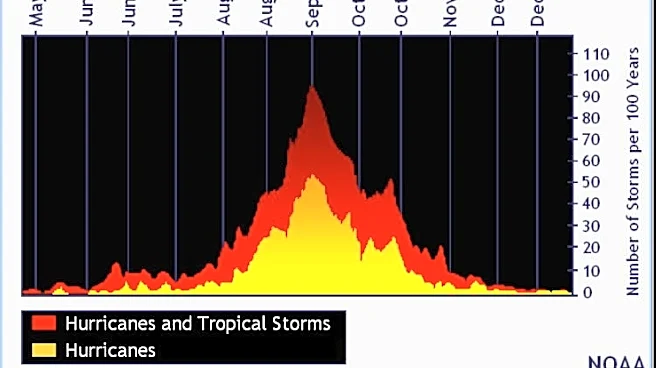
When is hurricane season?
The Atlantic hurricane season runs from June 1 through Nov. 30.
When is the busiest period of Atlantic hurricane season?

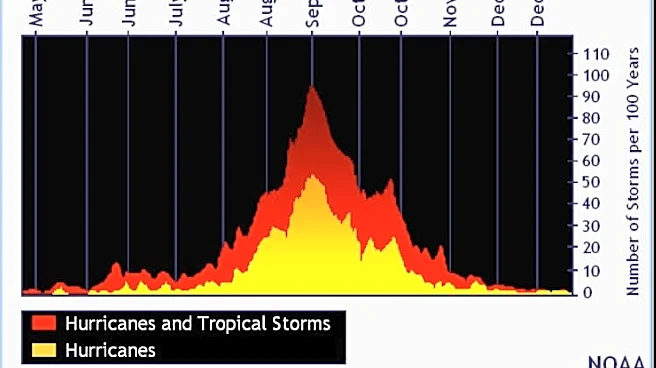
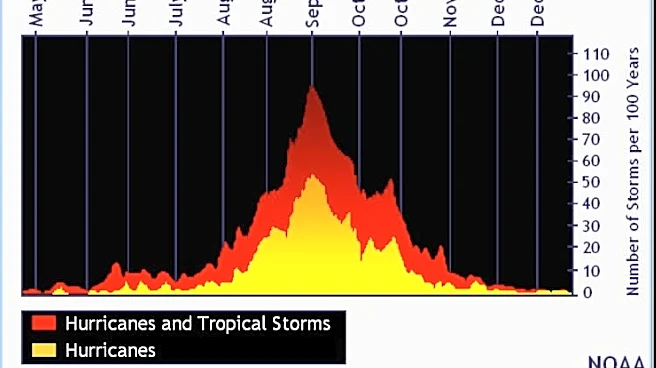
The peak of the season is Sept. 10, with the most activity happening between mid-August and mid-October, according to the Hurricane Center.
What are names for 2026 Atlantic hurricane season?
Names for the 2026 Atlantic hurricane season, and how to pronounce them, are:
Arthur: Tropical Storm Arthur formed June 17, 2026Bertha: Tropical Storm Bertha formed July 20, 2026- Cristobal, krees-TOH-bahl
- Dolly, DAH-lee
- Edouard, eh-DWARD
- Fay, fay
- Gonzalo, gohn-SAH-loh
- Hanna, HAN-uh
- Isaias, ees-ah-EE-ahs
- Josephine, JOH-seh-feen
- Kyle, KY-ull
- Leah, LEE-ah
- Marco, MAR-koe
- Nana, NA-na
- Omar, OH-mar
- Paulette, pawl-LET
- Rene, re-NAY
- Sally, SAL-ee
- Teddy, TEHD-ee
- Vicky, VIH-kee
- Wilfred, WILL-fred
When was the last time Florida was hit by a hurricane?
Hurricanes Debby, Helene and Milton all made landfall in Florida in 2024.
No hurricane or tropical storm hit the Sunshine State in 2025.
Is there anything in the tropics right now?
The National Hurricane Center on Aug. 6 said no tropical cyclone activity is expected during the next seven days.
Stay informed. Get weather alerts via text
What's next?
We will provide daily tropical weather coverage until the end of the seaon Nov. 30.
Download your local site's app to ensure you're always connected to the news. And look at our special subscription offers here.
Cheryl McCloud is a journalist for the USA TODAY Network-Florida's service journalism Connect team. You can get all of Florida’s best content directly in your inbox each weekday day by signing up for the free newsletter, Florida TODAY, at https://palmbeachpost.com/newsletters.
This article originally appeared on Palm Beach Post: Hurricane forecast updates potential threat by Florida county