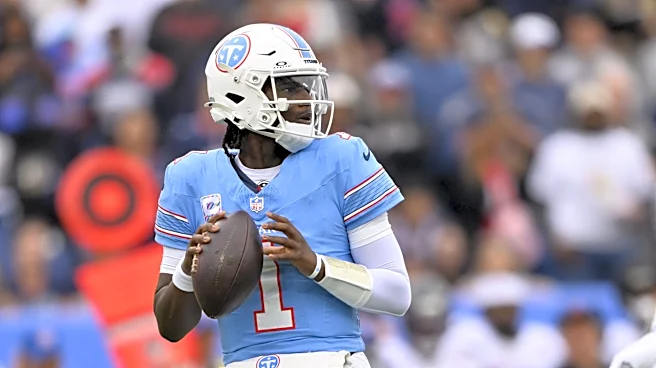




There was a moment last November when Tua Tagovailoa thought it’d be more fun if, instead of answering questions from the media, he’d ask them.
“Hal,” he said, “what are you thankful for?”
I reflexively said, “I’m thankful I get to cover the NFL,” which was the correct answer.
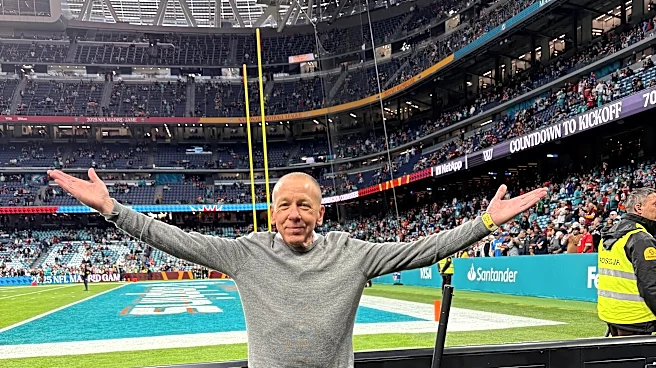
Today, I’m here to give you the complete answer. After 19 years at The Miami Herald and 28 at The Palm Beach Post, my time in those sports departments ended Oct. 1 via a buyout offer I couldn’t refuse.
“So don’t refuse it,” said Zach Sieler, Dolphins defensive tackle, shrewd financial advisor and one of the hundreds of athletes whose story I’ve had the honor of telling.

Telling my story, however — that’s a whole different ballgame, one that has my brain scrambling in more directions
than Lamar Jackson. If you’re wondering why that is, I’ll point to the summer of 2005, when I interviewed a young man named Mark Rhoads, who seven years prior was granted one request from the Make-A-Wish Foundation.
Rhoads wanted to meet Dan Marino, whose passes were not the greatest gift he gave South Florida. See, Marino didn’t meet with Rhoads once. Or twice. He met with him three times.
“It almost made cancer worth it,” Rhoads said.
You may need a moment to process that quote. I did. So did Dan when I shared that with him.
Nearly mugged for an Egg McMuffin during Athens Olympics

Take that snapshot from my career and now hold it up against the time I was nearly mugged for an Egg McMuffin.
For that story, I return you to the 2004 Athens Olympics. After writing all night, I looked up to see the sun rising over the Main Press Center. It was my only time during the Games I could get what passed for an edible breakfast, since the McDonald’s in the Press Center opened at 6 a.m. I then gleefully exited the complex to catch a bus to the Media Village for a nap when I found myself surrounded by four of Greece’s most brainless thugs. They were so drawn to the oversized bag I was carrying (containing only that Egg McMuffin), that they somehow missed all those Greek soldiers patrolling the center with those automatic rifles. Being the helpful guy I am, I pointed out their oversight to the ringleader.
They left with their lives; I left with my Egg McMuffin.
So, yes, you could say this career has covered pretty much every base you could imagine.
I’ve traveled the country. I’ve traveled the world.
I’ve been to modern and wondrous stadiums costing billions. I’ve been to Olympia, where the Olympic Games were born in 776 B.C. I know what it’s like to be the only civilian standing in Tiananmen Square.
I covered the New York City Marathon in the aftermath of 9/11 and the Boston Marathon after the bombing.
I was shocked when a Smoothie King operator ended the legend of Kimbo Slice in 14 seconds. I was dumbfounded (along with Bill Belichick) by the Miami Miracle.

Somber coverage of Marjory Stoneman Douglas HS shooting
And I know what it’s like to get home from work and break down in tears. Because if you covered what happened at Marjory Stoneman Douglas High School in Parkland and it didn’t get to you, you weren’t human.
February 14, 2018. Valentine’s Day. Chocolates. Sweetness. Children, for God’s sake. Then came word there had been a shooting at the school. The severity that 17 innocent lives had been lost wasn’t yet known, but the situation was dire enough that a reporter living in Broward needed to get to Parkland, whether he covered sports or not.
After parking as close as I could to the school, I began walking toward the campus when the first person I recognized was Jason Jenkins, senior vice president of the Dolphins and Parkland resident. Given his unyielding dedication to the South Florida community, it was no surprise he was there, hoping he could somehow help.
That was the beginning of a monthlong assignment involving vigils and funerals and town halls. I came to know school officials, coaches and students, sharing much of what I’d learned about their pain, respecting details they wished to keep private. I walked with them to report on the March For Our Lives, touched by the complete silence as the route took us past the school.
I listened as Kevin Siegelbaum, a special education teacher, tearfully wished he had an opportunity to reach the student-turned-shooter before it was too late. I was there when the football team gathered for a spring game that felt more like a rebirth. And I was the lone reporter (except for an NBC crew) attending the graduation ceremony in which Patricia Oliver, mother of the late Joaquin, accepted her son’s diploma wearing a shirt that read THIS SHOULD BE MY SON. She — and her son — received a standing ovation.
I wrote then, and I’ll write today, that I cannot fathom how news reporters do it. This is about where “stick to sports” isn’t a bad idea, at least for me.
Nine trips to Louisville for the Kentucky Derby
The spring of 2004 marked one of nine trips I made to Louisville to cover the Kentucky Derby. It surely was the wildest. One of the favorites that year was named Tapit, trained by a Brit named Michael Dickinson. If you pair a guy nicknamed “The Mad Genius” with a horse named Tapit, you get a horse that drinks a pint of Guinness every night.
“He’s a happy horse,” Dickinson said.
Testing the theory, I plopped down $2.49 on a pint and took off running 1 1/4 miles through a residential area near Churchill Downs. I didn’t fare much better than Tapit did on race day.
The first horse race I ever covered was the 2003 Derby. Although it was won by Funny Cide, the real story was his owners. They call this “The Sport of Kings,” but Funny Cide’s owners were a handful of high school buddies who chipped in $5,000 apiece on a what-the-hell lark only to hit the jackpot. Rather than pull into Churchill Downs in a limo, they frugally rented a yellow school bus. Since it brought them luck in the Derby, they did it again for the Preakness.
That put Funny Cide on track to win the elusive Triple Crown at the Belmont. By then, I’d visited the owners’ quaint village in Sackets Harbor, N.Y., and gotten to know them well. So when I stopped by their hotel on the morning of the Belmont to chat and wish them luck, they invited me on their bandwagon. When we ran out of beer en route, someone tossed a few twenties out the bus window while we were stopped at a red light. Someone ran into the nearby convenience store and exited with a couple of cases of beer.
That’s when I became bartender on the Funny Cide Express. (If only he’d won that day.)
Guess you could say I did some growing up on another street in New York, this time near Times Square. I’d just hitched a ride following a Dolphins-Jets game with two reporters then with the Sun-Sentinel, Omar Kelly and Chris Perkins. They dropped off their rental in Manhattan and from there, we were going to grab a taxi to our next stop.
“You hail the cab,” they said.
When I didn’t understand why they were insistent, they spelled it out. I’m white. They’re not. I couldn’t believe that cab drivers were that racist in modern New York, of all places. I was naive.
New York City Marathon went off in wake of 9/11
Just up the road is Central Park and the finish line of the New York City Marathon, which miraculously went off as scheduled mere weeks after the World Trade Center was destroyed. In the finishing chute, I met Drew Nelson, a New York City police officer, and his brother Matthew, a New York City firefighter. They had no time to train for weeks, of course, but for them, not finishing was never an option.
“Stay safe,” they told me as we parted.
I also met Cynthia Lynch, whose father, Dick, was a New York Giants cornerback and radio analyst. Cynthia ran in a T-shirt with a picture of her brother, Rich, 30, who had been on the 84th floor of the World Trade Center. Rich called his wife after the first plane hit, saying he was on his way out. He was not heard from again. The photo, accompanied by “Running for Rich,” showed him playing a guitar, like his favorite artist, Eddie Van Halen.
Cynthia told me as she ran through Brooklyn, Van Halen’s “Jump” was blaring through loudspeakers. She didn’t think it was purely coincidental.
“I made this a tribute for him today,” she said. “A couple of times, I felt my legs going. I was in pain at Mile 21. They were yelling ‘Go, Rich, go!’ and ‘Do it for Rich.’ ”
Sports, to me, reveal the human spirit incredibly well. Leading up to the 2002 Winter Olympics in Salt Lake City, there was an ad campaign featuring the heartwarming story of how Jim Shea Jr. was about to compete in skeleton as his family’s third-generation Olympic athlete.
But a month before the Games, his grandfather, Jack, died in an auto accident.
Jim had a half-second lead entering the final run of the competition. Over the first half of that last run, he fell behind. Silver seemed to be his fate. Inexplicably, he made up the gap, crossing the finish line .05 seconds ahead of the next-fastest competitor.
On the finish line, he pulled a picture of his grandfather from his helmet.
“I think he had some unfinished business before he went to heaven,” Jim said of his grandfather. “Now, I think he can go.”
Here are some of Hal Habib's favorite things

Now that I’m semi-retired, I’ve gotten questions on my favorite events and people to cover. So here goes:
Events: Anytime a local team competes for a league championship, with a special nod to the times the Heat won the NBA title and how, for a week, I smelled of celebratory beer and champagne from the locker room. And the Panthers, who after winning the Stanley Cup conducted postgame interviews on the ice, where Paul Maurice was at his deadpan finest. Dolphins highlights are easy: the Miami Miracle in 2018 and that comeback from 21 points down in the fourth quarter against the Ravens in Baltimore in 2022. Then there’s the gem nobody saw coming in this year’s World Cup, when tiny Cape Verde pushed Lionel Messi and Argentina to the limit, including that fabulous equalizing goal in extra time. Little-known fact: After the tournament, they pinpointed the spot from which Sidny Lopes Cabral scored the best goal of the tournament. They sent that patch of grass to the Cape Verde Museum in Pawtucket, Rhode Island, where it’s permanently preserved. Another little-known fact: I also have a patch of grass from that field in my yard. Oh, and can I include the time I did a hot lap on the Formula 1 Miami Grand Prix track at 166 mph? And didn’t get sick?
People: Among the Dolphins, I salute those who seemed to always make time to chat with me, including Jarvis Landry, Cam Wake, Michael Thomas and Kenny Stills (during the kneeling controversy) and two of the classiest men you’ll ever know, Terron Armstead and Calais Campbell. I’ll also put Mr. 305, Udonis Haslem, in that category. Michael Irvin, because you can’t beat chronicling the football career of a high school kid and eventually reminiscing with him at his private party following induction into the Pro Football Hall of Fame. Kobe Bryant, who didn’t know me but still made time for an interview at 2 a.m. in an otherwise empty arena at the Beijing Olympics. Angelo Dundee, Muhammad Ali’s trainer, who always said "It don't cost nuthin to be nice" and had thousands of friends to prove it. Soccer’s Ray Hudson, a quote machine. Michael Phelps and Zach Thomas, whom I interviewed on-stage during The Palm Beach Post’s high school sports awards and were outstanding. (Thomas has been especially kind upon hearing of my retirement.) And the entire Shula family.
A special mention goes to Tony Russell, a former University of Miami academic advisor who confessed to me that he’d forged forms in a Pell Grant scandal in 1991. The story won a national award, but more importantly, it was the turning point in my career. Until then, I was considered the guy who wrote boring stories, probably because my stories were boring. Years of serving as an editor with great sports writers such as Edwin Pope taught me what great writing looked like, and for all of them I’m forever grateful.
Oh, and in case you’re wondering, there’s a good reason I haven’t mentioned one of the most shocking Dolphins home games ever. I didn’t cover it. Oh, I arrived in the pressbox to cover it. But while walking down the steps to my seat, I took an awkward step that sent me lunging headfirst into the metal frame anchoring the pressbox glass enclosures.
In a flash, broadcaster John Congemi somehow located the largest wad of paper towels you’ll ever see, Perkins was applying pressure to my noggin to contain the bleeding and Anne Noland, head of the Dolphins’ communications department, had radioed for help. I kept insisting I’d be fine to cover the game. Each time, the response was: Uh, think again, pal. You’re on IR.
So, yeah, I was carted off at a Dolphins game. I was just thankful that as the cart passed the team’s locker room, no players were wandering about. I took seven staples to the top of my head — anesthesia is for wimps — and watched the game from the ER on my phone, tweeting, no less, as the Dolphins scored 10 points for each staple driven into my skull.
Final score that day: Dolphins 70, Broncos 20. Yes, that historic day was the time I picked to be a klutz.
This brings me back to my answer to Tua on what I’m grateful for. If you recall, I said I’m thankful I get to cover the NFL.
Today, putting aside that Denver game, I’ll amend that.
All of it.
I’m thankful I got to cover all of it.
Hal Habib can be reached via @gunnerhal on X and at gunnerhal@gmail.com.
This article originally appeared on Palm Beach Post: Thanks for the memories: Hal Habib signs off on Post sports writing era