






Palm Beach County commissioners voted 5-to-2 Tuesday to create a special taxing districtaimed at forcing Sheriff Ric Bradshawto provide a detailed line-item budget after years of spending increases and growing concerns about transparency.
In discussing the proposal, the county's governing board took umbrage over a single-page document Bradshaw provided to the commission. The filing was in response to a commission request that PBSO provide more budgetary details for the county to better understand how the law enforcement agency spends $1.2 billion.
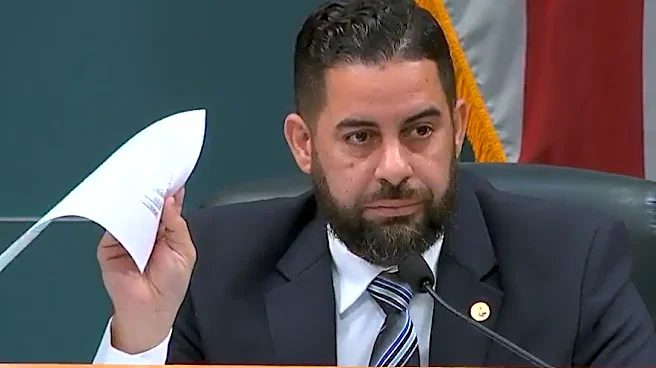
“This is a slap in the face,” said Commissioner Joel Flores as he held up the sheriff's one-page response.
The vote to move forward with a special taxing district followed mounting commission frustration
over lack of transparency in PBSO's budgetary requests.
A lawyer representing PBSO said the sheriff had no objection to the special taxing district but requested minor wording changes, which the commission agreed to make. He also suggested that the district be created in accordance with the Florida state constitution.
Under a taxing district format, law enforcement functions such as patrols and making arrests for violation of state law and county ordinances would be conducted by sheriff deputies in unincorporated areas. Other sheriff operations, such as overseeing county jails and courthouse security, would remain in the county budget since they are countywide functions.
Special taxing district faces uphill funding fight
After more than an hour of debate Tuesday, commissioners voted to create a Municipal Service Taxing Unit, or MSTU. But the measure may never take effect because it would require unanimous approval to fund it.
A separate tax rate would be set up to fund PBSO operations. It is expected to be about $6 per $1,000 of assessed valuation but there is expected to be about a $2 increase in the county tax rate since the county budget would no longer include funds for PBSO.
Commissioners Maria Sachs and Mayor Sara Baxter strongly oppose creating a PBSO special taxing district because it would significantly raise county property taxes for residents in their unincorporated areas.
A resident of one of the county’s 39 municipalities could save about $1,000 a year in property taxes on a home assessed at $500,000. That same home in an unincorporated area could see an increase of about $2,000.
The five commissioners who backed the taxing district primarily represent city residents.
Flores and Commissioner Gregg Weiss said the current system unfairly taxes city residents twice, as they pay for their own police departments while also helping fund PBSO patrols in unincorporated areas.
About 45% of the county residents live in unincorporated areas.
Budget stand-off with PBSO behind special taxing district plan
As a constitutional office, the county sheriff operates with autonomy but is funded from county tax revenue. The commission, though, still must approve the budget.
In recent years, Bradshaw’s annual budgets have regularly grown faster than inflation, forcing the county to scale back its own operations. Over the past two years, for example, increases in the sheriff’s budget have exceeded $200 million, outpacing the revenue brought in through higher assessments and new construction.
Even after a $20 million reduction for the coming fiscal year, the sheriff's budget still increased by more than 7%, while the county commission budget decreased by about 2%.
Previous county commissioners routinely accepted nearly double-digit percentage increases. But the accommodating position changed this year with the county under pressure to make cuts and with the property tax rollback Amendment 3 before voters statewide on the November ballot.

“We are facing a doomsday scenario if the amendment passes,” Flores said.
The one-page report Bradshaw provided listed $84 million in overtime, $56 million on other services, $28 million on rentals and leases, $25 million in operating supplies, and $2 million on special pay. There was no detail on how this money is being spent, Flores noted.
“We cannot make decisions on the sheriff’s budget without the information we need,” Flores said.
Sachs argued that obtaining more budget detail can be accomplished without further burdening some residents with higher taxes.
“We can require him to provide more information without creating this special taxing district,” Sachs said.
The Palm Beach Post has reported that special executive benefits and rehiring practices have contributed to increased personnel costs at PBSO.
More than $6.3 million has been paid to high-ranking members of PBSO through a special 401(k)-type perk that is 100% funded by taxpayers. As much as $70,000 per year has been deposited into those accounts.
In addition, nearly 40 high-ranking PBSO officers have been rehired after retiring. Some returned to newly created posts, while others were rehired in their former jobs at higher salaries.
Sachs said the report by The Post supports the argument for greater transparency, noting that no one was aware of the 401(k) perk or the vast number of rehires.
One of The Post stories reported that Bradshaw would no longer rehire employees after Oct. 15.
Flores said he called on County Administrator Joe Abruzzo to explore creating the special taxing district because of the significant budget hikes Bradshaw proposed.
“He has been a great sheriff,” said Flores. “This is about transparency.”
Mike Diamond is a journalist atThe Palm Beach Post, part of the USA TODAY Florida Network. He covers Palm Beach County government. You can reach him at mdiamond@pbpost.com. Help support local journalism. Subscribe today.
This article originally appeared on Palm Beach Post: County OKs PBSO taxing district. But 2 commissioners may prevent it.