



Despite the pronunciationand political kerfuffles over the name Isaias, it’s unlikely to be retired from the hurricane name list — a move reserved for the most destructive and deadly storms.
Thatmeans Isaias, which before this year was last used in 2020, will be up again in 2032 as the six-year rotation of tropical cyclone names moves through its cycle.
But the process to remove a name fromthe hurricane listis “surprisingly” subjective, said Brian McNoldy, a senior research associate with the University of Miami’s Rosenstiel School for Atmospheric, Marine and Earth Sciences.
There’s no threshold for storm category, central pressure, damages or deaths that must be met to have a name yanked from the list. A country only needs to make the request
to the World Meteorological Organization, plead its case on why it wants the name retired, and then a committee votes on it.
“It is tempting to construct some objective criteria but consider the same hurricane hitting a rural stretch of the United States coastline versus passing over a small Caribbean island nation,” McNoldy wrote in a blog this year when the name Melissa was retired. “In the U.S., such a storm would likely not make a significant or lasting impact, but the small island could be devastated.”
How many hurricane names have been retired?
Melissa, which crashed into Jamaica as a Category 5 hurricane in late October 2025 and is responsible for an estimated 93 fatalities, was the 100th name retired from the hurricane list. It was replaced by Molly.
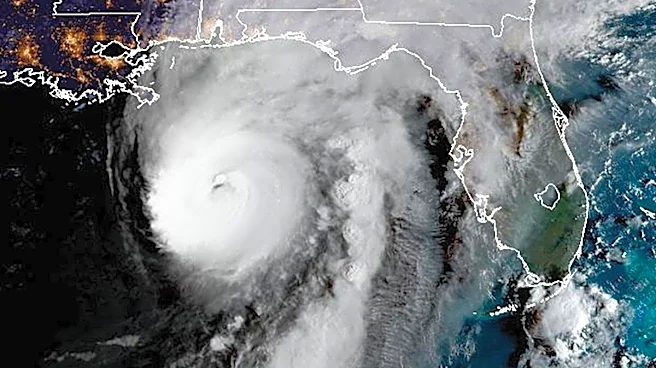
Isaias, pronounced ees-ah-EE-ahs, wasa Category 2 storm at landfall near Destin on Oct. 9 with 105 mph winds.
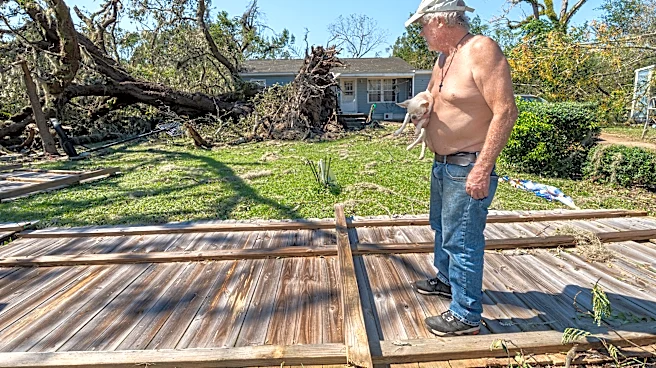
As of Oct. 13, it was responsible in Florida for one direct death when a tree fell on a home, and five related deaths from someone having a generator in their home, car accidents and medical emergencies.
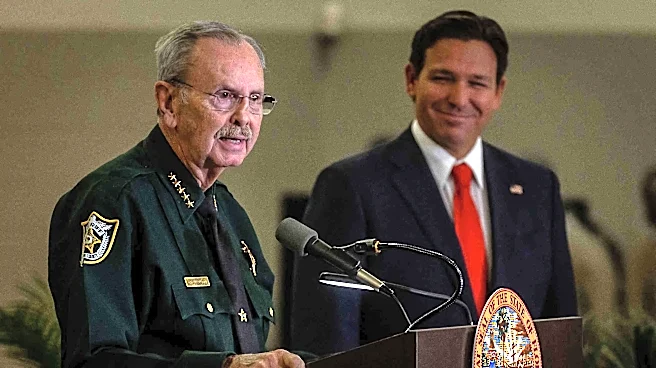
Ahead of the storm, there was some debate about the name Isaias. Gov. Ron DeSantis called it “weird.”
“I don’t know how to pronounce this because it’s not normal. So, you know, I’m calling it ‘Isaiah.’ You guys can call it what you want,” DeSantis said. “I know that’s not how you pronounce this. It’s something else. But it’s weird, and I’m just going to keep butchering it for the next 72 hours.”
U.S. Rep. Jimmy Patronis, R-Panama City, requested on social media that “common American names people can pronounce” be used for tropical cyclones.
“During a disaster, the last thing we need is everyone trying to figure out how to say ‘Isaias’ (too many syllables). Think of first responders using radios near loud equipment,” Patronis wrote.
Florida Politics noted that DeSantis didn’t have a problem pronouncing Isaias in 2020.
That 2020 storm formed in the eastern Caribbean Sea and took a swipe at Florida, coming within 40 nautical miles of West Palm Beach and Fort Lauderdale as a tropical storm. It made landfall as a Category 1 hurricane near Ocean Isle Beach, North Carolina, late on Aug. 3.
Why the Greek alphabet no longer is used for storm names
The 2020 hurricane season was also only the second time in more than a century’s worth of records that the Greek alphabet was used after the hurricane center had exhausted the traditional list of 21 names in September. The traditional names end with the letter W and exclude Q, U, X, Y.
Thirty-one named storms ultimately formed in 2020, delving eight names deep into the Greek alphabet.
Ultimately, the World Meteorological Organization (WMO) shelved using the Greek alphabet in the future because it was too confusing and wasn’t translating well in Spanish. The Greek alphabet also doesn’t follow the English alphabet in terms of order.
Major Hurricane Zeta was the 28th storm in 2020 and is the 6th letter in the Greek alphabet. It was followed by storms Eta, Theta and Iota, but people thought because it was the Z storm it was the last on the list.
National Weather Service Director Ken Graham was the director of the National Hurricane Center in 2021. He said at the time that the WMO is judicious about retiring names, in part, because they could run out.
And the I-named storms are the most frequently retired. Fourteen I names have been cut from the list since 1954, including Ike, which was retired in 2009 and replaced by Isaias.
“Your strongest storms will be peak of the season and that’s around when I names are used,” said James Franklin, former branch chief of the National Hurricane Center’s specialist unit. “Those are the strong and long lived ones that tend to do the most damage.”
Recently retired I-named storms include 2022’s Ian, 2021’s Ida and 2017’s Irma.
Franklin said he remembers when Isaias was named as a replacement and thought then it could be a challenge.
In 2020, WPDE chief meteorologist Ed Piotrowski in South Carolina struggled to pronounced Isaias. He said on Facebook this month that he's since figured it out and didn't mispronounce it this go around, but posted a clipfrom his previous attempts.
McNoldy said another recent storm that had some people confused was Henri in 2022. It’s pronounced ahn-REE not HEN-ree. In 1998, there was Hurricane Georges, pronounced ZHORZH. It was retired and replaced with Gaston.
Hurricanes began getting names in 1950 based on the phonetic alphabet. That was abandoned in 1953 when hurricanes started being named after women only. In 1978, men's names were added. The first man’s name used was Bob in 1979.
Kimberly Miller is a journalist for the USA TODAY NETWORK FLORIDA. She covers weather, the environment and critters as the Embracing Florida reporter. If you have news tips, please send them to kmiller@pbpost.com. You can get all of Florida’s best content directly in your inbox each weekday by signing up for the free newsletter, Florida TODAY, at palmbeachpost.com/newsletters.
This article originally appeared on Palm Beach Post: The name Isaias sparked debate in Florida but likely isn't going away