




Hundreds of people participated in the heralded 2026 Florida Python Challenge, a 10-day pursuitin sticky South Florida that pits hunters against the state's most notorious invasive species.
This year competitors navigated drought, wildfires and thunderstorms to find their prey, with hunter Tom Rahill winning the ultimate the $10,000 grand prize for catching the most snakes at 96.
The grand prize winner of the contest was announced Aug. 5 at the Florida Fish and Wildlife Conservation Commission meeting in Panama City Beach. With a total of 280 snakes caughtduring the contest that included 907 participants. Participants came from 30 states, Canada and Vietnam.
Last year's grand prize winner Taylor Stanberry nabbed 60 snakes compared to the 2024 winner's
take of 20 snakes.
Hunters said weather and land conditions matter almost as much as cunning and strategy during the competition, which ran this year July 10 to July 19.
For some hunters the contest was made more challenging this year by drought and wildfires.
Pythons aresemiaquatic animalsthat often use waterways to travel. When it’s drier, they don’t move as much because their food sources are sticking near water sources and also aren’t moving as much.
Much of western Broward and Miami-Dade counties, including parts of Everglades National Park, were still in extreme drought during the Python Challenge.
Python hunter Kym Clark snagged seven pythons in the 2025 competition, earning the status of runner-up in the novice category for the effort.
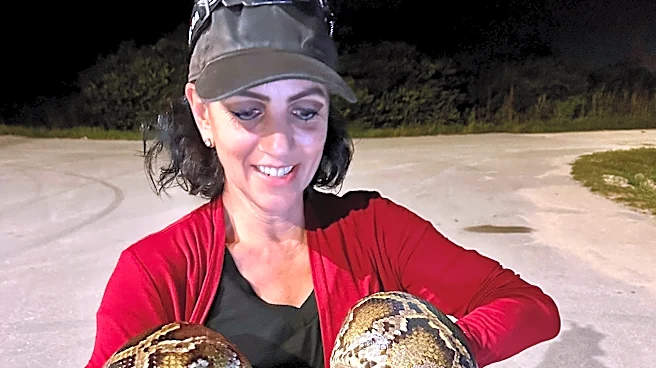
This year was more difficult, Clark said. After hunting every night during the 10-day challenge for 10 to 12 hours each outing, she nabbed one python. It was a female that measured 6-feet, 2-inches.
“It by far wasn’t the biggest python and it definitely wasn’t most pythons removed but I always feel like a winner if I an take one python out of the Everglades,” said Clark, who this year hunted in the professional category after becoming a python contractor for the South Florida Water Management District. “You have to be in the right place at the right time. There’s also an element of luck in this.”
The Python Challenge is held during the brutally hot and humid summer months to take advantage of the cold-blooded reptiles being more active and to coincide with python hatchling season.
Why the 2026 Florida Python Challenge was held during the hottest days of the year
The first three years of the now annual competition to help rid the Everglades of the invasive snake were held in January, when cooler temperatures meant less active snakes.
Just 254 pythons total were collected during the three events held in 2013, 2016, and 2020. That’s despite the first two contests lasting 30 days and with participation rates of nearly 1,600 hunters in 2013 and more than 1,000 in 2016.
In 2021, the contest switched to 10 days in July, and 223 snakes were caught with just 612 registered hunters.
The sweltering summer dates were repeated in subsequent years with similar jackpot results until last year when a record 294 pythons were captured and killed between July 11 and July 20.
Stanberry, who won the $10,000 grand prize in 2025 for the most snakes caught, agreed it was tougher hunting this year but said it was partly because of rainy, chilly nights in the Big Cypress National Preserve.
Rain and cold can also limit snake movements.
“We had to travel around to different areas within the bounds where the weather was good,” she said.
Clark said hunters started to see catches pick up following the contest, possibly because of a shift in environmental conditions or the timing of nests hatching.
“This is the kind of research we work all year long to gather so we can better understand pythons and their behavior,” Clark said. “Python removal is a team effort and I’m always grateful to be part of the community working together everyday to protect Florida’s native wildlife.”
What are the prizes for the 2026 Florida Python Challenge?
Longtime python hunter Dusty Crum, who is contracted with the South Florida Water Management District and will participate in this year’s Challenge, said it’s getting harder to win the big prizes because of the shortened time period.
When it was 30 days, he could hunt 30 days straight when other contestants had to work regular jobs during the week.
Also, the levees and public access roads where the majority of the pythons are found during the Challenge can be bumper-to-bumper with hunters during the contest.
“It’s kind of harder to find the snakes, and a lot of that is the influx of python hunters. It can be like I-75 out there because there are so many hunters,” Crum said in a June interview. “I encourage the young newcomers, but you need right-minded people with their heart in the right place.”
Kimberly Miller is a journalist for the USA TODAY NETWORK FLORIDA. She covers weather, the environment and critters as the Embracing Florida reporter. If you have news tips, please send them to kmiller@pbpost.com. You can get all of Florida’s best content directly in your inbox each weekday by signing up for the free newsletter, Florida TODAY, at palmbeachpost.com/newsletters.
This article originally appeared on Palm Beach Post: 2026 Florida Python Challenge grand prize winner announced