




MIAMI — The night before Florinda and her two children were scheduled to self-deport, she nearly canceled the flight.
Three years earlier, she and her husband had fled from Guatemala, believing their children would grow up safer in the United States. But sitting in their home near Lake Worth Beach, she packed that dream into a pink suitcase, folding clothes around the paperwork that would return them to the country they had once risked their lives to escape.
The decision haunted Florinda.
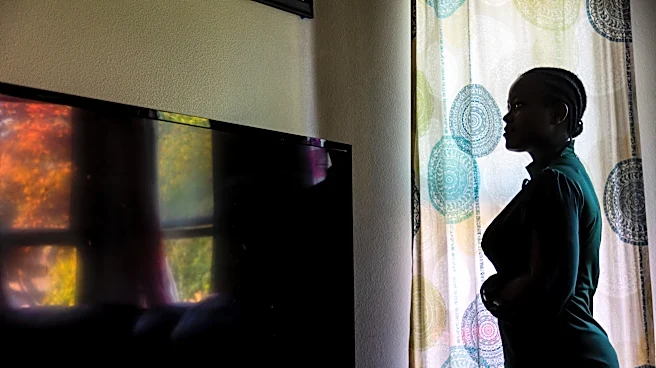
After watching immigration authorities detain her cousin and seeing families torn apart, Florinda said she no longer believed she could keep her children safe while living in fear and in the shadows.
Leaving felt like surrendering her American dream. Staying felt impossible.
At dawn, Florinda and her two children traveled to Miami International Airport to join Debhani and Eithan, two U.S.-born siblings who traveled nearly 700 miles from South Carolina to board the same flight to Guatemala. They were to be reunited with their mother, whom they have not seen since immigration authorities detained her eight months earlier.
Debhani watched as ICE agents took her mother into custody during a traffic stop in South Carolina. Eithan was only 3 months old and still breastfeeding at the time of her arrest.
Together, the five represented two sides of the same reality facing immigrant families in South Florida. Some families are choosing to leave before they are separated. Others are trying to reunite after separation has already happened.
Florinda, her children, Debhani and Eithan are just the latest people assisted by the Guatemalan-Maya Center, a Lake Worth Beach nonprofit that has helped reunite 59 children with deported parents since 2025, when the second administration of President Donald Trump began enforcing laws against immigrants without documentation in the United States.
Tears fell at Miami airport as family waited to self-deport to Guatemala
The sky was still dark when the families arrived at Miami International.
The children rubbed their eyes and yawned as they stepped into a concourse beginning to fill with travelers. For the five children, it would be their first time boarding an airplane.
Florinda hurried through the terminal, holding the hand of her daughter Mariana. Behind her, her son Federico peeked over her shoulder, wrapped against her back in a traditional Maya tzute cloth.
Nearby, volunteers Pedro and Patricia Barricales guided Debhani and Eithan through the airport. Debhani clutched a purple teddy bear while Eithan slept in Pedro's arms.
The group was quiet but tense. The adults moved quietly through the terminal, weighed down by the uncertainty of what lay ahead for the children. The toddlers seemed more captivated by the adventure unfolding around them.
At first, Debhani was shy around Mariana. Before long, the girls were playing together as they made their way through the concourse. Eithan examined a blue toy race car across the floor.

For a few moments, they looked like children heading off on vacation. But the reality awaiting them was far different.
In Guatemala, the children will settle in rural villages where access to education, health care and internet service are scarce. Next week, instead of going back to class in their daycare, elementary and middle schools in Palm Beach County, they will attend small-country schools, many of which charge tuition after the sixth grade.
Led by Maria de la Guardia, the families slowly made their way toward the security checkpoint. Beside her was the Rev. Frank O'Loughlin, the founder of the Guatemalan-Maya Center, who hugged and traced the sign of the cross over the group.
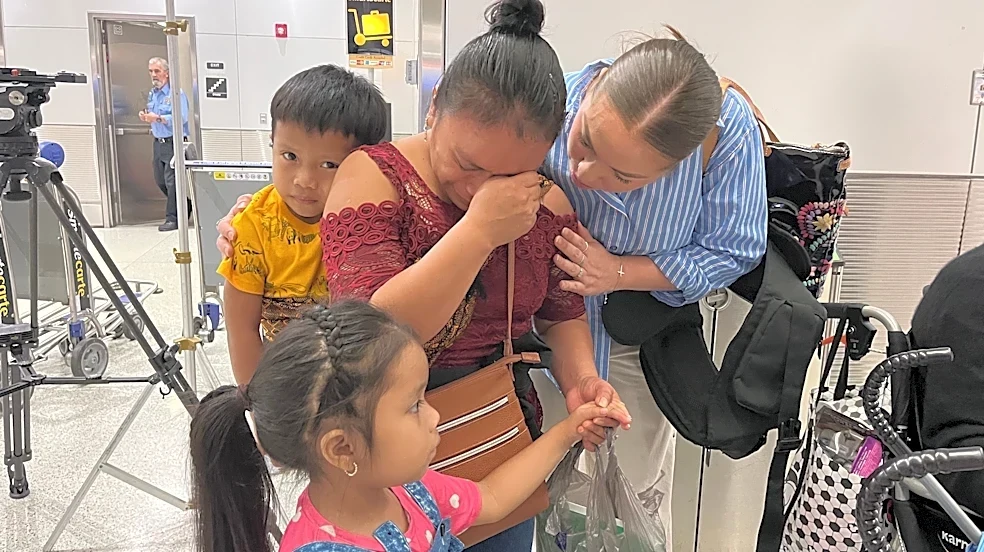
Florinda rolled Eithan to her chest and Mariana Blanco, the executive director of the center, wrapped her arms around the sobbing mother.
"Eres una madre valiente," Blanco said in a whisper. You are a brave mother.
As the families disappeared through security, Guatemalan-Maya staff members waved goodbye, smiling at the children before turning around and wiping tears with their shirts.
Dream denied: Families chose togetherness over hopes for children

On Thursday night, Florinda said she sat on the floor packing nearly everything her family owned into suitcases. She can't read or write in English, but she carefully memorized the paperwork organized by the Guatemalan-Maya Center.
Before going to bed for the last time in their Lake Worth Beach Home, Florinda braided her daughter's long, black hair.
As she packed, one thought kept returning: By morning, her family would be starting over from nothing, again.
Florinda said she came to the United States for the same reason many immigrant parents do: to give her children educational opportunities she never had.
Instead, she spent the last two years afraid. Afraid to go to work, to the grocery store and to church.
Mariana was supposed to begin preschool this year, but Florinda said she was too frightened to enroll her.
Her greatest fear was being detained and separated from her children.
She does not know what conditions will be like in the rural Guatemalan town where she is returning. But she said there is one thing she knows for certain.
At least, the family will be together. Her worst fear is being detained and that her children are left alone.
The day's question: Will 3-month-old son recognize mom?

It had been nine months since Debhani and Eithan last saw their mother, before she was deported to Guatemala.
After immigration authorities detained her during a traffic stop in South Carolina, the children remained with their grandmother while their mother's case moved through immigration proceedings.
Last month, their grandmother contacted the Guatemalan-Maya Center seeking help reuniting her daughter with her children.
Volunteers drove the siblings from South Carolina to Florida, where staff members coordinated the final leg of the journey. Along the way, the children experienced a series of firsts.
They stopped in Port St. Lucie, where Debhani posed for a photo beside a Mickey Mouse figure and ate chicken nuggets while watching the sunset.
The children spent the night in the Barricales' home, where volunteers had stocked a bedroom with stuffed animals, toy cars and new dolls.
The next morning, they ate Mickey-shaped pancakes and bagels before taking their first swim in a backyard pool.
Throughout it all, Debhani called her mother constantly, eager to share every new experience with her.
Eithan was only 3 months old the last time he saw his mother.
"It's been so long, he may not even recognize her," Pedro Barricales said.
Valentina Palm covers immigration and breaking news for The Palm Beach Post. Email her at vpalm@pbpost.com and follow her on X, the platform formerly known as Twitter, at @ValenPalmB. Support local journalism: Subscribe today
This article originally appeared on Palm Beach Post: Tears flow as two families fearing detention self-deport to Guatemala