




It will likely still feel hot and summery in Palm Beach County through October, but the fall season is officially here, with pumpkin spice products pouring out of coffee shops and cafes and Halloweendecor hitting shelves and popping up in yards.
Another sign of the season is also coming quickly: The time change is looming... unless the U.S. Senate votes to make daylight saving time permanent
, which doesn't seem likely.As of Sept. 29, there are only 32 days until clocks fall back and even less time for the Senate to schedule a vote on the Sunshine Protection Act. With no Senate vote on daylight saving time currently scheduled, it looks like many Americans will be falling back to earlier sunrises and sunsets in about a month.
Here's what to know
about the effort to make daylight saving time permanent, when the time is set to change this fall and how it affects sunrise and sunset times in Palm Beach County and across Florida.
When does the time change? When we fall back in 2026
Daylight saving time for 2026 started on Sunday, March 8, at 2 a.m., when clocks sprang forward an hour, to 3 a.m.
Daylight saving time for 2026 ends on Sunday, Nov. 1, at 2 a.m., when clocks will "fall back" an hour to 1 a.m.
Will the Senate vote on daylight saving time before clocks fall back?
It doesn't seem likely. After over a year in committee, the Sunshine Protection Act was voted on and approved by the House of Representatives on July 14, which is one step closer to allowing states to make daylight saving time permanent.
The legislation now must be passed by the Senate and signed into law by President Trump, who has long supported making daylight saving time permanent.
Unless the Senate votes on and approves making daylight saving time permanent, and President Trump signs it into law in the next week, most Americans' clocks will fall back on Nov. 1.
Senators only have about a week to take action, as lawmakers are scheduled to leave the Capitol again on Oct. 5 and will not return until after the time change, on Nov. 9. Not to mention, it's unknown whether there would even be enough votes to pass the measure. There is no Senate vote scheduled for the Sunshine Protection Act, as of Tuesday, Sept. 29.
H.R. 139, known as the Sunshine Protection Act, was filed Jan. 3, 2025, by Rep. Vern Buchanan, Florida-District 16. Buchanan has brought the Sunshine Protection Act before each Congress since 2018. Trump has repeatedly supported the shift to permanent daylight saving time and has been asking senators to pass the Sunshine Protection Act ASAP.
"People are sick and tired of having to change their clocks twice a year. It is foolish, inconvenient and, in some cases, very costly," Trump said in a Truth Social post on Aug. 12.
The Sunshine Protection Act would make daylight saving time the new, permanent standard time in the United States and would allow states to opt out to stay on standard time.
What time will the sun rise after clocks fall back? Sunrise, sunset times in Florida
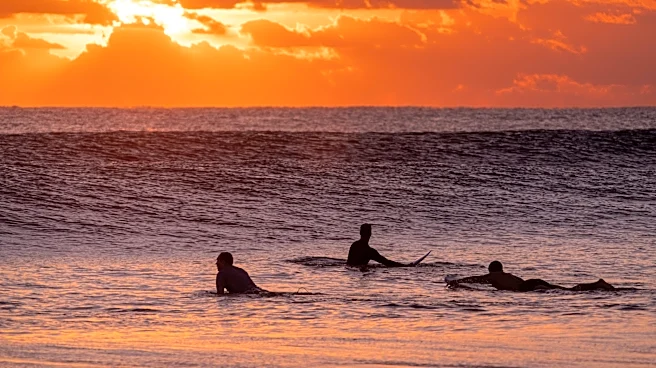
Sunrise and sunset will be about an hour earlier on Nov. 1 than the day before, meaning there will be more light in the morning and less light in the evening.
The sunrise on the day before, Oct. 31, will range between around 7:30 and 7:40 a.m. ET in Florida, depending on where you are in the state. The day after, on Nov. 1, when daylight saving time ends, that range will be between 6:30 and 6:40 a.m., dpeending on where you are in the state.
Although falling back gives us one more hour of sleep, the sunrise comes earlier, and so does the sunset.
Sunrise, sunset times around Florida, before and after the time change:
- Jacksonville:
- Saturday, Oct. 31: Sunrise at 7:40 a.m., sunset at 6:39 p.m.
- Sunday, Nov. 1: Sunrise at 6:41 a.m., sunset at 5:38 p.m.
- Orlando:
- Saturday, Oct. 31: Sunrise at 7:36 a.m., sunset at 6:41 p.m.
- Sunday, Nov. 1: Sunrise at 6:37 a.m., sunset at 5:40 p.m.
- Miami/Palm Beach County:
- Saturday, Oct. 31: Sunrise at 7:28 a.m., sunset at 6:39 p.m.
- Sunday, Nov. 1: Sunrise at 6:29 a.m., sunset at 5:39 p.m.
When does the time change? See countdown clock
Is it daylight saving time or daylight savings time? What does DST stand for?
“DST” is an abbreviation for daylight saving time. Many people pluralize the phrase to say “daylight savings time.” The correct way to spell and say it is the singular version of the phrase: daylight saving time.
Does Florida want to get rid of the time change? 19 states support it
Yes. Florida supports permanent daylight saving time. In fact, it was a Florida congressman that introduced the Sunshine Protection Act. Rep. Vern Buchanan, Florida-District 16, filed the Sunshine Protection Act on Jan. 3, 2025, and before that, brought it before each Congress since 2018.
According to congress.gov, 19 states have enacted legislation that would implement permanent daylight saving time if such action is allowed by Congress:
- Alabama
- Colorado
- Delaware
- Florida
- Georgia
- Idaho
- Louisiana
- Maine
- Minnesota
- Mississippi
- Montana
- Oklahoma
- Oregon
- South Carolina
- Tennessee
- Texas
- Utah
- Washington
- Wyoming
Lianna Norman and Cheryl McCloud are trending reporters for the USA TODAY NETWORK-Florida, covering lotteries, weather, Florida wildlife, breaking news and more. You can get all of Florida’s best content directly in your inbox each weekday by signing up for the free newsletter, Florida TODAY, at https://floridatoday.com/newsletters.
This article originally appeared on Palm Beach Post: Sun rise, sunset times in Palm Beach County after daylight saving ends