




JUPITER — Palm Beach County residents will soon have more ways to explore the Jupiter Inlet Lighthouse Outstanding Natural Area.
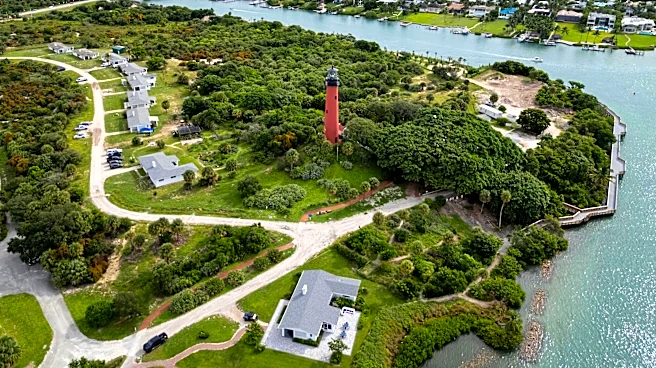
A new walking path, pavilion and snorkeling area, expanded kayaking access and an 800-foot boardwalk are among the additions taking shape as a major shoreline restoration effort nears completion.
The $16 million project aims to address years of erosion that had been eating away at the shoreline at a rate of about 7 feet per year. Over five decades, the 120-acre site has lost more than 5 acres.
“This project is critical,” said Peter DeWitt, site manager for the Bureau of Land Management, the federal agency that oversees the area.
Jupiter Lighthouse historic structure placed in a public park
DeWitt said the erosion was destroying habitat and creating safety concerns, including collapsing
sand dunes and vegetation washing into the Intracoastal Waterway, obstructing boaters.
Originally slated to be finished in August, the final touches and ribbon-cutting will now take place in early December.
Along with the 835-foot boardwalk along the Loxahatchee River side of the site, a new ADA-accessible trail loops around the lighthouse and connects to both the pier and boardwalk.
“It’s a really great benefit for some locals who each morning just want to do a beautiful walk around the property or a climb of the lighthouse,” said Katrina Heller, the executive director of the Jupiter Inlet Lighthouse Museum.

A Tequesta police boat will be stationed nearby on a lift at a dock expected to be completed within two weeks.
The project also expands kayaking access, with two recreational vendors operating from different sides of the park — one along the Loxahatchee River and another along the Indian River Lagoon.
“Hopefully a little competition between the two keeps the price nice and low,” DeWitt said.
A new pavilion will also host new programs and private events.
“We’re super excited for this as a structure mostly for our educational projects,” said Heller. “We have a monthly homeschool morning, and this is now a great spot where (kids) can be, especially in case of bad weather.”
Another previously restricted section of the property is being converted into lawn space, giving the lighthouse more room for events, including its annual River Cherish Art Festival in March.
“We’re hoping for 100 artists this year, up from 70 last year,” said Heller.
The snorkeling area is expected to open to the public on Dec. 20, a little more than two weeks after the rest of the project is completed. DeWitt said crews were given more time after a government shutdown delayed work early in the contract and material deliveries caused further setbacks.
Lighthouse Park changes mean less space for weekend Jupiter boaters

The changes also mean less room for boaters during busy weekends.
The shoreline can handle about 17 boats at a time on a first-come, first-served basis, matching the previous average daily use, though holiday weekends sometimes drew 40 to 60 boats at once.
“That use is no longer permitted,” DeWitt said.
An earlier version of the project would have extended the breakwater along the shoreline and gotten rid of boating access altogether.
DeWitt, who was initially tasked with finding money for that design, said he didn’t believe it would attract support.
“When I looked at it, I said, ‘No one’s going to fund this,’ ” DeWitt said. “It took me four years to get my management to be willing to look at a new design, and so the new design was a compromise.”

Others involved with the project have described DeWitt as a “driving force” behind the effort, though he is reluctant to characterize his role that way.
Construction began in March 2025 after years of redesigns, funding challenges and debate over how to protect the historic property while preserving public access to the water.
“The infrastructure itself is 95% complete. The restoration is still very much underway,” said DeWitt.
This restoration also includes artificial reef structures designed to protect the property while rebuilding habitat along the water and a living shoreline.
So far, over 7,000 mangroves have been planted, just shy of the project’s goal of 10,000.
“We’ve still got four more plantings,” DeWitt said. “We’re going to knock it out of the park.”
Jupiter Lighthouse park improvements expect to last 100 years

The riprap portion of the project — limestone barriers which enable coral to take root and provide habitat for seagrasses and sea life — was completed just ahead of a stretch of expected seasonal high tides, which will run through the end of October.
Although the project was designed around a 75-year flood event, DeWitt said the breakwaters are expected to last much longer and can be built up further as conditions change, in the event of rising sea levels or severe storms.
“I don’t expect this to fall down in 75 years,” DeWitt said. “The timbers we’re using, some of them are rated for 100-plus years.”
An invitation-only ribbon-cutting ceremony is scheduled for 10 a.m. on Dec. 3; the site will later host a public grand opening from 1 p.m. to 5 p.m.
After construction crews leave, Florida Atlantic University will help determine whether the shoreline will need to be replenished in the years ahead.
“The school will keep monitoring whether the beaches are stable, growing or shrinking,” DeWitt said. “And that will inform future management.”
This article originally appeared on Palm Beach Post: How a $16M project made Jupiter Inlet Lighthouse a better public park