





In a rare move, Gov. Ron DeSantis has withdrawn a death warrant to allow an inmate to live.
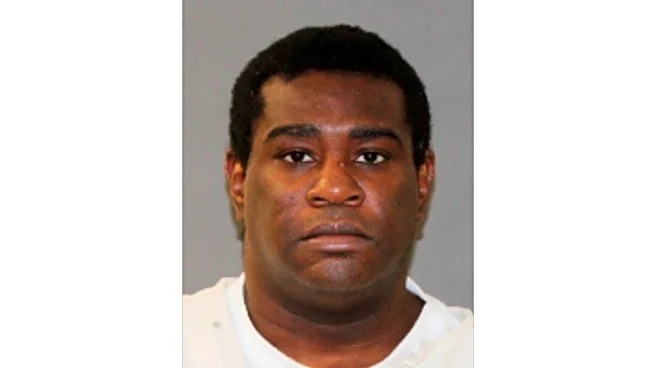
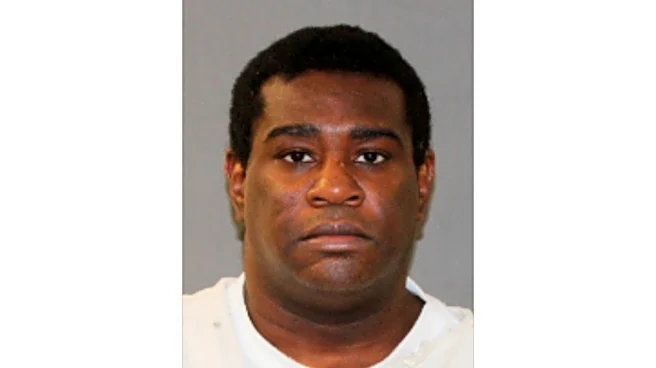
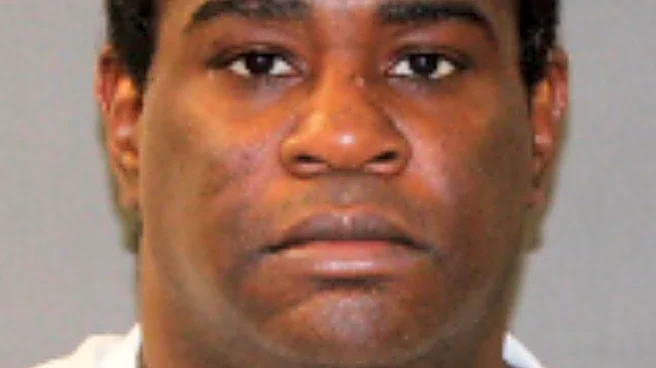
William Lee Thompson, convicted of the 1976 Miami kidnapping, rape, and murder of 23-year-old Sally Ivester, was spared in a letter DeSantis sent Florida State Prison Warden Randall Polk on Oct. 8, saying he was withdrawing the death warrant.
Thompson was one of two men scheduled to be executed on Oct. 13.
Thompson's attorneys argued that the 74-year-old man's mental capacity, possibly including dementia, meant that under Florida law he could not be executed. On Sept. 17, DeSantis appointed three psychiatrists to evaluate Thompson on Oct. 21. The results have not been released, and DeSantis gave no reason for the withdrawal in his letter.
In an emergency
filing in September, Thompson's attorneys pointed to his long history of evaluations showing mental incapacity. They said that in recent health assessments, Thompson seemed unaware of his own medical history, including the surgery that left him with colostomy and ileostomy bags, was “confused” and “ disoriented,” thought "Bush" was still the president, and was unable to respond verbally to questions.
"Mr. Thompson lacks the mental capacity to understand the fact of his impending execution and the reason for it," said Robert Ouaou, a Naples neuropsychologist, who evaluated Thompson on his attorney's request.
Thompson, 74, has also required extensive medical care recently for sepsis, systolic heart failure, severe malnutrition, and multiple decubitus ulcers. On Sept. 30, more than 100 healthcare providers signed a letter protesting Thomspons's execution.
This marks the only execution that has not gone through since DeSantis ramped up executions in Florida in 2025.
The state will still put an inmate to death on Oct. 13: James Robertson, a prisoner who killed his own cellmate, Frank Hart, just to get on death row, is not contesting his execution.
The withdrawal comes amid increased national execution scrutiny after Christa Pike survived her attempted execution by lethal injection in Tennessee, the second botched lethal injection in the state this year. Tennessee Gov. Bill Lee has halted executions for the rest of the year pending a review.
Can Florida execute someone who is intellectually disabled?
In 2001, Florida enacted a law preventing the execution of persons with intellectual disability.
Six years later, in Cherry v. State, the Florida Supreme Court required defendants to prove they had an IQ of 70 or lower to meet the intellectual disability criteria, but the U.S. Supreme Court struck down IQ benchmarks in 2014 as being unconstitutional under the Eighth and Fourteenth Amendments.
If Thompson is found to be mentally incapacitated, he may not be executed and will live out his remaining years in prison.
Thompson apparently attempted suicide
In September 1981, Thompson was found in his cell with a homemade knife protruding from his stomach, according to a Florida Department of Corrections spokesperson.
Thompson was stabilized at the prison clinic and sent to a nearby hospital to remove the knife, AP reported.
What did William Thompson do?

On March 30, 1976, William Lee Thompson, who was 23 at the time, and Rocco Surace were in a North Miami Beach hotel room with Ivester and Barbara Savage. The women had told the men they could get several hundred dollars from their parents if they wanted, The Miami News reported.
Savage received the money, but Ivester received only $25 after promising she could get $200 or $300.
The two men forced her to strip, and Surace beat her with his belt chain. They sexually assaulted her with a chair leg and a nightstick, causing internal tearing and bleeding, court records show. They also tortured her with lit cigarettes and lighters, followed by "further severe beatings with the chain, club, and chair leg," over the course of several hours, stopping only once to force her to call her mother for money again, according to a Florida Supreme Court document.
Ivester died of internal bleeding and multiple injuries.
Both Surace and Thompson initially pleaded not guilty, but changed their pleas to guilty a month later. They were convicted of kidnapping, sexual assault, and first-degree murder.
Thompson has been on Florida's death row for about 48 years, the fourth-longest span of anyone currently there.
William Thompson's appeals
In 1977, the Florida Supreme Court unanimously overturned the sentences and ordered retrials for both men after Thompson and Surace said they had changed their pleas to guilty after being promised life sentences.
At Surace's trial, Thompson testified and took responsibility. Surace was found guilty of second-degree murder and sentenced to life. He died in prison in 1993.
Thompson pleaded guilty again to first-degree murder, and his attorneys attempted to introduce mental evaluations. He was again sentenced to death. An appeal against it was dismissed two years later.
Thompson narrowly avoided the electric chair twice. Then-Gov. Bob Graham issued a death warrant for him in 1982, but he was granted a stay of execution. In 1987, after another appeal had been shot down, then-Gov. Bob Martinez issued another, but the Florida Supreme Court stayed that one, overturned his sentence a second time, and ordered a resentencing because the judge had not considered mitigating factors, including his mental capacity, that might have led to a lesser sentence.
A jury recommended the death penalty again, with a vote of 7 to 5, and he was sentenced to death again. Multiple further appeals since then requesting further psychiatric evaluations and claiming that Surace forced him to take responsibility for the murder have been dismissed.
C. A. Bridges is a journalist for the USA TODAY Network-Florida's service journalism Connect team. You can get all of Florida’s best content directly in your inbox each weekday by signing up for the free newsletter, Florida TODAY.
This article originally appeared on Palm Beach Post: DeSantis withdraws death warrant of Florida killer after appeal