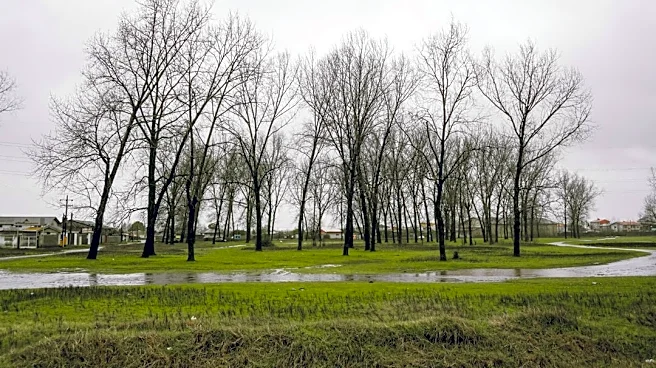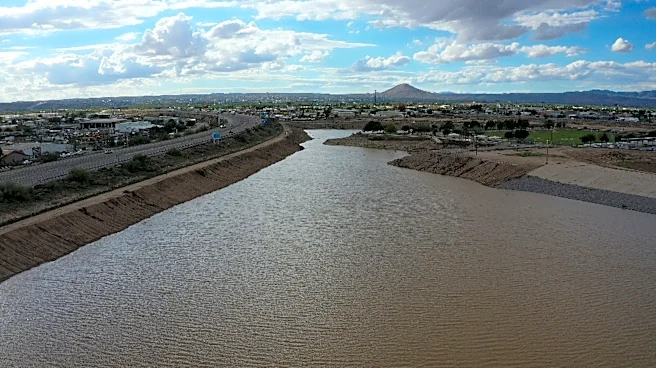

Burn Lake is no longer a dusty and littered wasteland welcoming interstate travelers to Las Cruces, the Mesilla Valley and the Borderland.
The lake is, well, actually a lake again.
This follows the Borderland's
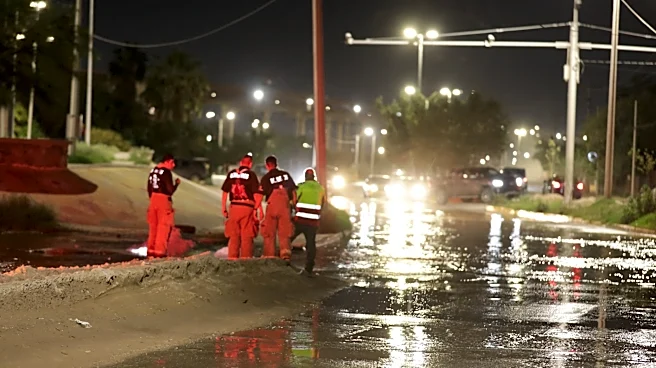
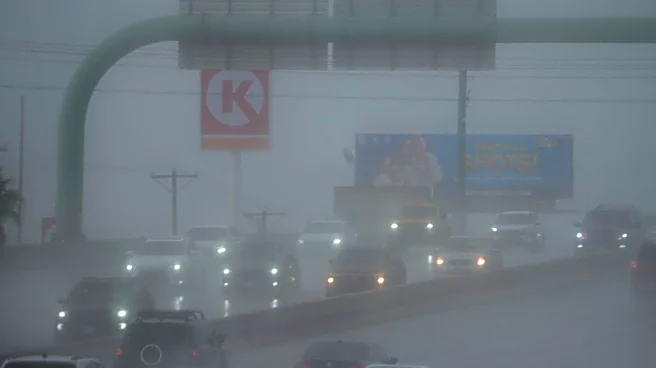
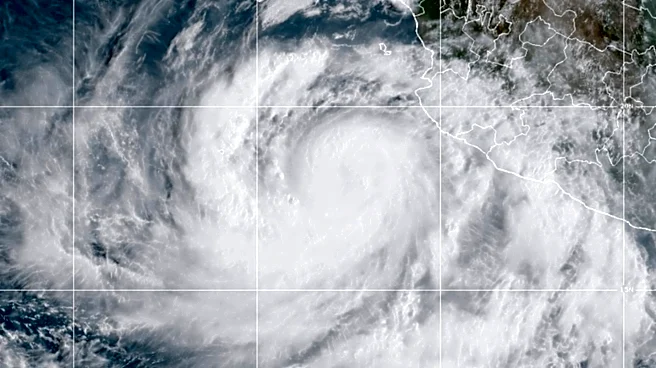
higher-than-normal rainfall totals in 2026 and the aftermath of Hurricane Polo that soaked Las Cruces during the last days of September.

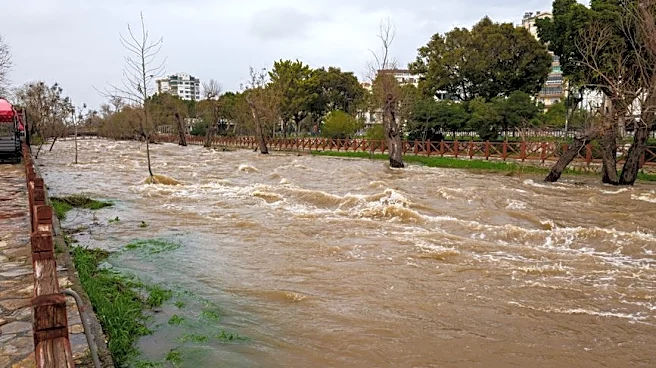
Las Cruces received between two and three inches of rain. The rain caused the Rio Grande to overflow its banks, closing La Llorona Park and storm runoff partially filling Burn Lake.
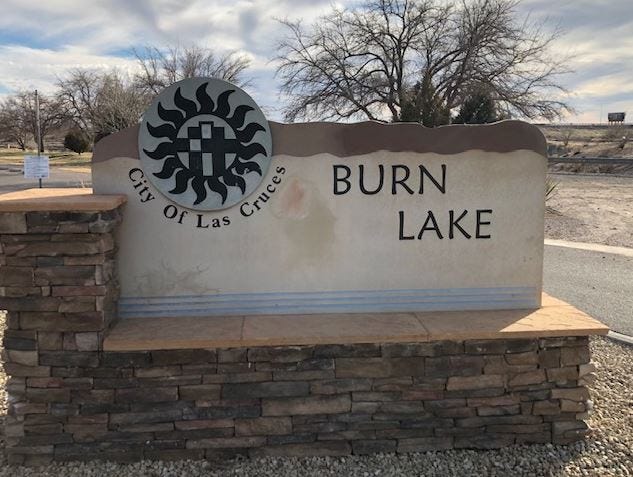
The lake, which has two pools, is located in West Las Cruces off Interstate 10, near Amador Avenue.
The city of Las Cruces Public Works Engineering Services presented a document in May 2011 that included a timeline of the lake's history.
The following — taken from that report — is a rough timeline of the lake that never seemed to reach its full potential as a landmark.

Late 1960s
Burn Construction contracted to provide millions of cubic yards of soil for development of a section of Interstate 10.
Burn Construction purchased land at the lake’s current location and began excavating soil. When the hole filled in with water, they installed temporary pumps and pumped water into the Mesilla drain. Over 3.25 million cubic yards of dirt were removed from the site.
The water table quickly filled the borrow pit after excavation was finished and Burn Lake was formed as a result.

1971
The Las Cruces City Commission rezoned the land and permitted the landowners to operate a recreational lake.
On Aug. 8, 1971, Burn Lake opened to the public. Admission was $1 and activities included fishing, boat rentals, swimming, water slides and two crane boom swings that extended over the slides, and two crane boom swings that extended over the water.
1973
Burn Lake was sold to the city of Las Cruces for $125,000, which included 38 acres of land. At the time, city leaders thought the lake would one day play a vital role in the El Molino Flood Control Project.
1980s
Soccer fields were developed north of the lake.

2004
Fourteen ducks and geese were found dead at the lake. City and state health officials closed the lake for several months. State health officials determined that the waterfowl were killed by botulism as a result of poor water quality.
2005
The City Council approved a preliminary conceptual plan that involved the Mesilla Lateral Pipeline Project that would incorporate a pump to regulate flows to and from the lake.
This plan died when the city did not secure the funding to preserve and protect the lake.
2008
The New Mexico Environment Department conducted a water quality assessment for Burn Lake. An exceedance of aluminum and E. coli was discovered.

2010 and beyond
Improvements were added around Burn Lake, including new bathroom facilities, a playground, landscaping and road upgrades.
The city applied for the 2011 Water Trust Board Grant/Loan Program to regulate and improve the water quality and aesthetic appearance of Burn Lake.

By the early 2000s, the lake had completely dried up. It was suffering from trash accumulation and neglect.
The Las Cruces Sun-News reported in a November 2022 article that a 6,775-square-foot dog park, which cost $399,492, opened at Burn Lake. Other amenities include a soccer complex, walking paths, shaded picnic shelters and BBQ grills.
In a 2025 revitalization effort, the city of Las Cruces, along with the Elephant Butte Irrigation District, launched the Burn Lake Aquifer Test. They diverted water from the Rio Grande into the Burn dry lakebed.

Burn Lake mysteries
A lack of rain and unusually hot temperatures allowed for the discovery of a "twisted and corroded vehicle" with the skeleton of a woman pinned inside, the Sun-News reported on June 5, 2005.
The remains were later identified as Joanne Dodge, a 23-year-old New Mexico State University student who went missing in 1981.
From the Sun News: "Dodge was last seen by a friend at 10 p.m. on Sept. 2, 1981, according to an NMSU police report dated two days later. A friend told police Dodge "had been drinking and was intoxicated" and left an apartment on Triviz Street in her 1978 Ford Mustang II, according to the report.
After Dodge had been missing for 24 hours, the friend notified police."
The New Mexico state medical examiner concluded in June 2005 that the remains found in the car were indeed those of Dodge.
Body of newborn recovered
The Sun-News reported that the body of a newborn baby was recovered by the Las Cruces Fire Department at Burn Lake on Feb. 7, 2026.
The Las Cruces Police Department said the baby girl's mother, Sonia Cristal Jimenez, 38, was arrested and charged with one felony count of intentional child abuse resulting in death.
Investigators alleged she disposed of her baby in the holding tank of a portable toilet after giving birth at Burn Lake.
Trish Long may be reached at tlong@elpasotimes.com.
This article originally appeared on El Paso Times: Burn Lake rises after storms, reviving decades of history