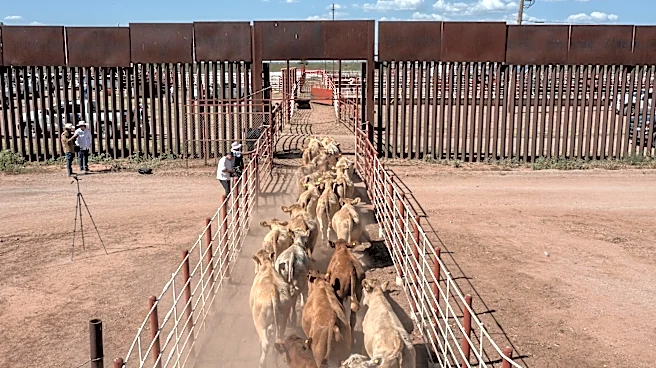






AGUA PRIETA, Mexico — A swirl of dust, rocks and excitement filled the desert air as the first two dozen cattle trotted across the U.S.-Mexico border.
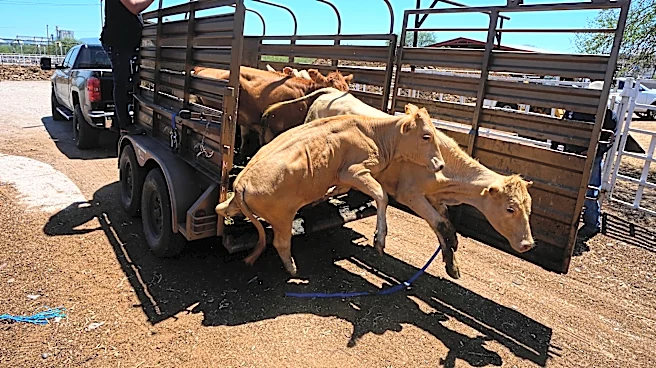
The rhythm of hooves from the white, brown and black cattle echoed along a strip of cement beside the border fence, mixing with the cheers and applause of onlookers as the animals became the first exports in more than a year. Ranch hands hooted and hollered behind the moving herd as some cattle tried to turn back toward the corrals.
In about half an hour, hundreds of animals were driven across the border.
The crossing marked the reopening of the first U.S.-Mexico livestock trade route after a more than 15-month shutdown, with huge implications for ranchers, cross-border commerce, animal health policy
and the U.S. beef supply.

The Borderland's cattle industry is keeping a close eye on the resumption of cattle exports from Mexico. The key port of Santa Teresa — the nation's leading livestock port — is next in line to reopen in 30 days if everything goes to plan.
Earlier in the day at the Douglas, Arizona crossing, U.S. Border and Customs Protection agents opened the massive, rusted cattle gate that led to corrals on the U.S. side of the border. The iron door creaked and cracked as it opened, exposing cobwebs on the inside of the frame — a testament to how long it had been locked down.
A Mexican customs agent arrived shortly before 3:15 p.m. MST/4:15 p.m. CST to open the chains connecting the two corrals.
There were 719 head of live cattle exported in the early afternoon on Monday, Aug. 24, as Mexico renewed exporting cattle. These exports were paused because of the spread of the parasitic New World Screwworm fly across Mexico and Central America.

Ranchers in Mexico plan to increase the number of cattle exported to the United States from the initial 750 head of cattle per day to 1,500 head of cattle in the coming weeks, Juan Carlos Ochoa Valenzuela, the president of the Unión Ganadera Regional de Sonora, told the El Paso Times.
Prior to the May 2025 shutdown, Mexico was exporting over 1 million head of cattle annually. Exports plummeted from 1.2 million head of cattle in 2024 to 229,055 in 2025, according to USDA data.
The renewal of exports comes as the Trump administration seeks to ease high beef prices in the U.S. The export also comes as the U.S. cattle herds are at the lowest levels in the last 75 years, according to a USDA report.

The Texas & Southwest Cattle Raisers Association expressed its support for the reopening of exports to Mexico, thanking U.S. Secretary of Agriculture Brooke L. Rollins for her work in opening exports. But they called for the border crossings to be closed again if any of the monitoring systems detect the New World screwworm.
"If any established trigger fails, we will call on USDA to immediately close the ports again," Stephen Diebel, the President of the Texas & Southwestern Cattle Raisers Association, said in a statement. "Our priority remains protecting the U.S. cattle herd and wildlife while allowing cattle raisers and markets to normally operate. TSCRA will continue monitoring the situation and advocating for immediate action if the risk changes."
A '100% inspection'
The Unión Ganadera Regional de Sonora, which aids cattle ranchers across the state of Sonora with supplies and transport, and USDA had hoped to export 750 head of cattle per day to start, but 31 head did not meet the strict new requirements.
Their heads were marked with red paint to show their rejection, and they remained in Mexico.

"It is a very stringent protocol. It is essential that we follow it, comply with it, and meet those standards," Dudley Hoskins, USDA's undersecretary for marketing and regulatory programs, said at a news conference on the Douglas side of the border a few hours prior to export.
“We have every confidence that protocol will ensure there are no cattle transmitting screwworm through legal safe channels at ports of entry."
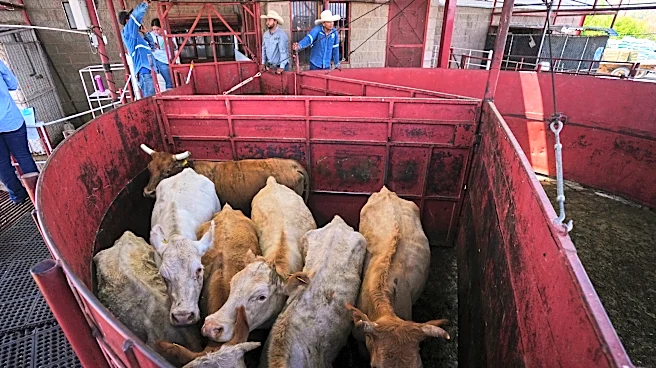
Work to check the health of the cattle began early in the morning on Aug. 24 ahead of the opening of the U.S.-Mexico border corrals. USDA inspectors crossed the border, where the cattle waited in pens. Inspectors worked with Mexico's El Servicio Nacional de Sanidad, Inocuidad y Calidad Agroalimentaria, or SENASICA, to check the health of the animals that would later cross the border.
"All they ask of us is to conduct a 100% inspection," said Sergio Villalobos García, the person in charge of the quarantine station at the cattle facility in Agua Prieta. "And to not send anything that is diseased or otherwise unfit for entry into the United States."

The pens were chaotic as veterinarians and workers inspected the cattle before they cleared for exportation. Tags hanging from their ears were checked and scanned as startled cattle climbed on the backs of others in the narrow chutes. Inspectors could close the chutes to look in the ears, mouths, and noses of the cattle for any imperfections, infections or other health issues.
As little as a broken horn could mean that the animal would not meet the requirements for export.
But in many ways, the inspections are not all that different than what they were prior to the export pause, Villalobos García explained. The main difference is that cattle are now identified with electronic tags that allow ranchers to track an animal's movements and medical history.
The strict new inspections stem from the spread of New World screwworm in Mexico and Central America. The parasitic fly, Cochliomyia hominivorax, once spread across the Western Hemisphere, but was exterminated in the United States, Mexico and Central America between the 1970s and 1990s through the coordinated efforts of governments in the region.
The parasitic fly lays its eggs in wounds and body openings of warm-blooded animals, including humans, where the larva completes its life cycle by feeding on the host's flesh and tissues. The devastating damage caused by the infestation is the reason for the intensive inspection of the cattle prior to export.

"We have designed an animal import protocol … that cattle that are imported into the United States legally," Alan Huddleston, the lead vet at USDA's Animal and Plant Health Inspection Service, said during the new conference. "And using our import protocol will have a negligible risk of bringing New World screwworm into the country."
Mexico has registered over 38,000 infections in 30 states since the parasite was first detected, including hundreds of cases in humans, resulting in the closure of cattle exports to the United States. Sonora registered its first case of screwworm infestation on Aug. 19, but the exports still continued. There are currently 46 cases of screwworm infection registered in 16 Texas counties and one in New Mexico, according to USDA.
On the U.S. side of the border, inspectors used trained dogs to sniff out and warn them about unseen infections that could be vectors for transporting the parasitic larva and that had been overlooked.
Efforts to control screwworm's spread
Cattle are not the only potential carriers of the larva of the New World screwworm fly; an infected rabbit crossing the border in an unseen part of the border could carry the growing larva into the United States. In fact, cases of screwworm infestation have been found in Central America and in Mexico in dogs, cats, rabbits, deer, hogs, goats and humans.
Failing to treat the infestation can be deadly and costly for ranchers.
The Trump administration has viewed the spread of the screwworm as a national security threat. In response, the administration is working with Mexico and Panama to produce millions of sterile flies to stop the screwworm reproduction.

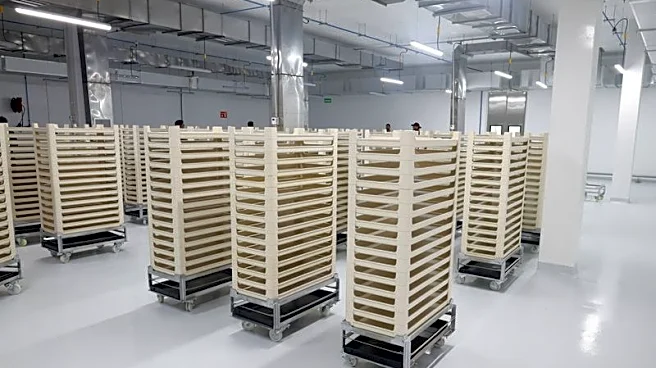
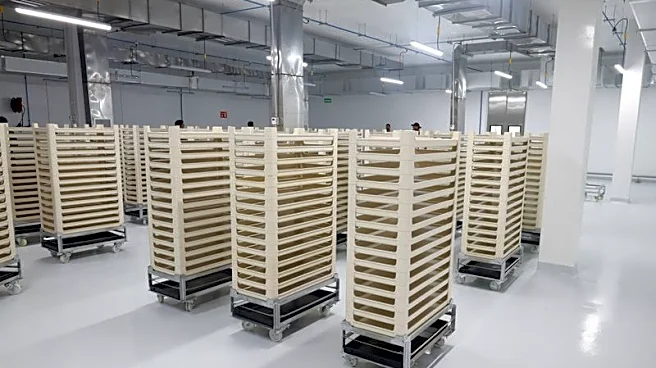
Mexico has opened a plant in the southern state of Chiapas that will produce millions of sterile flies to combat the spread.
Mexican President Claudia Sheinbaum celebrated the reopening of cattle exports during her news conference on Aug. 24. She said that Mexico was releasing sterile flies in Chihuahua and Sonora, praising the efforts as a "modern" response to the crisis.
Ochoa Valenzuela, the president of the Unión Ganadera Regional de Sonora, pointed out that it took 500 million flies to eradicate the screwworm, but today they have high-quality dewormers to help combat the spread of the fly. He was opposed to the closure of the border, he said, because that would never have stopped the spread of the parasitic fly.
"It was either political or it was foolish," Ochoa Valenzuela said the day prior to the reopening of exports.
He pointed out that wildlife continues to be a vector for the spread of the screwworm, making it harder to combat. This isn't lost on USDA, with Huddleston reminding hunters in the U.S. to speak up if they see any animals that may be infected, so they can release sterile flies quickly.
"If you see something, say something," Huddleston said. "That works for screwworm, too."
'It’s a relief, but let's see'
Roberto Sánchez was one of the transport drivers who delivered the first 750 head of cattle to the border on Aug. 23. He took a moment to express how the closure had impacted him and his family just before he entered with the 62 cows that were pushed around in the back of his trailer.
“We’ve been at a standstill for two years now,” Sánchez said before climbing into his truck. “It has affected everything, absolutely everything. It has impacted my work because this brings with it collateral damage from all sides. But for us, the biggest impact has been financial. We don't earn even half of what we earned.”
The 26-year-old from Hermosillo, Sonora, has driven cattle trailers to the U.S.-Mexico border for six years, but he has had little work on this route for the past 15 months. His trailer was one of at least nine that had delivered cattle for export to the U.S.
The pause in exports had a significant economic impact on both sides of the border.
The ranchers with the Unión Ganadera Regional de Sonora in Mexico were forced to sell their cattle at a 40% loss, Ochoa Valenzuela explained.
He said that the closure of the border led the Sonora ranchers to realize they could not rely on a single market for their cattle. They are considering other options to cover any future closures.

"The United States made a very unilateral decision and never showed any concern for its neighbors," Ochoa Valenzuela said. "I am not judging them; everyone does as they please, but obviously, the Unión Ganadera needs to move toward finding a second market option for producers in the state of Sonora, and that is what we are doing."
Still, for the time, there is cautiously optimism that cattle exports to the U.S. will continue. Employees like Sánchez welcomed the return to work.
“It’s a relief, but let's see," Sánchez said about the renewal of exports. "Hopefully it lasts a good long while this time.”
Jeff Abbott covers the border for the El Paso Times and can be reached at:jdabbott@usatodayco.com; @palabrasdeabajo on Twitter or @palabrasdeabajo.bsky.social on Bluesky.
This article originally appeared on El Paso Times: 'It's a relief': How 100% inspections regulate Mexican cattle exports to US