






Texas has plenty of land, but more than 95% of it is privately owned. Texas has four national forests but none in West Texas, making the public forests just across the New Mexico border especially important to people in El Paso.
Those forests now face a potential threat. Established in 2001, the Roadless Area Conservation Rule protects approximately 1.6 million acres of New Mexico’s national forests from permanent road construction and certain forms of industrial development, including large-scale logging.
At first glance, this may seem like a New Mexico issue. It is not.
As someone who spends considerable time outdoors, I see the landscape around us as a connected system rather than a collection of state boundaries. Wildlife moves between New
Mexico and Texas. Birds migrate across both states. Watersheds extend far beyond political borders. The health of New Mexico’s forests can affect the wildlife, water, and outdoor opportunities that West Texans depend on.
What is at stake?
Roads can create consequences far beyond their physical width. They can fragment habitat, disrupt wildlife movement, increase human disturbance, and divide the areas animals need for food, shelter, breeding, and migration. Once a road network is established, those effects can be difficult to reverse.
Wildlife does not recognize state lines. An eagle does not stop flying at the border and migrating birds do not follow political maps. According to Audubon, the region between El Paso and New Mexico is part of a migration corridor used by Turkey Vultures, Golden Eagles, Flammulated Owls, Tree Swallows, Ospreys, and several shorebird species.
Large mammals depend on connected habitat, too. Mountain lions require extensive ranges, and movement between populations helps maintain genetic diversity. Protecting habitat in New Mexico may therefore help protect animals that eventually move into West Texas.
Water creates another vital connection. The National Forest System provides drinking water to more than 60 million people in approximately 3,400 communities across 33 states. Intact forests and roadless areas can help maintain water quality, reduce erosion and sedimentation, and protect headwaters and watersheds.
For those of us in El Paso, water is impossible to take for granted. We live in the desert, and the Rio Grande is central to our region. What happens in mountains and forests upstream can affect the larger watershed downstream. Water is habitat, and water is life — for people and wildlife alike.
These are public lands
New Mexico’s national forests belong to all Americans. They provide opportunities that many Texans cannot find in their own state: hiking, camping, hunting, fishing, wildlife watching, research, education, and direct experience with wild landscapes.
Those experiences can shape how people understand and value nature. Reading about a mountain lion or forest ecosystem is different from standing in that landscape and recognizing that you are part of something larger. Time outdoors can inspire the next generation of conservationists.
Conservation does not mean keeping people out of nature. People should be able to explore, camp, hunt, fish, watch birds, and take their children outside. But enjoying public lands and permanently altering them are not the same thing. Some places are most valuable when they remain relatively intact.
The public comment period on the Roadless Rule is open until Sept. 21, 2026. Comments can be submitted at regulations.gov.
Texans should participate. We live next to these forests, visit them, and share their wildlife and watersheds.
The state line exists on a map. The ecosystem does not.
These are not simply New Mexico’s forests. They are America’s forests — and for those of us in West Texas, they are our wild forests, too.

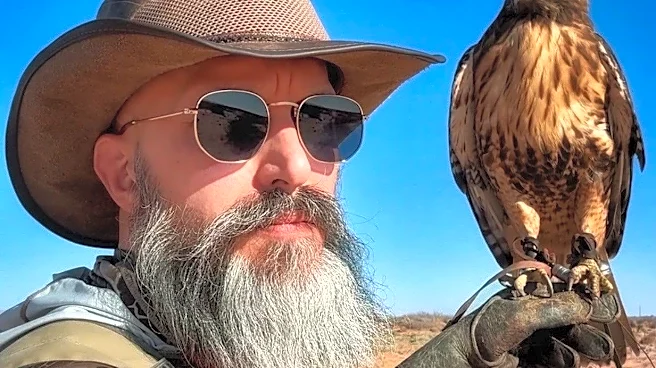
El Pasoan Keary Molinaro is an outdoor enthusiast.
This article originally appeared on El Paso Times: OPINION: New Mexico’s wild forests are Texas’ wild forests too