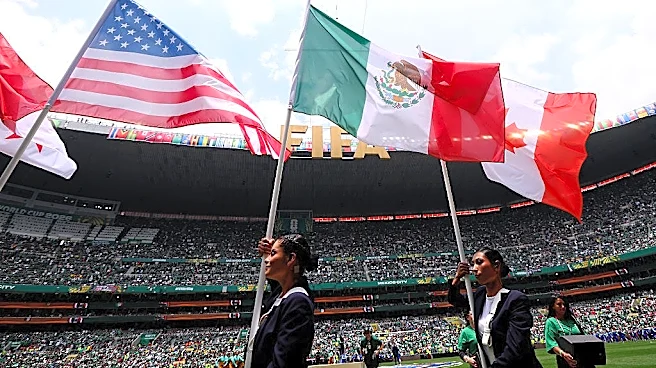






Mexico’s national flag is flown at half-staff on Thursday, July 30, to honor Miguel Hidalgo y Costilla, the Catholic priest and revolutionary leader who helped launch Mexico’s War of Independence from Spain in 1810.
The annual observance marks the anniversary of Hidalgo’s death on July 30, 1811.
Why is the Mexican flag lowered?
Flying the Mexican flag at half-staff, known as media asta, is a symbol of mourning and remembrance.
Mexico’s flag protocol is governed by the Law on the National Coat of Arms, Flag and Anthem (Ley sobre el Escudo, la Bandera y el Himno Nacionales), which establishes dates when the national flag should be lowered to honor important figures and historic events.
July 30 is one of those dates because it commemorates the death of Hidalgo, who is considered the “Father
of Mexican Independence.”
Who was Miguel Hidalgo y Costilla?
Miguel Hidalgo y Costilla was a priest and revolutionary figure who helped begin Mexico’s fight for independence from Spain.
On Sept. 16, 1810, Hidalgo issued the Grito de Dolores (“Cry of Dolores”), a call to revolt that marked the beginning of Mexico’s independence movement. Today, Sept. 16 is celebrated as Mexico’s Independence Day, with the flag flown at full-staff, while the evening before is marked with ceremonies recreating Hidalgo’s famous call for independence.
Hidalgo was captured by Spanish forces and executed on July 30, 1811. Mexico honors his legacy each year by flying the national flag at half-staff on July 30 to mark the anniversary of his death.
His birthday is also recognized in Mexico’s flag traditions: the national flag is flown at full staff on May 8 to commemorate his birth in 1753.
Do I have to lower my Mexican flag?
Private residents in the United States are not required to lower a Mexican flag on Mexico’s official half-staff observances. Mexico’s flag rules only apply to official displays of the Mexican flag within Mexico, especially government buildings and institutions following Mexico’s national flag law.
However, some people may choose to follow Mexico’s flag traditions as a gesture of respect, especially in communities with strong cultural ties to Mexico.
When are flags flown at half-staff in Mexico?
Mexico flies its national flag at half-staff (media asta) on specific dates throughout the year to honor important figures in the country’s history and commemorate major events.
- Feb. 14: Death of Vicente Guerrero, one of Mexico’s independence leaders and a former president who was executed in 1831.
- Feb. 22: Death of Francisco I. Madero, a leader of the Mexican Revolution and former president who was assassinated in 1913.
- Feb. 28: Death of Cuauhtémoc, the last Aztec emperor, who died in 1525.
- April 10: Death of Emiliano Zapata, a major figure in the Mexican Revolution who was assassinated in 1919.
- May 2: Death of members of the 201st Mexican Expeditionary Air Force, who served during World War II and died in 1945.
- May 21: Death of Venustiano Carranza, a leader of the Mexican Revolution and former president who died in 1920.
- June 5: Remembrance of victims of the 2009 Hermosillo daycare center fire.
- July 17: Death of Álvaro Obregón, a revolutionary leader and former president who was assassinated in 1928.
- July 18: Death of Benito Juárez, a former president and one of Mexico’s most important historical figures, who died in 1872.
- July 30: Death of Miguel Hidalgo y Costilla, the leader who launched Mexico’s War of Independence in 1810 and was executed in 1811.
- Sept. 12: Remembrance of the Saint Patrick’s Battalion, a group of mostly Irish immigrants who fought for Mexico during the Mexican-American War and were executed in 1847.
- Sept. 13: Remembrance of the Niños Héroes, young military cadets who died defending Mexico during the Battle of Chapultepec in 1847.
- Sept. 19: Remembrance of victims of major earthquakes, including the 1985 Mexico City earthquake and the 2017 Chiapas and Puebla earthquakes.
- Oct. 2: Remembrance of victims of the Tlatelolco massacre in 1968.
- Oct. 7: Remembrance of Senator Belisario Domínguez, who was assassinated in 1913.
- Dec. 22: Death of José María Morelos, a leader of Mexico’s independence movement who was executed in 1815.
The president of Mexico can also order the national flag to be flown at half-staff outside of these dates to honor major national figures, foreign leaders or victims of large-scale tragedies.
When does Mexico fly its flag at full staff?
Mexico flies its national flag at full staff on dates that recognize important moments in the country’s history, national holidays and the birthdays or achievements of key figures.
- Jan. 21: Birth of Ignacio Allende, one of the leaders of Mexico’s independence movement, who was born in 1779.
- Feb. 5: Adoption of Mexico’s Constitutions of 1857 and 1917.
- Feb. 19: Día del Ejército Mexicano, or Mexican Army Day.
- Feb. 24: Día de la Bandera, or Mexican Flag Day.
- March 1: Proclamation of the Plan of Ayutla, which helped lead to political reforms in Mexico.
- March 18: Anniversary of the 1938 oil expropriation, when Mexico nationalized its oil industry.
- March 21: Birth of Benito Juárez, a former president and national hero, in 1806.
- March 26: Adoption of the Plan of Guadalupe during the Mexican Revolution.
- April 2: Capture of Puebla in 1867, an event that contributed to the fall of the Second Mexican Empire.
- April 21: Remembrance of the heroic defense of Veracruz during the 1914 U.S. occupation.
- May 1: Día del Trabajo, or Labor Day.
- May 5: Anniversary of Mexico’s victory over the French Army at the Battle of Puebla in 1862, known as Cinco de Mayo.
- May 8: Birth of Miguel Hidalgo y Costilla, the leader who launched Mexico’s War of Independence, in 1753.
- May 15: Capture of Querétaro in 1867, which led to the fall of the Second Mexican Empire.
- June 1: Día de la Marina Nacional, or Mexican Navy and National Maritime Day.
- June 21: Victory of Republican forces over the Second Mexican Empire in 1867.
- Sept. 1: Opening of the first regular session of the Mexican Congress.
- Sept. 14: Incorporation of Chiapas as a federal state of Mexico.
- Sept. 15: Commemoration of the Grito de Dolores, the call that began Mexico’s independence movement.
- Sept. 16: Anniversary of the beginning of Mexico’s War of Independence in 1810.
- Sept. 27: Anniversary of the formal conclusion of Mexico’s War of Independence in 1821.
- Sept. 30: Birth of José María Morelos, a leader of Mexico’s independence movement, in 1765.
- Oct. 12: Día de la Raza, a day recognizing Mexico’s cultural heritage and history.
- Oct. 23: Día Nacional de la Aviación, or National Aviation Day.
- Oct. 24: Día de las Naciones Unidas, or United Nations Day.
- Oct. 30: Birth of Francisco I. Madero, a leader of the Mexican Revolution, in 1873.
- Nov. 6: Adoption of the Act of National Independence by the Congress of Chilpancingo in 1813.
- Nov. 20: Anniversary of the beginning of the Mexican Revolution in 1910.
- Dec. 29: Birth of Venustiano Carranza, a leader of the Mexican Revolution and former president, in 1859.
- December: The flag is also flown at full staff on the day Mexico’s Congress closes its session.
Brandi D. Addison covers weather across the nation as the Weather Connect reporter for the USA TODAY Network and contributes to Texas Connect coverage across the state. She can be reached at baddison@usatodayco.com. Follow her on Facebook here
This article originally appeared on El Paso Times: Why are flags half-staff? Why Mexican flags are lowered on July 30