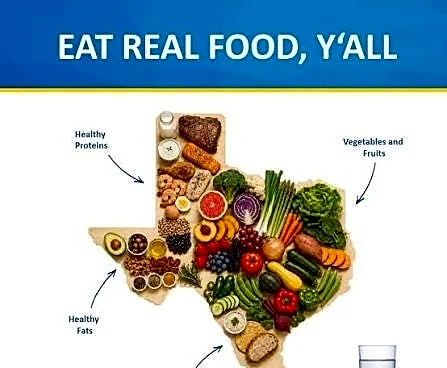









Washington spends a lot of time debating what Americans should eat. Texas just showed the country a better way to have that conversation.
The Texas Nutrition Advisory Committee just released the state's first nutrition guidelines, developed specifically for Texans. They translate nutrition science into actionable advice: eat more whole and minimally processed foods; prioritize protein, vegetables, fruit and healthy fats; drink water; and reduce or avoid sugar-sweetened beverages and highly processed foods.
The guidelines offer a practical framework for eating well, rather than a rigid prescription for every person. Texas has also committed to reviewing the evidence and updating its recommendations annually as new research emerges.
That is exactly
the kind of approach our national nutrition policy needs.

The Dietary Guidelines for Americans are the cornerstone of federal nutrition policy, shaping everything from nutrition programs to public health education. As policymakers consider how future guidelines should be developed, Texas offers a useful example to bring them to the Lone Star State: guidance grounded in scientific consensus, practical for everyday life, responsive to new evidence and focused on helping people improve their health.
The need is urgent. More than 90% of U.S. adults show signs of suboptimal cardiometabolic health. Millions are living with obesity, insulin resistance, prediabetes, type 2 diabetes, and other chronic conditions closely connected to metabolic health.
Our nutrition guidance needs to reflect that reality. Texas is right to emphasize nutrient-dense and minimally processed foods, adequate protein, vegetables and fruit, healthy fats, water, and reducing highly processed foods and added sugars. But effective guidance must also recognize that not everyone is starting from the same place.
Someone living with insulin resistance or type 2 diabetes may have different nutritional needs than someone who is metabolically healthy. Medications, genetics, underlying conditions, cultural food traditions, personal preferences, and individual responses can all influence which dietary approach is most appropriate and sustainable.
Good nutrition guidance should give people and their health care providers evidence-based options—not assume that one dietary pattern will work equally well for everyone.
The Texas Legislature created the Texas Nutrition Advisory Committee in 2025 to examine the relationship between nutrition, ultra-processed foods, and chronic disease; independently review the scientific literature; educate Texans; and develop and maintain nutritional guidelines. Its work is designed to continue as new research emerges—a crucial recognition that nutrition science is not static.
In 2024, for example, the National Academies' Food and Nutrition Board recommended discontinuing the long-standing Acceptable Macronutrient Distribution Range, or AMDR, which called for 45% to 65% of calories to come from carbohydrates. The board concluded that the methodology used to establish those ranges was not sufficiently rigorous.
Researchers also continue to study how different dietary approaches affect chronic disease, including the potential role of lower-carbohydrate diets for people with metabolic conditions.
The latest federal Dietary Guidelines reflect this evolving evidence. The 2025–2030 Guidelines recognize that people living with certain chronic diseases may benefit from a lower-carbohydrate diet and encourage them to work with health professionals to determine an appropriate dietary path.
That marked meaningful progress—and Texas is building on it. The state's Annual Scientific Review, which provides scientific context for its guidelines, identifies several whole-food dietary patterns associated with protection against some forms of cancer, including some lower-carbohydrate diets.
Texas is also demonstrating the importance of how nutrition guidance is communicated.People need recommendations they can use, guidance that acknowledges different circumstances and food traditions, and confidence that recommendations will change when the evidence does.
The Coalition for Metabolic Health recently responded to an invitation from the American Society for Nutrition to help shape the future of dietary guidance. Our comments called for three priorities: strengthening and reassessing the evidence underlying nutrition recommendations; developing guidance that directly addresses chronic disease; and expanding the evidence-based dietary patterns available to metabolically vulnerable populations, including lower-carbohydrate options.
These principles align with and build on Texas' new guidelines.
Texas has created a framework that puts science into practice while leaving room for individual needs and new evidence. It has also been recognized that nutrition education should give people practical knowledge and confidence to make healthy choices throughout their lives.
The rest of the country should pay attention. Nutrition policy should provide people with reliable information, make nutritious foods more accessible and equip them—and their health care providers—with evidence-based options.
That requires continuing to study what works, revisiting long-standing assumptions, and understanding that the right dietary approach may look different for someone trying to prevent disease than for someone already living with it.
When developing the next generation of federal guidance, policymakers should look to Texas—not only for its recommendations, but for its approach: follow the evidence, offer practical advice, acknowledge individual differences, and adapt as research evolves.That is how nutrition guidance can reflect America's health today and help build a healthier tomorrow

Maya Marotois the executive director of the Coalition for Metabolic Health. The coalition is a national alliance of researchers, clinicians, philanthropists, nonprofits, business leaders and advocates ushering in a new era in health care by making metabolic health mainstream.
This article originally appeared on El Paso Times: OPINION: Washington should follow Texas on nutrition policy