





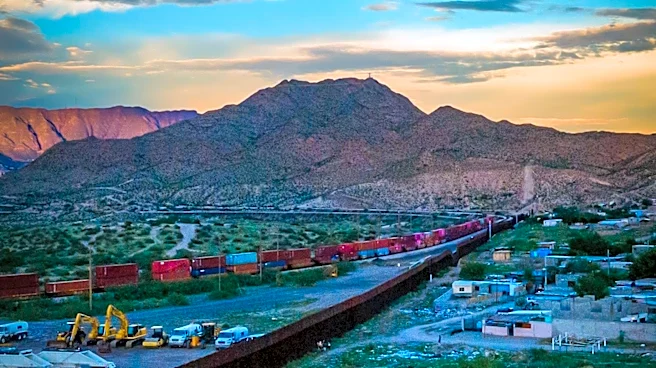

AGUA PRIETA, Mexico — Mexican cattle exports into the U.S. resumed through the Douglas, Arizona, port for the first time in more than a year after a suspension tied to the spread of New World screwworm.
The first cattle began the journey into the U.S. from Mexico on Monday, Aug. 24, through the cattle crossing gate in Agua Prieta, Sonora, after over a year of tense attempts to control the spread of the New World screwworm. The exports began shortly after 3:30 p.m. MT/ 4:30 p.m. CT.
Cattle exports were suspended May 11, 2025, because of the rapid spread of the parasitic fly across Mexico and Central America.
The decision to reopen cattle exports to the U.S. was welcomed by ranchers in Mexico, who were forced to sell their cattle at a 40% loss, Juan
Carlos Ochoa Valenzuela, the president of the Unión Ganadera Regional de Sonora, said.
"I think the U.S. authorities finally realized that closing borders wouldn't stop the (parasite)," Ochoa Valenzuela told the El Paso Times. "After all, the infestation (in the U.S.) arrived via other means, not through livestock."
He added, "the economies of both countries were (also) severely affected."
There were 719 head of cattle exported on Aug. 24, but plans are to initially export 750 head of cattle per day, a spokesperson for the United States Department of Agriculture said. Authorities hope to increase exports to 1,200 to 1,400 head of cattle per day.
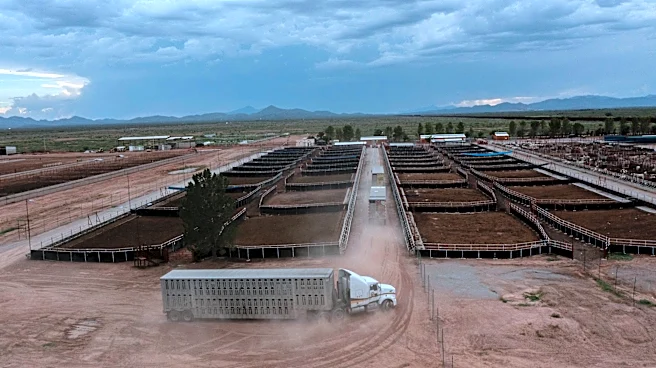
By late afternoon Sunday, Aug. 23, nine trailers had entered the corrals along the border for export to the United States. Each trailer carried between 40 and 80 head of cattle, which were offloaded for inspection before crossing into the U.S.
The Trump administration had justified the suspension as necessary to control the spread of the screwworm.
“The closure of the Southern ports of entry for the last year has been a tough but necessary action to control the spread of NWS in Mexico and protect the American livestock industry," U.S. Secretary of Agriculture Brooke L. Rollins said in a statement. "Thanks to the work across the federal government as well as state, local, and industry partners, it is now safe to reopen the Douglas, Arizona, port ... to resume the hundreds-year-old movement of cattle."

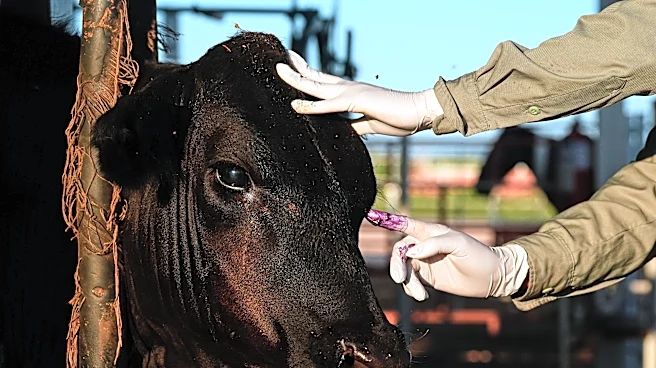
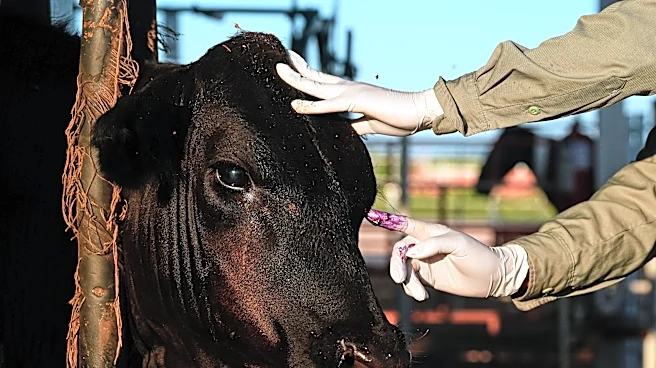
The cattle were inspected by both the Mexican federal agency responsible for maintaining the health of livestock, El Servicio Nacional de Sanidad, Inocuidad y Calidad Agroalimentaria, or SENASICA, and inspectors from the USDA. Afterwards they were passed through a bath meant to remove any parasites, like the parasitic protozoa called Babesia bigemina that historically caused "Texas fever" in cattle.
USDA said that Douglas, Arizona was selected to phase in the cattle exports "because Sonora and Chihuahua are identified as the lowest-risk Mexican states for New World screwworm due to longstanding, successful animal health infrastructure and effective inspection programs."
But Ochoa Valenzuela explained that all the cattle exported through Sonora were born and raised in the Mexican state.
Members of the Unión Ganadera Regional de Sonora, which aids cattle ranchers across the state of Sonora with supplies and transport, celebrated the reopening of cattle exports. The members of the association were joined by the state Governor Alfonso Durazo Montaño in a restaurant in a joyous lunch in the border town of Agua Prieta ahead of the renewal of export.
Borderland's Santa Teresa next in line
The renewal of cattle exports from Mexico is part of a pilot project that will expand to other crossing sites across the southern border.
USDA officials willconsider reopening cattle exports from Mexico through the Santa Teresa and Columbus cattle ports of entry. The exports could begin in the next two months.
The port near El Paso is the largest when it comes to cattle exports from Mexico along the southern border.
What is the New World screwworm?
New World screwworm, or Cochliomyia hominivorax, is a type of parasitic fly that once spread across the western hemisphere.
It doesn't just affect cattle. The fly lays its eggs in wounds and body openings of warm-blooded animals and humans, where the larva completes its life cycle by feeding on the flesh and tissues of the host.
The parasite devastated the cattle industry, so the United States worked with the governments of Mexico and Central America to exterminate the fly. By the mid-1990s there were no screwworm cases north of the Darien Gap in Panama.
The screwworm was under control until 2023, when Panama registered its case. The fly quickly spread north, and by 2024, the southern Mexican state of Chiapas was registering their first cases.
Mexico has registered over 38,000 infections in 30 states since the parasite was first detected, including hundreds of cases in humans, resulting in the closure of cattle exports to the United States. Sonora registered its first case of screwworm infestation on Aug. 19, but the exports still continued.
The U.S. too has registered cases of the parasite. There are currently 46 cases of screwworm infection in 16 Texas counties and one in New Mexico, according to USDA.
Panama, Mexico and the United States have launched efforts to produce sterile flies to combat the spread of the parasite. They are looking to release millions of sterilized flies to stop the spread of the parasitic fly.
Jeff Abbott covers the border for the El Paso Times and can be reached at:jdabbott@usatodayco.com; @palabrasdeabajo on Twitter or @palabrasdeabajo.bsky.social on Bluesky.
This article originally appeared on El Paso Times: Mexican cattle cross into US again after 15-month screwworm closure