



The USDA is set to reopen a cattle port of entry in Arizona after more than a year of restrictions prompted by the New World screwworm outbreak in Mexico.
Every animal entering the United States through the reopened ports will undergo a full USDA inspection to ensure it shows no signs of New World screwworm, the agency said. The reopening will happen in phases, beginning with Douglas, Arizona, on Aug. 24, followed by potential openings at ports in Santa Teresa and Columbus, New Mexico.
The move comes as agriculture officials continue battling the return of a flesh-eating parasite that had largely disappeared from the United States for decades. In June, New World screwworm was confirmed in a calf in Zavala County, Texas. The case marked the first
confirmed New World screwworm case in U.S. cattle in roughly six decades.
Concerns over the parasite had already disrupted cattle trade with Mexico. Mexican cattle exports totaled $335 million in 2025, a 78.2% decline from the previous year following U.S. restrictions on live cattle imports prompted by New World screwworm detections in southern Mexico, according to Bank of Mexico data cited ina Texas A&M AgriLife Extension newsletter.
Here's what to know about the New World screwworm, how it affects cattle and why the parasite has become a major concern for the U.S. livestock industry.
What is screwworm?
The New World screwworm is a species of parasitic fly that completes part of its lifecycle by feeding on the tissue or flesh of warm-blooded animals and people, according to the Centers for Disease Control.
New World screwworm flies are attracted to wounds and body openings like the nose, eyes, ears, and mouth, where they lay eggs. The eggs hatch into maggots (larvae) that feed on living tissue, causing a worsening, often painful, and foul-smelling wound.
What is screwworm in cattle?
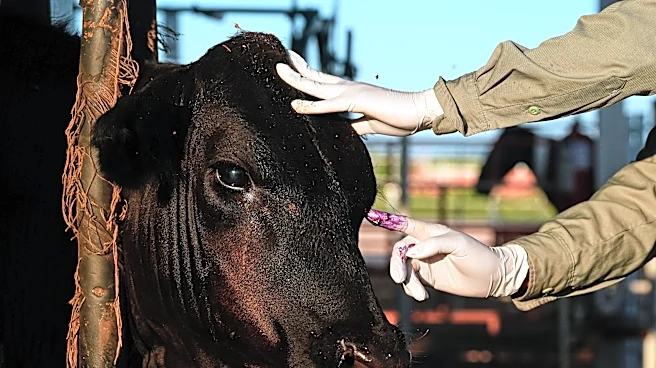
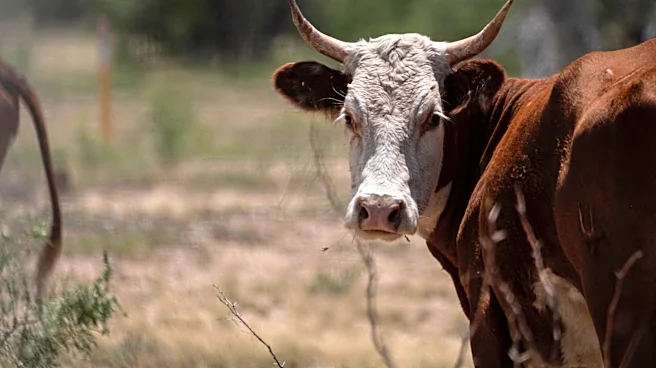
New World screwworm poses a serious threat to cattle because its larvae burrow into open wounds and feed on living tissue. Infestations can cause severe wounds, declining health and, if left untreated, death, according to the USDA.
While the pest does not make properly inspected beef unsafe to eat, but a widespread outbreak could disrupt cattle production and movement at a time when the U.S. cattle supply is already historically tight.
Screwworm symptoms
Animals suffering from NWS infestation may exhibit the following signs:
- Bloody or light-colored drainage from a cut or wound.
- A cut or wound that rapidly enlarges for seemingly no reason.
- White or cream-colored runny substance (the eggs) in and around a wound.
- Presence of fly larvae (maggots) in wounds.
- Irritated behavior and signs of pain.
- Head shaking.
- Reduced appetite.
- Fever and other signs of secondary infection.
- Foul odor or smell of decay.
What is screwworm in humans?
New World screwworm can also infect humans, although cases are rare, according to the CDC. The pest is not contagious and does not spread between animals or from animals to people. Screwworm infestations begin when a female fly lays eggs on a wound or body opening.
It is also not spread by eating beef.
Does screwworm affect beef prices?
It can.
Restrictions on Mexican cattle imports because of New World screwworm reduced the number of cattle entering the U.S. supply chain. Mexico supplied about 62% of U.S. cattle imports from 2020 to 2024, according to the USDA. Fewer cattle can tighten supplies and put upward pressure on prices, although screwworm is not the only reason beef prices are high.
Why are beef prices high?
The U.S. cattle herd has shrunk to its lowest level in about 75 years, after years of drought and high feed and production costs led ranchers to reduce their herds. USDA reported the 2026 calf crop is down another 2% from last year.
Beef and veal prices increased by 1.4% from May 2026 to June 2026 and were 11.8% higher in June 2026 than in June 2025, according to the USDA.
The USDA predicts that beef and veal prices will increase by a whopping 10.7% in 2026.
Natassia Paloma may be reached at npaloma@gannett.com, @NatassiaPaloma on X, natassia_paloma on Instagram, and Natassia Paloma on Facebook.
This article originally appeared on El Paso Times: US reopens cattle border amid screwworm fears. Could beef prices fall?