





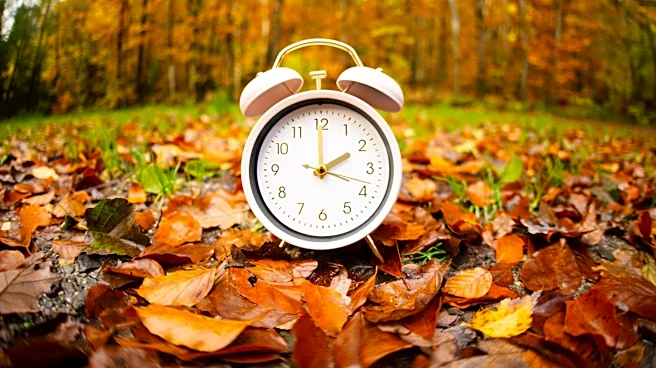
Fall is here, but it’s not quite time to fall back.
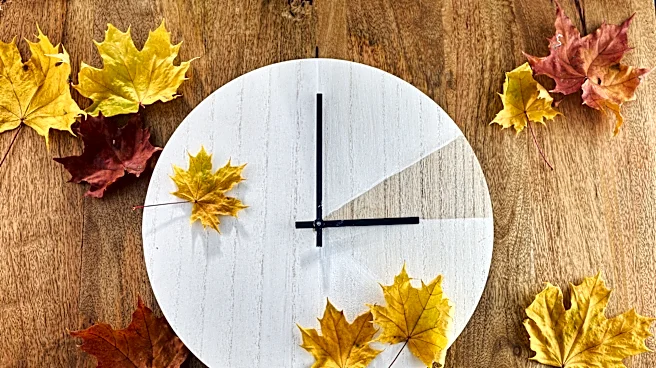
Clocks will remain on daylight saving time this weekend, Sept. 26-27. When the seasonal switch arrives, they’ll turn back one hour, bringing earlier sunsets and more light in the morning.
The twice-yearly ritual has sparked years of debate in Congressover whether Americans should keep switching between daylight saving time and standard time. Efforts to make daylight saving time permanent have yet to become law, so another clock change remains on the calendar.
Here’s what to know about when daylight saving time ends.
What is daylight saving time?

Daylight saving time is the period of the year when clocks are moved one hour ahead. In the United States — this has the effect of creating more sunlit hours in the evening during months
when the weather is the warmest, according to the National Institute of Standards and Technology, a federal agency within the U.S. Department of Commerce.
Daylight saving time, or DST, was formally introduced in the United States in 1918, and in 2007, the rules for DST changed.
The new changes were enacted by the Energy Policy Act of 2005, which extended the length of DST in the interest of reducing energy consumption.
The rules increased the duration of DST by about one month.
DST is now in effect for 238 days, or about 65% of the year, although Congress retained the right to revert to the prior law should the change prove unpopular or if energy savings are not significant, according to NIST.
When does daylight saving time end?
Daylight saving time ends at 2 a.m. local time on Sunday, Nov. 1, when clocks will fall back one hour to 1 a.m. The change marks the return to standard time, which will remain in effect through the winter.
Natassia Paloma may be reached at npaloma@gannett.com, @NatassiaPaloma on X, natassia_paloma on Instagram, and Natassia Paloma on Facebook.
This article originally appeared on El Paso Times: What is daylight savings time? Why we change clocks twice a year